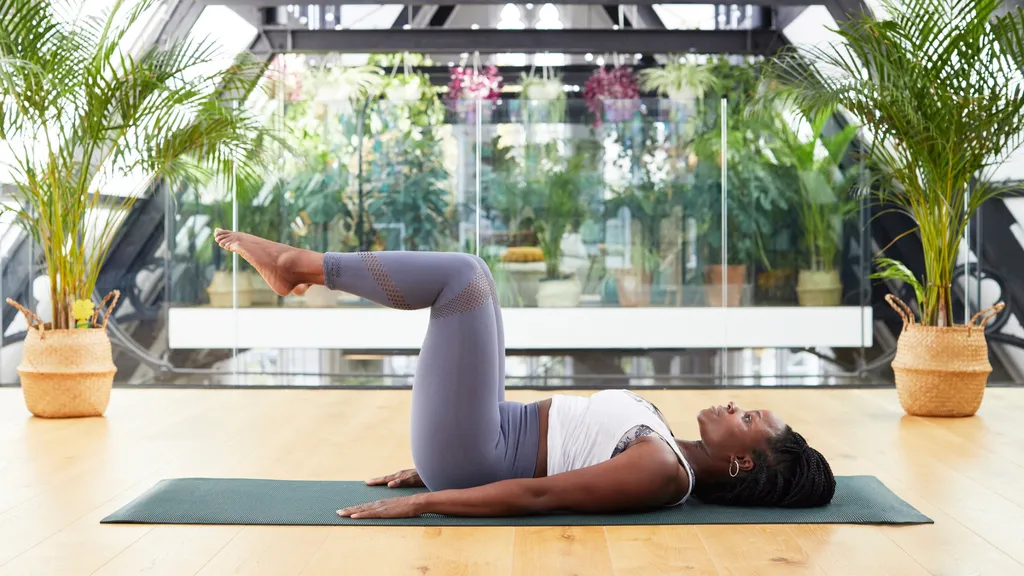
Your arms feel cool against the floor. Your toes press firmly into the mat while your legs stay active and steady. Your breathing slowly settles into a calm rhythm. You feel tension through your stomach muscles and a sharp sense of focus in your mind, and then a simple question appears: how long should I stay in this position?
Is it ten seconds? Thirty seconds? Or two long minutes that feel endless?
Planks are often treated as a simple exercise that anyone can do, but they are actually a way for the body to interact with gravity. And that relationship changes as the years pass. What feels effortless and powerful at eighteen can feel very different at forty-eight and may require more care and control at sixty-eight.

At the centre of it all is the core. This hidden support system stabilises your spine, protects your lower back, and allows the body to move smoothly and safely. Because of that, the real question is not simply how long you can hold a plank, but how long you should hold it to strengthen your core without pushing beyond what your body can handle today.
Understanding What Plank Timing Really Means
Most workouts are loud and energetic. Treadmills thump, weights crash together, and heavy breathing fills the gym. Planks are completely different.
You simply position your body in a straight line. Your shoulders stack over your elbows or wrists, your heels stretch backward, and your head stays relaxed between them. From the outside it almost looks like nothing is happening.
But inside your body, many muscles are working together.
The transverse abdominis tightens around your middle like a supportive belt. The multifidus stabilises and protects the spine. The diaphragm connects breathing with effort. The pelvic floor supports everything from below.
These muscles do not respond well to chaos or strain. They respond best to calm, precise effort repeated consistently.
Because of that, quality and consistency matter far more than duration. A shaky one-minute plank where your body collapses is far less effective than a controlled twenty-second hold where your spine stays aligned and your breathing remains steady.
Time still matters, but the correct time is the moment just before your form begins to break.
The Myth of the Two Minute Plank
For many years the fitness world has celebrated extremes. Two-minute planks. Five-minute endurance tests. Viral videos of people shaking while trying to hold on.
Somewhere along the way, longer started to mean better.
The quieter truth is that after a certain point, longer planks mainly train pain tolerance rather than core strength. Many experienced coaches and research studies suggest that shorter high-quality holds repeated several times are far more beneficial for spinal health and core stability.
Long planks are not necessarily harmful, but the benefits start to decrease while the risk of poor posture increases.
Instead of asking “How long can I survive this position?”, a better question is “How well can I hold this position right now?”
How Age Changes the Plank Equation
As the body ages, the internal mathematics of strength and recovery changes.
Muscles recover more slowly. Connective tissues become less forgiving. Balance and coordination require more attention. A plank that once felt easy might suddenly feel demanding, but that is not failure. It is simply biology.
Because of this, it is better to think in flexible ranges rather than strict rules. The goal is always to stop just before form begins to collapse.
Below are general guidelines for healthy adults without major injuries.
| Age Range | Suggested Hold Time Per Set | Recommended Frequency |
|---|---|---|
| Teens (13–19) | 20 to 40 seconds | 2 to 4 sessions per week |
| 20s to 30s | 30 to 60 seconds | 2 to 4 sessions per week |
| 40s | 20 to 45 seconds | 2 to 4 sessions per week |
| 50s | 15 to 40 seconds | 2 to 3 sessions per week |
| 60s and older | 10 to 30 seconds | 2 to 4 sessions per week |
These numbers are not strict rules. They are simply helpful reference points. The most important factor is the quality of every second you hold.

Plank Training in Your 20s and 30s
During your twenties and thirties the body often feels strong and resilient. Muscles recover quickly and strength improves easily with practice.
Many people experiment with longer plank holds during this stage. A range between thirty and sixty seconds usually works well when form stays strong.
The biggest risk during these years is not weakness but inattention. Hips begin to drop slightly. Shoulders creep toward the ears. The lower back sends subtle warnings that often go ignored.
Instead of chasing a single long hold, splitting the effort into several shorter high-quality sets often leads to better long-term strength.
Staying Strong and Aware in Your 40s
By the time people reach their forties, the body becomes more honest with its feedback.
Old injuries may start to speak up. Stiffness can appear more quickly. Strength is still there, but it requires more respect and awareness.
For many people, a working range of twenty to forty-five seconds per plank is ideal. Performing several sets with strong alignment helps maintain posture, spinal stability, and everyday movement.
Some days the body may feel capable of more, while other days it may ask for less. Listening to that feedback is part of intelligent training.
Planks in Your 50s, 60s, and Beyond
Later in life the definition of strength begins to evolve.
Muscle mass may slowly decline, balance may shift, and recovery can take longer. But the ability to adapt and improve still remains.
Shorter plank holds of ten to thirty seconds with excellent form can be extremely valuable. Modified versions such as knee planks or incline planks are not signs of weakness. They are thoughtful adjustments that allow the body to continue building strength safely.
Each well-supported second helps maintain posture, stability, and confidence in movement.
Knowing When to Stop a Plank
The body always sends signals when a plank is no longer productive.
Common warning signs include the lower back beginning to sag, shoulders rising toward the ears, breath being held instead of flowing naturally, or facial tension becoming overwhelming.
The moment you notice these signals, it is time to stop.
Ending a set when form begins to fade is not quitting. It is intelligent training that teaches the nervous system to move efficiently rather than forcing the body into poor patterns.
Making Planks Part of Everyday Life
Planks do not need to be dramatic or exhausting to be effective.
A short hold before your morning coffee, another after work, and perhaps one more before bed can quietly strengthen the core over time.

Small consistent efforts add up. Over weeks and months, these simple moments build a stronger spine, better posture, and a body that moves with greater confidence.