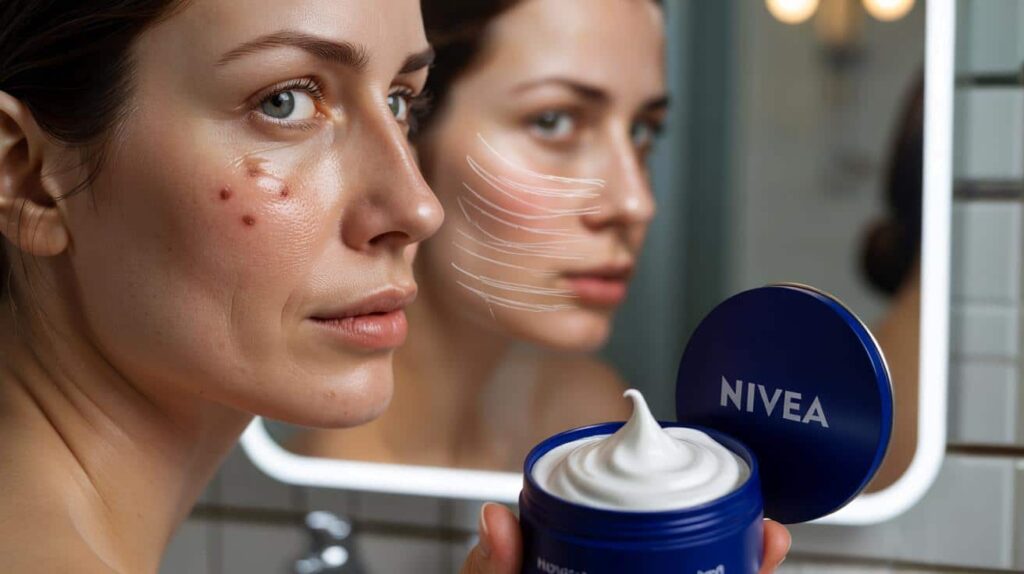
Opening the classic blue Nivea tin feels like opening a small time capsule. The familiar scent instantly brings back memories of old bathroom cabinets and winter hand care. But this time, the cream wasn’t going on dry hands. Instead, I tried a simple experiment: applying Nivea blue cream on only one side of my face every night for a week to see what difference it would make.
On the left side, I used the famous Nivea cream. On the right side, I continued using my usual lightweight moisturizer. The goal was simple — compare both sides and see if this €2 classic still holds up against modern skincare.
The First Few Nights: Texture and First Impressions
The first thing I noticed was the texture. Nivea’s blue cream is incredibly thick — almost wax-like. It doesn’t glide across the skin the way lighter moisturizers do. Instead, it forms a dense protective layer.

Within minutes of applying it, the left side of my face had a shiny, slightly sticky film. My regular moisturizer on the right side absorbed quickly and felt completely natural.

Going to bed felt a little strange. I found myself trying not to sleep on the Nivea side because it felt like wearing a protective mask.
Day Three: Small but Noticeable Changes
By the third morning, the difference was subtle but real. The Nivea side looked slightly fuller around the cheekbone. Fine dehydration lines near my nose looked softer and less visible.
My makeup also applied more smoothly on that side. Foundation didn’t cling to dryness, and the skin looked more hydrated.
The right side — using my normal moisturizer — still looked healthy and hydrated, but the Nivea side looked like it had retained more moisture overnight.
Why This Happens: The Occlusive Effect
The explanation is quite simple. Nivea blue cream is an occlusive moisturizer. That means it forms a barrier over the skin that slows down water loss.
Instead of adding hydration directly, it helps the skin hold onto the moisture it already has. This is why the skin can appear more plump and smooth the next morning.
This effect is especially noticeable in dry environments or during winter when indoor heating removes moisture from the air.
The Downside: Potential Clogged Pores
However, the richness of the cream also revealed a downside. After several days, I noticed two small bumps forming along my jawline on the Nivea side.
They weren’t inflamed pimples, but small clogged pores that could be felt when touching the skin.
This highlighted the main limitation of very rich creams. While they provide comfort and hydration, they can also trap oil, sweat, and dead skin cells — particularly on acne-prone or oily skin.
After One Week: What Actually Changed?
By the end of the week, the differences were clearer:
- The Nivea side appeared slightly more hydrated and smoother.
- Fine dehydration lines looked softer.
- Makeup sat better on that side.
- However, small clogged pores started forming near the jawline.
During a video call, a friend even commented that my left cheek looked smoother without knowing about the experiment.
The effect wasn’t dramatic, but it was noticeable enough to confirm that the cream was doing something.

Who Should Use Nivea Blue Cream?
Nivea works best for certain skin types and situations:
- People with dry or dehydrated skin
- Cold weather climates
- Wind-exposed or winter skin
- Areas prone to dryness like cheeks and smile lines
Those with oily or acne-prone skin may find it too heavy for daily full-face use.
How to Try the Half-Face Experiment Yourself
If you want to test the cream yourself, you can safely try the same method:
- Cleanse your face gently at night.
- Apply your normal routine.
- Warm a small amount of Nivea between your fingers.
- Press it only onto one side of your face.
- Avoid acne-prone areas like the center of the forehead.
- Repeat for 3–7 nights.
This allows you to clearly see how your skin reacts without committing to long-term use.
Best Ways to Use Nivea Blue Cream
Instead of applying it everywhere, many people benefit from using it strategically:
- As a nighttime seal over lighter moisturizer
- On dry spots such as cheeks or around the nose
- During cold or windy weather
- As an occasional moisture barrier
Using a small amount reduces the chance of clogged pores while still providing the hydration benefits.
What This Simple Experiment Revealed
After a week, the biggest takeaway wasn’t that Nivea is a miracle anti-aging cream. It isn’t. It doesn’t erase wrinkles or change skin structure.
What it does very well is protect the skin barrier and lock in moisture. And sometimes, that simple function is exactly what the skin needs.
The difference between the two sides of my face wasn’t dramatic, but it was enough to show that basic skincare principles still matter more than trendy ingredients.
In the end, the famous blue tin proved something important: sometimes the simplest products — the ones that quietly sit on bathroom shelves for years — can still deliver surprisingly effective results when used the right way.
FAQs
Can I use Nivea blue cream on my face every night?
Yes, especially if you have dry skin. However, start with small amounts and monitor how your skin reacts.
Does Nivea blue cream prevent aging?
Not directly. It does not contain anti-aging actives, but it helps retain moisture, which can temporarily soften fine lines.
Is it suitable for oily skin?
People with oily or acne-prone skin may find it too heavy. Spot application on dry areas is usually a better option.
 Longest Solar Eclipse Of The Century Will Turn Day Into Night Across Several Parts Of Earth
Can it be used under the eyes?
A thin layer can be applied under the eyes, but avoid the lash line and stop if you notice milia (tiny white bumps).