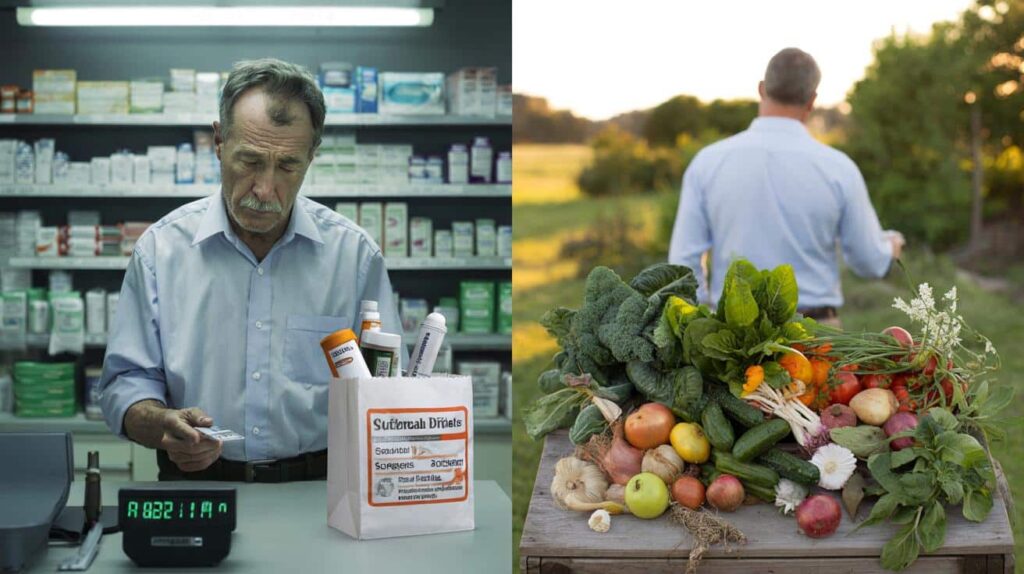
When the total came up on the screen, the guy in front of me at the pharmacy didn’t look up. He sighed, slid his card, and stuffed a crumpled receipt into his already full wallet. He lost three different diabetes drugs, a small paper bag and almost a third of his weekly pay cheque.A woman in work boots stood behind him and looked at the shelves of sugar-free snacks and cookies that were good for diabetics. She turned each box as if it held the answer to all of his problems.
That same woman opened the trunk of her car in the parking lot to put the groceries in. Next to the pharmacy bag was a bag of onions, garlic, kale, and a few apples. She didn’t know that the bag with the orange labels probably didn’t have the best tools for her blood sugar.
Why the diabetes business wants you to be sick, not healthy
Type 2 diabetes isn’t just a disease anymore. It has a hold on everything, from breakfast cereal to TV ads at night.If you look closely, you’ll see that the same companies that sell sugary, highly processed foods also work with the companies that make diabetes drugs that can save your life. One side is to blame for the problem. The other side sells the bandage.This isn’t a theory about a secret plot. It’s a way to do business. And you are the money that keeps coming in.
For instance, the new diabetes drugs that quickly became popular as weight loss shots. You know what I mean: gorgeous pictures of the before and after, influencers talking about their journeys, and clinics opening up in strip malls like nail salons.
How much does it cost every month? Every year, hundreds, and sometimes thousands, of dollars.
A lot of people are told they will probably need them for the rest of their lives because their weight and blood sugar often go back up after they stop. It’s like renting your health instead of owning it.But no one makes a TV ad for beans, cinnamon, or bitter greens. There isn’t a call for shareholders to go for a walk after dinner. Food doesn’t make you money.
Your pancreas gets better slowly when you start eating real food and moving like your grandparents did. But big companies don’t make any money. They make money when your lab numbers stay bad enough to need more treatment.The simple story you hear is that you’re broken and this drug is the only thing that can help you get better. It works, makes money, and only goes one way.
The truth is that Type 2 diabetes is very closely linked to a person’s environment and way of life. This means that some people can get better enough to stop taking their medications with the help of a doctor. That chance doesn’t happen very often.
The real answer is closer than the nearest drugstore.
You can find them in almost any small backyard: dandelions that won’t go away, a scraggly rosemary bush, or even a pot of basil that is still alive on a windowsill. It doesn’t look like medicine at all. People from all over the world have used these plants for hundreds of years to help them control their blood sugar, hunger, and digestion.
This is a simple and helpful way to do it. Every day, eat at least one plate of food that has half vegetables on it. Try to grow at least one of the vegetables on your own. Even if it’s just a pot of cherry tomatoes on a balcony or a patch of dirt with green beans in it.Growing your own food makes you feel different about it. You relax. You see? You care about it. And your blood sugar quietly thanks you.
A reader once told me about his mother, who lived in a small town and was 62 years old. She had been taking metformin and another diabetes drug for years. When I went to the doctor, they would always say, “Your numbers are still too high; let’s change the dose.” When they talked about what she made, they only told her not to eat sugar.
One spring, she got bored and tore up a piece of grass. She planted green beans, onions, tomatoes, cucumbers, and a row of leafy greens that tasted bad. She called it “medicine salad.” She started eating a big bowl of those greens with vinegar and olive oil before lunch and dinner.Six months later, her doctor told her to take fewer medications. She hadn’t done anything to show off. Famous people don’t have to follow a diet. A garden, a daily walk, and more food that still looked like it came from the ground.
This isn’t magic. It’s biology. There are a lot of things that happen when you eat plants that are high in fibre, bitter, and colourful. Your gut makes sugar take longer to get into your blood. Insulin works better on your cells. Your liver stops leaking extra glucose, like a broken tap.Herbs like rosemary, fenugreek, and cinnamon, as well as foods like beans, lentils, leafy greens, berries, and nuts, are not other ways to treat a disease. Before the modern food industry changed our taste buds, these were the foods that the body was meant to eat.To be honest, no one really does this perfectly on Instagram every day. Things are a mess in life. But even moving 20–30% in this direction can change lab results enough to surprise a doctor who thought you were going to keep taking higher and higher doses forever.
How to use your kitchen and garden as the first tools you need to control diabetes
Start at the very bottom. Choose three plants that help lower blood sugar if you have a small piece of land or even a sunny window. One should be green (like kale, Swiss chard or spinach), one should be a legume (like bush beans in a pot) and one should be a herb (like rosemary, basil or sage).Make a promise to eat from them three times a week. That’s all. Not a big change in your life, just a quiet habit you can do over and over.To make your plate, start with a small bowl of raw or lightly cooked vegetables, then add protein (eggs, fish, beans, chicken), and finally starch if you still want it. That order alone can lower blood sugar levels after meals in a way that looks like a mild drug, but without the side effects.
A lot of people crash because they want to be perfect. On Monday, they throw away half of what’s in the pantry and promise themselves they’ll never touch bread again. By Thursday, they’re eating doughnuts in the car and feeling like failures.This is a gentler way: keep what you already eat, but make it less crowded. Put a handful of greens from your garden in your lunch. Put beans in your soup. One soda can be replaced with water with lemon and a sprig of mint from your own pot. Little things that aren’t very interesting and don’t look good on social media.
We’ve all been there: staring at a plate of healthy food you don’t even like and wondering how long you can keep pretending to like it. You need to find food that fits your tastes and your schedule, not someone else’s, for real change to happen.
A nurse with Type 2 diabetes told me, Diabetes drugs saved my life in the short term. But my garden brought my life back to me in the long run. The drugs put out the fire. The food stopped the fuel.
Simple daily habit: Eat vegetables or salad first at two meals a day.
Garden upgrade: Grow at least one green and one herb you actually enjoy.
Smart carb timing: Keep sweet foods for after a fiber-rich meal, not on an empty stomach.
Movement nudge: Walk 10–15 minutes after your biggest meal, even if it’s just around the block.
Medication reality check: Talk with your doctor regularly about whether lifestyle changes might allow dose adjustments.
So are diabetes drugs a scam… or are we just asking the wrong question?
Some diabetes drugs are lifesaving. If your blood sugar is dangerously high, if your pancreas is exhausted, if you’re facing complications, those pills and injections are not the enemy. They’re a seatbelt in a crash.
The scam is the story that stops there. The quiet message that you are doomed to progressive disease no matter what you do, that your only power is to swallow or inject and pay the bill. The scam is a system that spends billions advertising drugs and pennies teaching people how to cook lentils.
The real revolution is boring stubborn and grows leaf by leaf. A pot of herbs on a balcony. A bag of frozen spinach in the freezer instead of another box of waffles. A habit of eating plants and protein before sugar. A walk with the dog after dinner instead of collapsing straight onto the sofa.Imagine what would happen if the average person with Type 2 diabetes believed truly believed that their daily choices could change their need for medication in the next 6–12 months. Not everyone would reverse it. But many would shift it, bend the curve, lower the dose.
Also read Engineers Confirm Construction Begins on Massive Underwater Rail Line Designed to Link Entire Continents Engineers Confirm Construction Begins on Massive Underwater Rail Line Designed to Link Entire Continents
That scares an industry built on lifelong prescriptions. It empowers families to ask: What can we grow cook walk and change before we add another pill?
| Key point | Detail | Value for the reader |
|---|---|---|
| Diabetes is an industry | Food and pharma profit when blood sugar stays “managed” but not resolved | Helps you see the incentives behind the advice you’re given |
| Garden and kitchen are tools | Fiber‑rich plants, herbs, and simple cooking patterns improve insulin sensitivity | Gives you concrete actions that cost little and support medication |
| Small habits, big shift | Vegetables first, grow one plant, walk after meals, adjust with your doctor | Shows a realistic path to better numbers and possibly fewer drugs |