Smudges, fog, and streaks are common issues for glasses wearers. However, a surprisingly simple method can clear lenses without using wipes or microfiber cloths. This technique starts at the sink, not from your pocket, and has been recommended by optical specialists for years.
Simple Soap and Water Technique
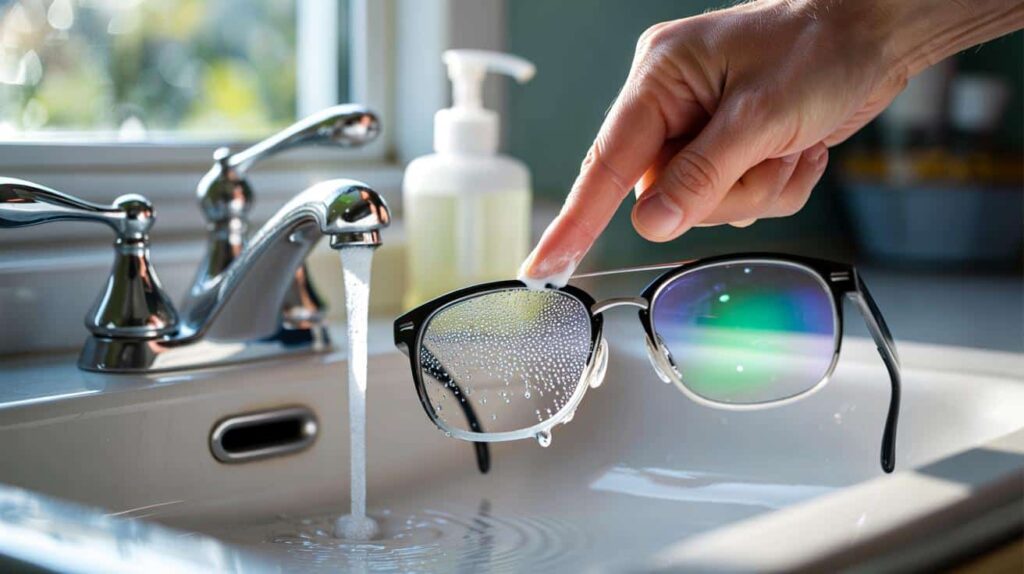
In a small sink, a bottle of basic dish soap sits next to a tray of lenses. An optician takes a pair of cloudy glasses, runs cool water over them, and gently rubs the lenses using only her fingertips. The motion is soft and deliberate, almost like smoothing icing on a cake. No wipes or microfiber cloths are involved.
She rinses the lenses thoroughly, then uses her thumb and forefinger as a tiny squeegee, moving from the bridge to the rim of the glasses in a smooth motion. One simple pass is enough. Finally, she places the frames upright on the rim of a mug to air-dry naturally. The lenses quickly return to a crystal-clear reflection. This entire process is simple, yet effective.

Why Wipes Often Fail
Disposable lens wipes promise quick cleaning, but often leave traces of fragrance, alcohol, and tiny lint particles. Microfiber cloths work well when clean, but once they collect oils or debris, they smear instead of cleaning. This issue is even more noticeable on anti-reflective coated lenses. Step outside in bright sunlight, and the streaks that seemed invisible indoors suddenly appear, forming a dull haze on the lenses.

This haze is often caused by a mixture of skin oils and residue. Instead of wiping the lenses around, it’s necessary to rinse off the oils completely. A mild soap and water solution effectively breaks the bond between oil and the lens surface, while clean fingertips help detect any grit before it can cause damage.
The Science Behind Soap and Water
The reason this method works so well lies in simple physics. Soap reduces the surface tension of water, allowing it to spread smoothly across the lens rather than forming droplets. This enables oils to release more easily, while dust particles float away. The fingertip squeegee motion also helps push remaining water towards the edges of the lens, preventing uneven drying and mineral spots.
Using lukewarm water helps protect delicate lens coatings and prevents frame warping. Rinsing the lenses first also eliminates tiny dust particles before they come in contact with the lens surface.
The Bubble Rinse and Fingertip Squeegee Method
1. Start with clean hands. Hold your glasses under a gentle stream of cool to lukewarm water to wash away dust.
2. Place a small drop of plain, fragrance-free dish soap on your wet fingertips and gently create bubbles across both sides of each lens.

3. Massage the surface using soft circular motions with the flat part of your fingers, avoiding contact with nails. Rinse again until all bubbles disappear and the lenses feel clean.
4. Pinch lightly near the bridge of the lens with your thumb and forefinger, then slide outward towards the rim. This fingertip motion works as a tiny squeegee to remove most of the water quickly.
5. Stand the glasses upright by resting the bridge on a mug rim or holding them by the temple tips. Let them air-dry naturally so that the remaining water droplets slide off.
Remember: Avoid hot water as it may damage coatings or adhesives. Skip scented soaps with moisturizers as they can leave behind residue. A simple dish soap and gentle water flow is all you need.
Building Good Habits for Clear Lenses
Clear lenses are often the result of consistent habits rather than special products. For example, always put on and remove your glasses using both hands to keep the frame properly aligned. Rinse your lenses after activities like workouts, cooking, or spending time at the beach to prevent oils and splashes from drying on the lenses.
Think of your glasses like camera lenses—handle them gently and use minimal friction when cleaning. Let water do most of the work, and save wiping for occasional touch-ups. Keeping a small bottle of dish soap near your bathroom sink makes the process easy and effortless. Over time, this routine can make dealing with smudges less frustrating.
 UK Ends Retirement at 67 Historic Shakeup Changes Pension Age and Sparks Nationwide Debate
Environmental Benefits
By using fewer disposable wipes, you help reduce plastic waste and unnecessary purchases. Adopting this simple habit of soap and water cleaning not only keeps your lenses clear but also extends the life of your frames. Small changes to your cleaning routine can go a long way in maintaining your glasses.
Key Points
| Key Point | Details | Benefit for Reader |
|---|---|---|
| Rinse First | Wash away dust before touching lenses | Reduces scratches and streaks |
| Fingertip Squeegee | Slide fingers from bridge to rim | Faster drying and fewer water spots |
| Plain Dish Soap | Use one drop without fragrance or lotion | Removes oil without residue |
| Cool or Lukewarm Water | Gentle rinse temperature | Protects coatings and frame materials |
| Air Dry Upright | Stand glasses vertically after cleaning | Prevents streaks and spotting |