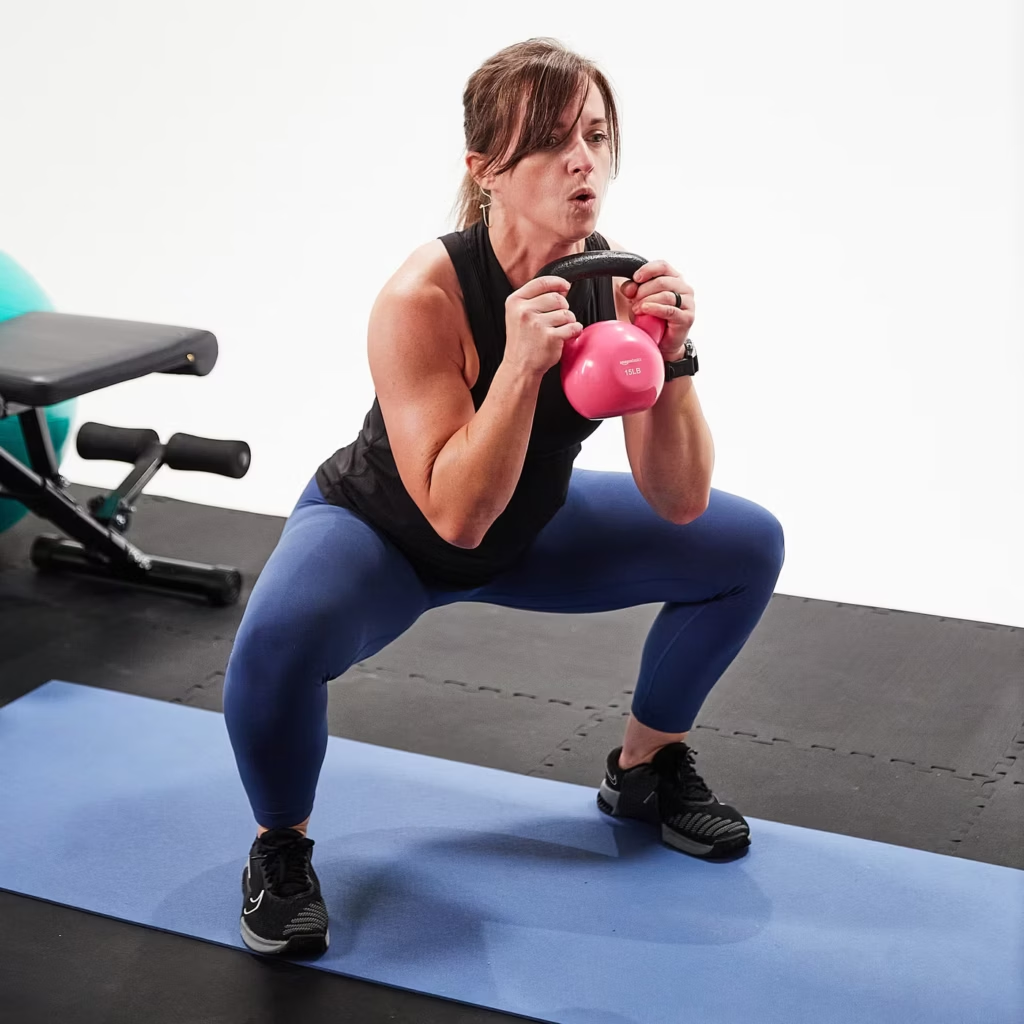
Cyclists often place a significant emphasis on time spent riding, but integrating strength training into their routine can yield remarkable improvements in speed, endurance, and overall cycling performance. By strengthening muscles and stabilizing key movement patterns, cyclists can optimize every pedal stroke for greater efficiency and power. Off-bike workouts can boost acceleration, enhance climbing ability, and increase resistance to fatigue during long rides. With targeted strength exercises, cyclists can build explosive leg power, improve pedaling efficiency, support muscle endurance, and maintain balanced body strength, directly contributing to faster cycling performance.
Building Muscle Strength for Enhanced Cycling
The primary benefit of strength training for cyclists is the ability to generate more force with each pedal stroke. Exercises such as squats, lunges, and step-ups focus on building powerful lower-body muscles that are directly responsible for cycling propulsion and stability. Strengthening these key muscle groups allows cyclists to maintain higher speeds over longer distances without feeling fatigued. Additionally, regular strength training enhances pedal stroke power, increases force production capacity, and builds climbing strength. By consistently incorporating strength workouts, cyclists can boost performance while also reducing injury risk by strengthening the joints and connective tissues.
Functional Strength Workouts That Enhance Bike Speed
Functional strength exercises mirror the movements involved in cycling, offering key benefits. Core-driven exercises like planks, deadbugs, and farmer’s carries help to improve stability and posture on the bike. A solid core provides stability for maintaining a strong and efficient posture while cycling, allowing for better energy transfer between the upper and lower body. Exercises targeting balance and coordination also enhance neuromuscular control, improving body mechanics and cycling performance. Incorporating movements that activate the glutes and hamstrings is vital for supporting hip drive power, resulting in more efficient pedaling, especially during climbs and sprints.

Explosive Strength Training for Enhanced Cycling Speed
While endurance plays a crucial role in cycling, explosive strength is key to achieving quick accelerations and maintaining race-winning bursts of speed. Plyometric exercises such as box jumps, kettlebell swings, and jump squats teach muscles to generate force quickly. This type of training activates fast-twitch muscle fibers, improving a cyclist’s ability to accelerate rapidly and maintain high cadence during intense efforts. By incorporating explosive exercises alongside traditional strength work, cyclists can enhance their ability to respond quickly during competitive situations and improve race pace intensity.

Why Strength Training Makes Cyclists Faster
The key to faster cycling lies in the relationship between strength training and efficiency. As muscles become stronger, the body requires less energy to produce the same amount of power on the bike. This enables cyclists to maintain higher speeds while conserving energy over longer distances. Strength training also enhances joint stability, supports increased power output, and improves resistance to fatigue. As a result, cyclists are able to train harder, recover more quickly, and perform better. By integrating structured strength routines into a cycling training plan, cyclists will see consistent performance gains and long-term athletic improvements.

Exercise Guide for Cyclists
| Exercise | Main Muscle Focus | Primary Benefit |
|---|---|---|
| Barbell Squats | Quadriceps and Glutes | Improves pedaling force |
| Walking Lunges | Glutes and Hamstrings | Builds leg endurance |
| Plank Holds | Core Muscles | Enhances riding stability |
| Box Jumps | Explosive Leg Muscles | Boosts acceleration |
| Farmer’s Carry | Core and Grip | Improves posture control |