Nearly a century ago, astronomer Edwin Hubble discovered that most galaxies are moving away from the Milky Way, a key observation in modern cosmology. This observation provided strong evidence that the universe is expanding, originating from the Big Bang. However, even during Hubble’s time, it was understood that not all galaxies followed this pattern. The Andromeda galaxy, our closest neighbor, is moving toward the Milky Way at approximately 100 kilometers per second—a significant anomaly.
Unraveling a Long-Standing Mystery
For the past 50 years, scientists have been trying to understand why most large galaxies near the Milky Way appear to be moving away from us, despite the gravitational pull the Local Group, which includes the Milky Way, Andromeda, and several smaller galaxies, should exert on them. The presence of gravity from this mass should cause galaxies to move towards the Local Group, but the observed behavior is the opposite.
A Huge Cosmic Sheet Surrounding the Local Group
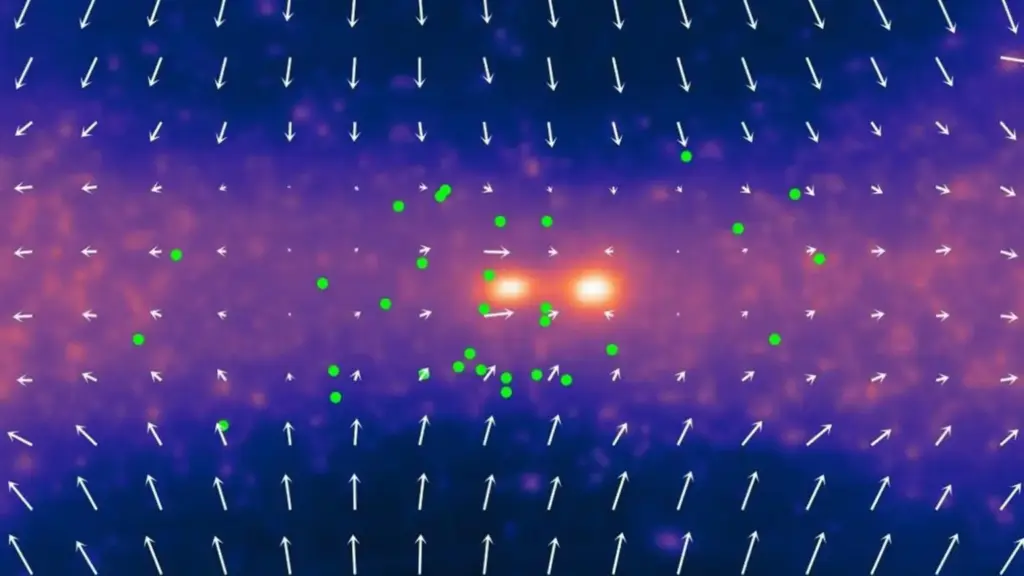
Researchers, led by PhD graduate Ewoud Wempe of the Kapteyn Institute in Groningen, believe they have found the answer. Through advanced computer simulations, the team discovered that the matter surrounding the Local Group is distributed in a vast, flat structure stretching across tens of millions of light-years. This structure is composed not only of regular matter but also of dark matter, which we cannot directly observe. The area contains vast cosmic voids above and below the flat matter plane.

The simulations showed that this arrangement of matter could accurately reflect the positions and velocities of galaxies around us. The computer model mirrored the patterns astronomers observe in the real universe, providing new insights into the movement of galaxies.

Recreating the Local Group’s Cosmic Neighborhood
To create this virtual model, the scientists used data from the early universe, including measurements of the cosmic microwave background. This data helped estimate the locations of matter just after the Big Bang. A powerful computer simulation then moved this early universe forward in time, generating a system closely resembling our current cosmic neighborhood.The model incorporated the positions and movements of the Milky Way and Andromeda, as well as 31 galaxies that do not belong to the Local Group. This “virtual twin” of our cosmic environment accurately represents the mass, locations, and velocities of galaxies both inside and outside the Local Group.
Dark Matter and Its Role in Galaxy Movements
The simulations revealed that while the Local Group’s gravity does influence the galaxies within the plane, the additional mass distributed across the plane affects their motion. The combined mass of this flat structure balances out the Local Group’s gravitational pull, explaining why galaxies in certain directions seem to move away from us, despite the gravitational forces at play.

There are few galaxies outside this plane, which is why we don’t see galaxies falling toward the Local Group from these areas. This finding highlights the significance of the mass distribution in the region around the Milky Way and Andromeda.
Solving a Cosmic Puzzle
Ewoud Wempe, the study’s lead researcher, stated that this is the first detailed attempt to map the distribution and movement of dark matter around the Milky Way and Andromeda. “We are investigating the possible configurations of the early universe to understand how the Local Group eventually formed,” he said. “It’s thrilling to have a model that aligns with both the current cosmological framework and the specific dynamics of our cosmic environment.”
 UK Ends Retirement at 67 Historic Shakeup Changes Pension Age and Sparks Nationwide Debate
Excitement from the Astronomical Community
Amina Helmi, an astronomer who also praised the study’s results, noted that the mystery of galaxy movements had remained unsolved for decades. “I’m excited that we can now pinpoint a mass distribution that explains the positions of galaxies both within and near the Local Group, based solely on how galaxies move,” she said. This breakthrough is a significant step forward in our understanding of the universe and the complex forces shaping galaxy motions.