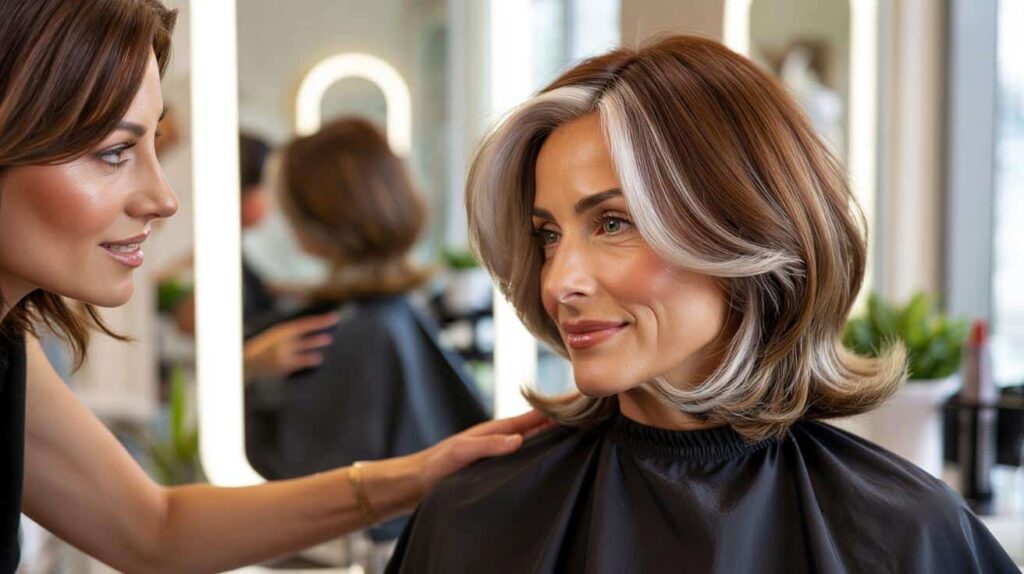
A woman entered my salon early one morning, wearing her coat half-on, looking uneasy. At 52, with a soft brown bob and silver roots gleaming under the neon lights, she sighed and shared a familiar sentiment: “I don’t recognize myself in the mirror anymore, but I don’t want to look like I’m trying too hard.” It’s a sentiment I hear daily, especially from women over 50 who are navigating changes in their appearance.
As I draped the black cape over her shoulders, we discussed how hair can reflect deeper shifts—emotional and physical—that come with aging. It’s not just about the color; it’s about how the light hits your face and how the contrast changes over time. Her color timer went off, but the real issue wasn’t the hair; it was how she felt about the reflection staring back at her.
Understanding the Shift in Contrast: Not About the Color, But the Light
When you reach your 50s, the real change is not in your hair color, but in the contrast. Before turning 50, you might have been a brunette with auburn hues or jet-black hair. As your skin softens and your eyebrows fade, these dark shades may no longer feel flattering. Instead of offering a youthful glow, they can sometimes feel harsh, like the color enters the room before you do. As I often advise women, what works at 35 may not always be the best option after 50. It’s less about covering grays and more about changing how the light interacts with your face.
The Helmet Effect: What Happens When Hair Color and Skin Tone Clash
Isabelle, one of my regulars, turned 50 last year. She had worn dark espresso brown hair for years, sticking with the same formula. One day, her hair felt like a helmet—too dark and too rigid for her now softer features. We lightened her base and added fine caramel strands that were nearly invisible. When she came back, she said, “People keep telling me I look rested,” not realizing the subtle changes made her appear more radiant without the focus being solely on her hair. When hair color transforms from ‘Who did your hair?’ to ‘You look good,’ you know you’ve found the right balance.
 Plank Duration Guide Clarified: Recommended Hold Times That Strengthen the Core by Age Group
Why Grey Hair is Your Friend: Embracing the Natural Change
Rather than treating grey hair as an enemy, I encourage women to embrace it. The best approach is to soften the color contrast. Instead of opting for full coverage, I often suggest starting with a translucent color at the roots and adding glosses and toners to the lengths. This method respects the natural changes in hair and gives it a healthy shine that is more youthful than any wrinkle cream. Leaving a few grey hairs around the temples is not a mistake—it’s a deliberate framing technique.

Summary: A Personalized Approach to Hair Care After 50
As you approach your 50s, it’s important to tailor your hair care routine to reflect who you are now, rather than who you were years ago. Your hair’s texture changes as it ages, becoming more porous and fragile, and how you care for it plays a huge role in how it looks. Hydrating masks and reducing heat styling can do more for the appearance of your hair than any color treatment. Instead of opting for harsh, opaque color changes, focus on softening the contrast and treating your grey hair with respect. The goal is to find a style that works with your natural changes and helps you look your best with minimal effort.

| Hair Change Focus | Benefit |
|---|---|
| Softening Contrast | Reduces harsh lines, gives smoother regrowth, and creates a natural look |
| Embracing Grey Hair | Fewer harsh lines, longer time between appointments, more natural appearance |
| Focus on Texture | Improves shine, softness, and youthfulness with less styling effort |
| Using Glosses and Toners | Enhances shine without changing color drastically, makes hair look healthy |