The floor feels cool on your forearms. Your toes grip the mat, your legs are engaged, and your breathing becomes steady. Your core is tight and your mind is focused. A question emerges: “How long should I hold this plank?” Ten seconds? Thirty? Two minutes that seem endless? As we get older, planks change in relation to how our bodies interact with gravity. At 18, it may feel easy, but at 48, it could become challenging, and at 68, it may require more effort. Regardless of age, your core is a crucial part of your body. It supports your spine, keeps your back safe, and allows you to move freely. Understanding your current body condition will help you determine the optimal plank duration.
How to Time a Plank Hold
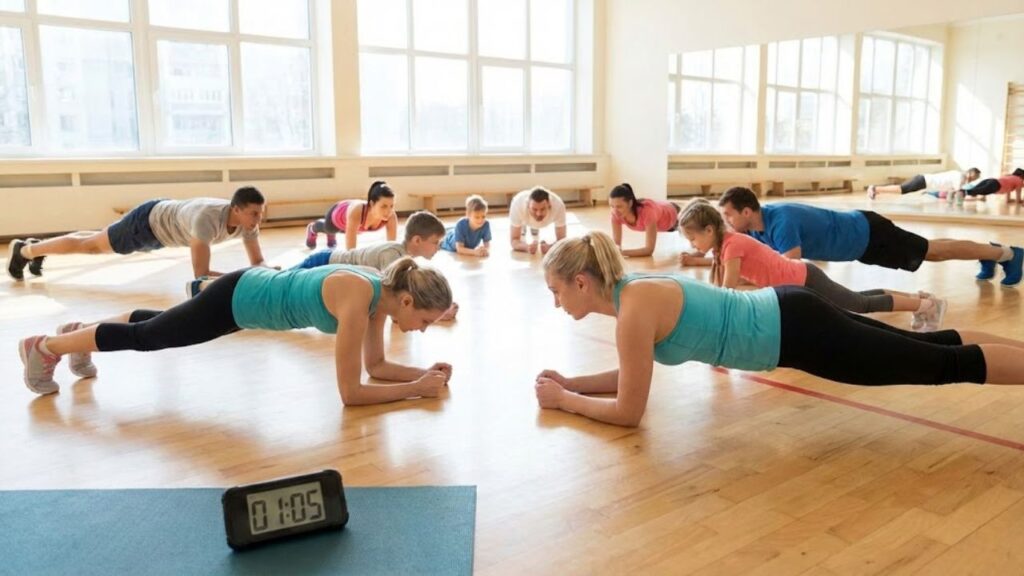
Planks are quiet. Unlike workouts with heavy weights or loud movements, your body forms a straight line, with shoulders stacked over elbows or wrists, heels reaching backward, and your head floating naturally. It looks effortless from the outside. But internally, a quiet storm begins. The transverse abdominis tightens, the multifidus stabilizes the spine, the diaphragm regulates breathing, and the pelvic floor offers support. These muscles work best when they perform their duties calmly and consistently.
Therefore, quality is more important than duration. A tense, collapsing one-minute plank is less effective and more risky than a clean, controlled twenty-second hold. Time matters, but it should end when form begins to slip, not when you push through pain.
What You Should Know About Long Planks
Fitness culture often glorifies extremes—holding a plank for two minutes, engaging in five-minute challenges, and watching viral videos of people pushing through pain. In reality, planks are quieter. After a certain point, holding a plank longer doesn’t necessarily build strength; it only increases tolerance for discomfort. Experts agree that performing shorter, precise holds is better for your core strength and spinal health than doing long, exhausting ones occasionally.

Long planks aren’t bad, but they aren’t as beneficial. The risk of fatigue and loss of balance increases with longer durations. The focus should shift from “How long can I last?” to “How well can I take care of my body right now?”
The Plank Equation, Age, and the Force of Gravity
As we age, our bodies respond differently. Wounds heal slower, tissues become stiffer, and balance becomes harder to maintain. It’s not weakness that makes planks harder as you age—it’s biology. It’s better to adjust your plank duration based on your age rather than following a strict rule.
Age-Related Plank Durations
| Age Range | Duration | Sets | Frequency |
|---|---|---|---|
| Teens (13-19) | 20-40 seconds | 2-4 sets | 2-4 days a week |
| 20s-30s | 30-60 seconds | 2-4 sets | 3-5 days a week |
| 40s | 20-45 seconds | 2-4 sets | 3-4 days a week |
| 50s | 15-40 seconds | 2-3 sets | 2-4 days a week |
| 60s-70s+ | 10-30 seconds | 2-3 sets | 2-4 days a week |
These ranges are suggestions, not hard rules. Use your time wisely and make the most of each second.
Strength in Your 20s and 30s
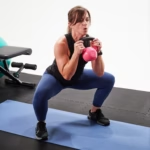
In your 20s and 30s, muscle recovery is fast, and your tissues are strong. The best plank duration is typically between 30 and 60 seconds. However, the key is paying attention to form. Small misalignments, like dropping your hips, creeping shoulders, or lower back pain, are signs that you need to focus on quality rather than quantity. Short, controlled holds are more beneficial than pushing through a long, uncomfortable one.
Strength with Awareness in Your 40s
At 40, your body starts to communicate more clearly. Old injuries, stiffness, and tightness can appear more quickly. Planks should last between 20 and 45 seconds, done multiple times. Some days, stopping early is best, while other days, a longer hold might feel appropriate. The focus shifts to supporting posture and ensuring long-term health.
In Your 50s, 60s, and Beyond: Smart Training
As you age, the definition of strength changes. Muscle mass may decrease, balance might change, and recovery takes longer. Planks are still useful, but shorter holds with good alignment are more effective. For those in their 50s and beyond, try knee or incline planks if necessary. Every well-supported second helps you maintain posture, stability, and confidence as you age.
When to Stop
Planks should be stopped when your body signals it’s no longer safe. Signs to stop include your lower back sagging, shoulders tensing, breath holding, or facial strain. Smart training means stopping as soon as you notice your form slipping. This approach supports your nervous system and ensures your muscles remain effective over time.

Conclusion
Incorporating planks into your routine at any age is a great way to build core strength and maintain spinal health. Focus on quality over quantity, adjust the duration according to your age, and listen to your body. Planking is a tool that can be used smartly at any stage of life, so start where you are and progress gradually, ensuring each hold supports your health in the long run.