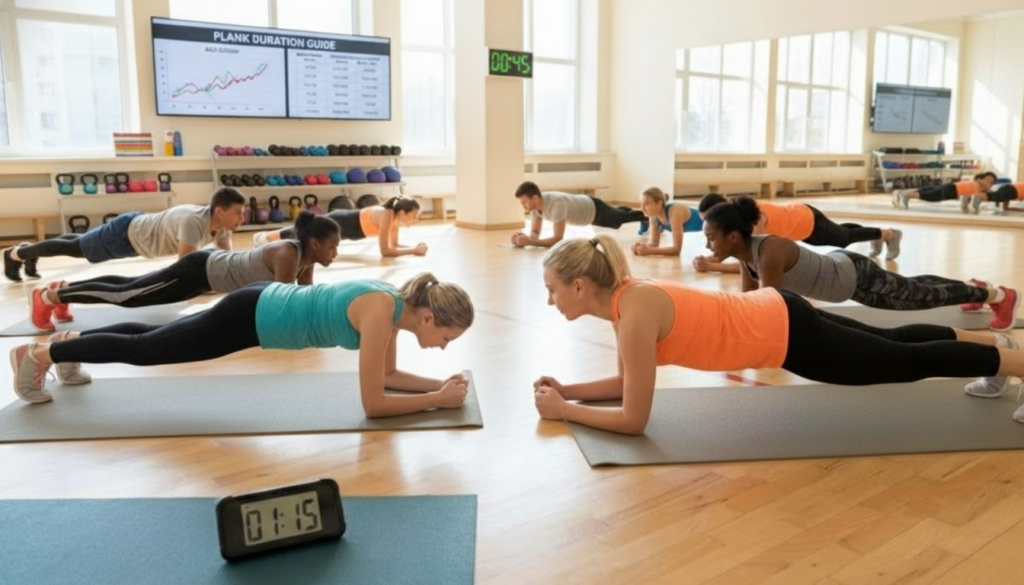
The floor feels cool on your forearms, and your toes grip the mat firmly. Your legs are engaged, and your breathing steadies. At this moment, you might wonder, “How long should I hold this plank?” With a tight core and a clear mind, you’re ready to push yourself. It might feel effortless at 18, but by the time you’re 48 or 68, things change. The plank is an essential exercise for core strength, protecting your back, spine, and overall movement. The right plank duration depends on understanding your body’s current state.
The Quiet Strength Within a Plank
Unlike loud workouts with weights or explosive movements, planks are silent but powerful. In a plank, your body forms a straight line, with your head floating naturally, and your shoulders aligned with your elbows or wrists. The muscles engage quietly beneath the surface. The transverse abdominis tightens to support the body, the multifidus protects the spine, while the pelvic floor gives stability from below. These muscles work best with consistent, calm effort over time.
Quality should always come before quantity. A tense, collapsing plank held for a minute is less beneficial and more harmful than a clean 20-second hold. It’s important to stop when your form starts slipping, not when pain hits. Focus on the technique and alignment rather than pushing for a specific time.
The Myth of the Long Plank
In the fitness world, longer holds are often celebrated. Social media is full of two-minute holds or viral challenges. However, these extreme holds are not as effective as many believe. Long planks often result in the body losing alignment due to fatigue, and while they may increase pain tolerance, they don’t necessarily build core strength. Experts agree that short, well-executed planks done regularly are far better for core stability and spinal health.
In reality, the key isn’t how long you can hold the plank, but how well you do it. Gradually increasing your plank time with correct form will help more than pushing your body to the limit.

How Age Affects Your Plank Timing
As we age, our body’s response to exercise changes. It’s common to notice increased stiffness, longer recovery times, and a challenge in maintaining balance. While planks were once easier to perform, they may now require more effort as you age. That’s biology—not weakness. It’s essential to adjust your plank timing to suit your body’s current state rather than sticking rigidly to one standard.
Here’s a general guideline for plank durations based on age:

| Age Group | Recommended Time | Frequency |
|---|---|---|
| Teens (13–19) | 20–40 seconds | 2–4 sets, 2–4 days a week |
| 20s and 30s | 30–60 seconds | 2–4 sets, 3–5 days a week |
| 40s | 20–45 seconds | 2–4 sets, 3–4 days a week |
| 50s | 15–40 seconds | 2–3 times a week |
| 60s and 70s | 10–30 seconds | 2–4 times a week |
Key Takeaways: Strength and Form Over Time
Strength doesn’t have to be about how long you can hold a plank, especially as you age. It’s about maintaining proper form and focusing on shorter, more controlled holds that help with posture and core support. In your 40s, 50s, and beyond, prioritize quality over quantity. Adjust your planks according to your body’s needs and be mindful of how your muscles are reacting. Remember, it’s not about breaking records, but about improving stability, posture, and overall well-being with consistent effort.