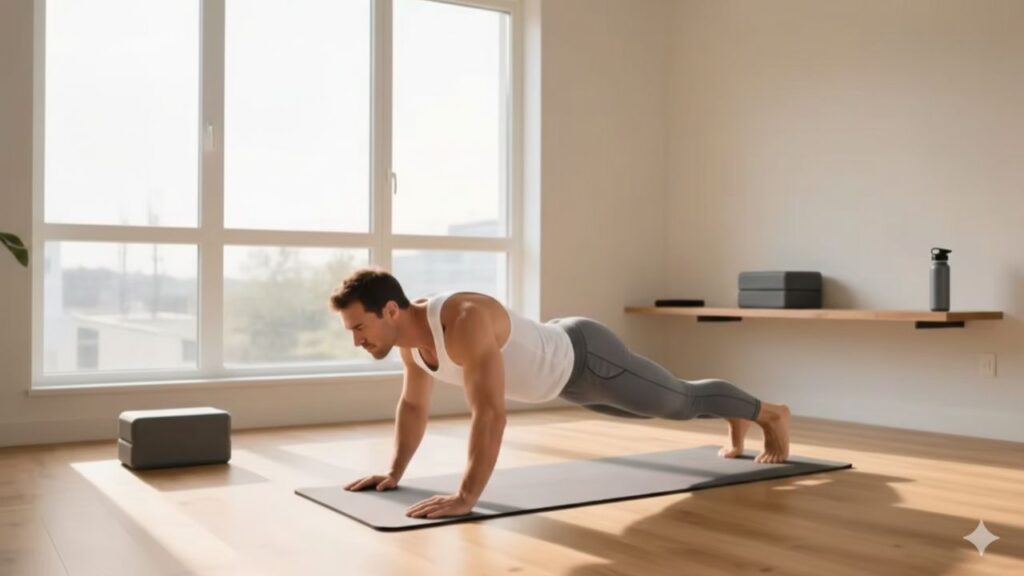
The 1-minute plank is a simple yet effective core exercise. By holding a push-up-like position on your forearms and toes for 60 seconds daily, it activates multiple muscle groups, including the transverse abdominis, rectus abdominis, obliques, glutes, shoulders, and lower back. Unlike high-intensity workouts, this exercise requires no special equipment and can be performed by people of all fitness levels. It’s about developing a strong core to support your everyday movements, rather than aiming for extreme fat loss or visible six-pack abs.
Why the 1-Minute Daily Plank is Gaining Popularity
With more people adopting micro-workouts like the 1-minute plank, busy schedules no longer mean skipping exercise. As sedentary lifestyles and increased screen time become common, individuals are seeking efficient ways to counteract poor posture and muscle deconditioning. The 1-minute plank fits perfectly into this trend, offering a quick, high-impact workout that delivers real results. It’s an appealing option for those who need to integrate movement into their daily routine without the need for long gym sessions.
Key Benefits of the 1-Minute Daily Plank
The 1-minute plank offers several notable benefits. It’s a low-barrier exercise that requires no equipment or gym membership, and it’s simple to learn with minimal effort. One of its greatest advantages is the immediate feedback you receive from engaging your muscles right away. Additionally, holding the plank for just 60 seconds a day is an achievable goal that promotes consistency and habit formation. By adding this exercise into your daily routine, you can build core strength, improve posture, and boost overall body awareness.
Plank Variations to Suit Your Needs
There are several plank variations, each designed to target different needs. Here’s a quick breakdown:

- Forearm Plank: Great for core endurance and shoulder stability, but it can strain the wrists if the form breaks down.
- Knee Plank: A good choice for beginners or those with joint sensitivity, though it offers reduced core activation.
- High Plank: Engages the upper body more, but places more strain on the wrists.
- Side Plank: Focuses on the obliques and lateral stability, though it can be more difficult to balance and harder to time.
When to Focus on Your Form
To ensure the 1-minute plank is effective, maintaining proper form is key. During each plank, check if your body remains in a straight line from head to heels and if your core, glutes, and shoulders are activated. If you can hold the position for the full 60 seconds without discomfort in your joints, it’s a sign your form is correct. While visible changes like tighter abs may take longer, functional improvements like standing taller and moving with greater ease can show up much sooner.
Pros and Cons of the 1-Minute Plank
As with any exercise, the 1-minute plank has both pros and cons:

- Pros: Improves core strength, enhances posture, requires no equipment, builds mental resilience, and can be done anytime.
- Cons: Limited calorie burn, no cardiovascular benefit, risk of strain if form is incorrect, and insufficient for full-body fitness.
How to Choose Your Plank Routine
To make the 1-minute plank a sustainable habit, start by assessing your readiness. If you can hold a modified plank for 30 seconds without pain, gradually increase your duration. Set aside a specific time each day to do your plank—whether in the morning to set the tone or in the evening to relieve tension. Focus on maintaining good form, ensuring your elbows are under your shoulders, and your body remains straight. Progress gradually by adding 10 seconds each week until you reach 60 seconds.
How the 1-Minute Plank Stacks Up Against Other Time-Efficient Exercises
When compared to other quick exercises, the 1-minute plank shines in terms of core stability and posture improvement. Here’s a quick comparison:
| Practice | Strengths | Limits |
|---|---|---|
| 1-Minute Daily Plank | Core stability, posture, discipline | Limited metabolic demand |
| Daily 5-Minute Stretch | Flexibility, joint health, relaxation | Minimal strength gain |
| 10 Squats Every Hour | Leg strength, circulation | Harder to remember |
| 2-Minute Wall Sit | Quad endurance, mental grit | High discomfort, low carryover |
Customer Feedback
Many users have reported positive results from incorporating the 1-minute plank into their routines:

- Positive Feedback: “I stand straighter now—I catch myself slouching less at my desk.” “My lower back feels supported during daily tasks.”
- Common Complaints: “My wrists hurt after a few days—I switched to fists or forearms.” “I forgot most days—habit tracking helped.”
Conclusion: Who Should Try It and Why
The 1-minute daily plank is perfect for anyone looking to improve posture, build core strength, and integrate movement into a busy life. It won’t replace full-body workouts but can provide a strong foundation for further progress. Start with 30 seconds, focus on your form, and gradually increase the time. Consistency, paired with other forms of movement, will help you achieve the best results.