Cycling often puts the body in a forward-leaning position. While this posture helps riders move faster because it improves aerodynamics, staying hunched over the handlebars for long periods can create some problems. When the shoulders round forward and the upper back collapses, extra pressure is placed on the spine while the core, chest, and upper-back muscles gradually weaken. Many people already spend hours leaning over phones or laptops during the day, so adding long bike rides in the same posture can increase stiffness and poor alignment.
The good news is that a few targeted strength exercises can help counter these effects. Building stronger core and back muscles can improve posture and make cycling more comfortable. Strength and conditioning specialist Noam Tamir designed a simple six-exercise routine focused on improving stability, posture, and overall strength for cyclists.
How to Perform This Workout
The routine is divided into two separate circuits. Perform three rounds of each circuit before moving on to the next one. Each exercise has a specific number of repetitions or hold time.

Circuit 1:

- Deadbug
- Glute Bridge
- Bird Dog
Circuit 2:
- Half-Kneeling Anti-Rotation Isometric Hold
- Forearm Plank
- Farmer’s Carry
Forearm Plank
How to do it: Begin on your hands and knees. Place your forearms on the floor with palms facing down and elbows directly under your shoulders. Tighten your core and step both feet back until your body forms a plank. Your hips should stay aligned with your shoulders, creating a straight line from your heels to your head. Hold this position for 30 seconds.
Why it helps: This movement strengthens the core while preventing excessive arching in the lower back. It also improves spinal stability and overall posture.
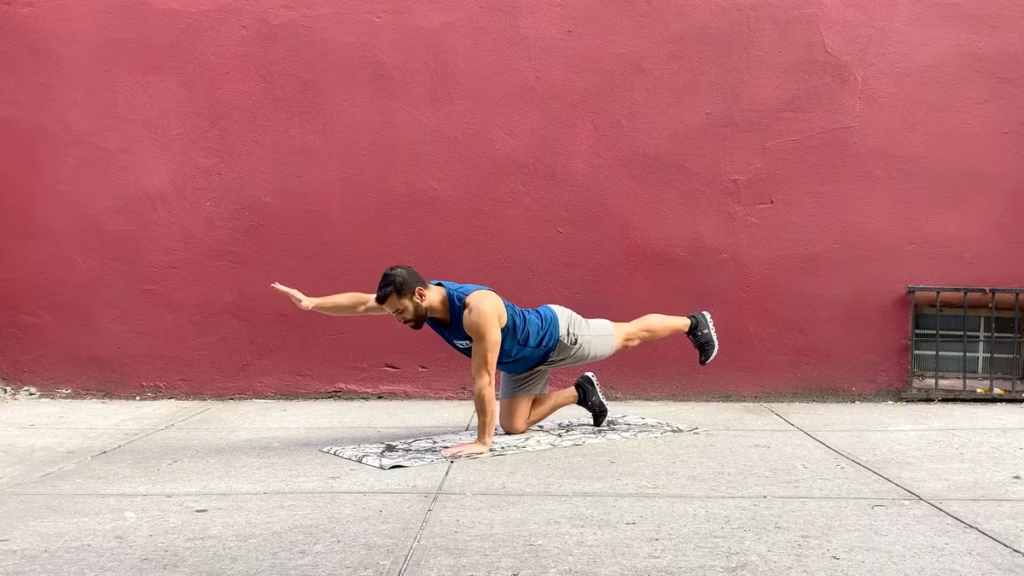
Bird Dog
How to do it: Start on all fours with knees under hips and wrists under shoulders. Keep your back flat and your hips steady. Extend your left arm forward while stretching your right leg straight behind you. Bring your left elbow and right knee toward each other beneath your body, then extend again. Alternate sides and complete 20 repetitions total.
Why it helps: This anti-rotation exercise trains each side of the body independently, helping correct natural muscle imbalances and improving coordination.
 Viral climate map identifies regions considered most suitable for long-term human survival worldwide
Deadbug
How to do it: Lie on your back with arms reaching toward the ceiling. Bend your knees at 90 degrees while keeping your shoulders relaxed on the floor. Tighten your core and slowly lower your left arm and right leg toward the ground. Return to the starting position and repeat with the opposite arm and leg. Perform 20 alternating repetitions.
Why it helps: This movement targets the deep core muscles, particularly the transverse abdominals, which support stability and improve overall performance.
Glute Bridge
How to do it: Lie on your back with knees bent and feet flat on the floor. Press through your heels and squeeze your glutes to lift your hips toward the ceiling. Your body should form a straight line from shoulders to knees. Lower your hips slowly and repeat for 15 repetitions.
Why it helps: Strengthening the glutes helps maintain proper pelvic alignment and supports better posture during both cycling and daily activities.
Half-Kneeling Anti-Rotation Isometric Hold
How to do it: Start in a half-kneeling position with your left foot forward and your right knee on the floor beside a resistance band or cable anchor. Turn slightly toward the anchor, hold the band with both hands, then rotate your torso away until the band reaches the center of your chest. Extend your arms straight forward and hold for 30 seconds before returning them to your chest. Repeat on the opposite side.
Why it helps: The resistance from the band challenges your body to resist rotation, activating the obliques, glutes, and shoulders for better stability.
 UK clocks changing earlier in 2026 may reshape evening daylight patterns for millions of households
Farmer’s Carry
How to do it: Stand with feet hip-width apart holding a kettlebell or dumbbell in each hand by your sides. Keep your chest lifted, shoulders relaxed, and back straight as you walk forward. Maintain balanced posture without leaning to either side. Walk for about 45 seconds before stopping.