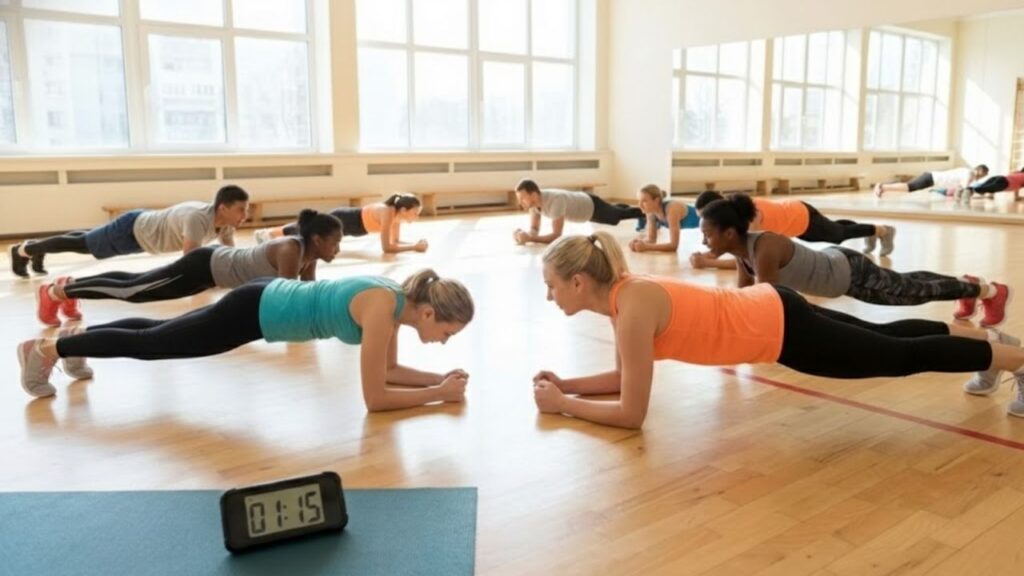
Your arms feel cool on the floor. Your toes dig into the mat, and your legs work hard. Your breathing gets back to normal. You feel tense in your stomach and focused in your mind, and a question comes to mind: “How long should I stay in this position?” Is it ten seconds? 30 seconds? Two minutes that seem like they will never end? People think that planks are an easy exercise that works for everyone, but they are actually a way for your body to deal with gravity that changes as you get older. Something that seems easy and strong at 18 can be a different kind of challenge at 48 or needs more care at 68. The core of your body is always the most important part. The hidden structure supports your spine, keeps your back safe, and lets you move around easily. So, how long should you hold a plank to get the best results for your core without pushing yourself too hard or letting your pride get in the way? To answer that, you need to know exactly how your body is right now.
What does Plank Hold Timing mean?
Most workouts are loud, with feet pounding on treadmills, iron plates crashing together, and sharp exhales filling the room. Planks are not the same. They sneak in You put your body in a long line, with your shoulders stacked on top of your elbows or wrists, your heels reaching back and your head floating easily between them. Nothing seems to be moving. It doesn’t seem like it takes much work from the outside.
But inside, a storm is brewing. The transverse abdominis tightens your middle like a supportive belt, the multifidus gently protects your spine, the diaphragm connects your breath to your effort, and the pelvic floor gives you steady support from below. These muscles don’t want any drama or stress. They work best when you do calm precise work over and over again.

That’s why how well and how often are much more important than “how long.” A tense, collapsing plank for one minute is less helpful and more dangerous than a clean twenty second hold where you feel strong, aligned, and calm. Time is still important, but it should match the moment your form starts to fade, not go beyond it.

The Myth of the 2-Minute Plank
For a long time, the fitness world has praised extremes. Planks for two minutes. Tests that last five minutes. People shaking and holding on with their willpower in viral videos. At some point, longer and better became the same thing.
The less flashy truth is that after a certain point, adding to a plank makes it more tolerant of pain than it makes it stronger. Research and experienced coaches tend to agree that short high quality holds done several times are better for core strength and spinal health than long, hard workouts done once in a while.
This doesn’t mean that long planks are bad for you. This means that the return on investment goes down and the chance of getting out of queue because of tiredness goes up. The question changes from How long can I live?” to “How well can I take care of my body right now?” over time.
The Plank Equation, Age, and the Force of Gravity
The body’s maths changes over the years. The process of getting better slows down a bit. Tissues are less forgiving. You need to pay more attention to balance and coordination. It may now feel like a chore to do a plank that used to be easy, but that’s not a problem; it’s just how biology works.
It’s better to think in flexible ranges than to stick to one strict rule. The point is to hold on to the moment just before your form starts to fall apart. These are some simple realistic rules for healthy adults who don’t have any major injuries or health issues.
| Age Range for Suggested Plank Hold Time | Suggested Time to Hold (per set) | How often sets happen each week |
|---|---|---|
| Teens (ages 13 to 19) | 20 to 40 seconds | 2 to 4 times a week |
| 20s to 30s | 30 to 60 seconds | 2 to 4 times a week |
| 40s | 20 to 45 seconds | 2 to 4 times a week |
| 50s | 15–40 seconds | 2–3 times a week |
| 60s to 70s and older | 10–30 seconds | 2–4 days a week |
These are not judgements; they are signs to follow. It’s fine if you fall above or below them. The most important thing is how good each second you choose to keep is.
In your 20s and 30s, you could do anything.
When you’re in your 20s and 30s, your body often feels generous. Tissues heal quickly, and it’s easy to get stronger. A lot of people try to hold a plank for longer periods of time at this time. Thirty to sixty seconds is a great working range if you have good form.
 The Ordinary New Serum Nicknamed Filler in a Bottle Gave My Skin a Youthful Look in My 40s
It’s not being weak that puts you in danger; it’s not paying attention to small problems. Hips dip a little. Slowly move your shoulders up. The lower back sends out warnings that no one pays attention to. If you’re in this age group, you might want to split your effort. A few shorter high quality holds may be more helpful than one long, hard try.
Strong but aware in your 40s
By the time you turn 40, your body starts to give you clearer feedback. Injuries from the past talk. Stiffness happens more quickly. There is still a lot of strength there, but it needs to be respected.
A lot of people now think that the best plank range is between twenty and forty-five seconds, done a few times. Some days you’ll feel better for longer, and other days you’ll think it’s better to stop sooner. The goal is to keep things going for years to come, like your spine, posture, and daily movement.
Your 50s, 60s, and Beyond: Strong, Not Careless
In the future, we will need to change what strength means. Muscle mass may slowly go down, balance may change, and recovery may take longer, but adaptation is still possible. Planks are still useful, even if they look different.
Short holds of ten to thirty seconds with good alignment can be very helpful. Knee planks and incline planks are examples of modified versions that are not compromises; they are smart changes Every well-supported second helps you keep your posture, balance, and confidence in your movements.
When to Stop
Your body always lets you know when a plank has gone from being helpful to being harmful. Some common signs are lower back pain or sagging, shoulders tightening toward the ears, holding your breath, or facial tension taking over. You should stop as soon as you see these.
It’s not giving up to stop when you first notice form loss; it’s smart training This method teaches your nervous system how to work better over time instead of breaking down.

Getting Used to Planks
Planks don’t need to be big. You can fit them into your daily routine: a short hold before coffee, another after work, and one more before bed. These small things add up over time to make a big difference.