The first thing I notice when she settles into the salon chair isn’t the grey strands. It’s the quiet gesture of her hand reaching for the crown of her head, gently pressing it as if trying to hold on to the fullness that used to be there. She jokes about it — “My hair seems to have gone on a diet since I turned 50” — but her eyes stay locked on the mirror. The ends appear lifeless, the part looks wider than before, and the familiar layered bob she once relied on no longer creates the shape it used to.
The Short Haircut That Revives Fine Hair After 50
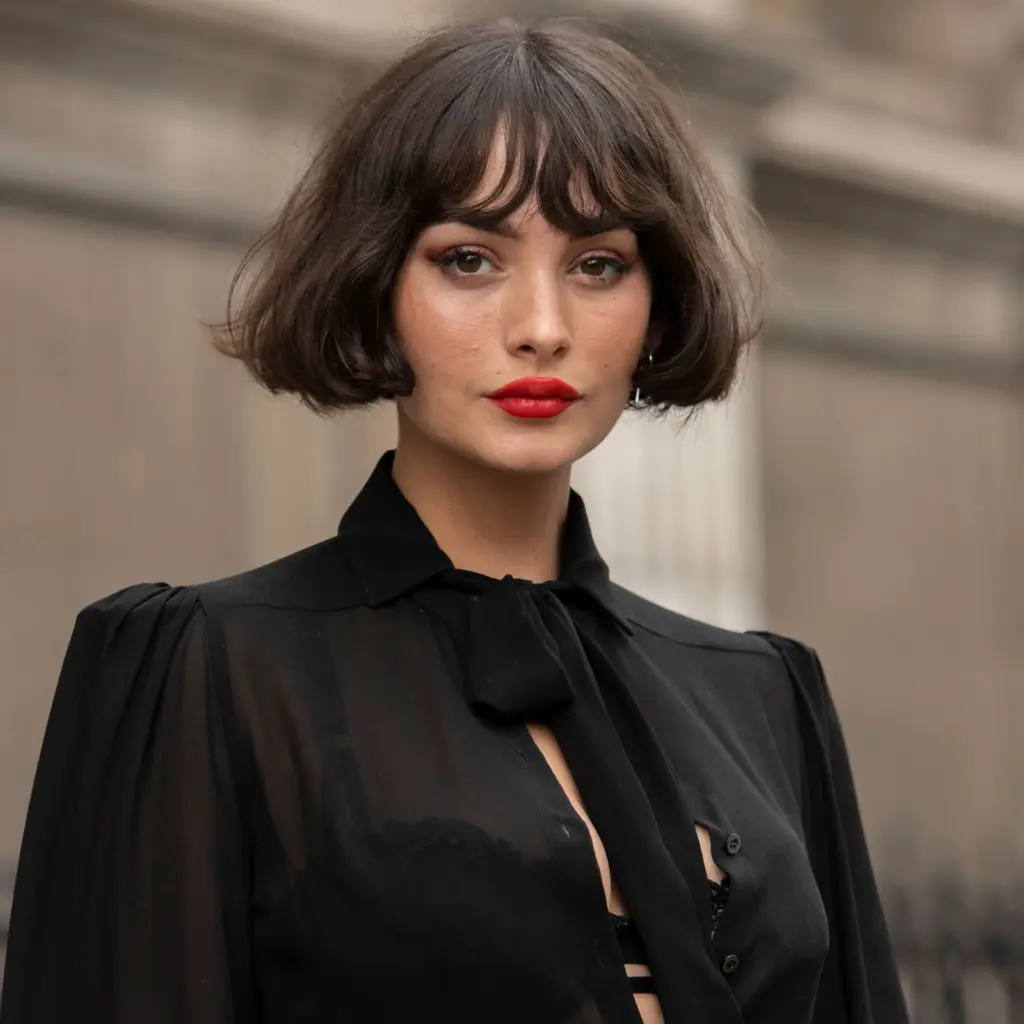
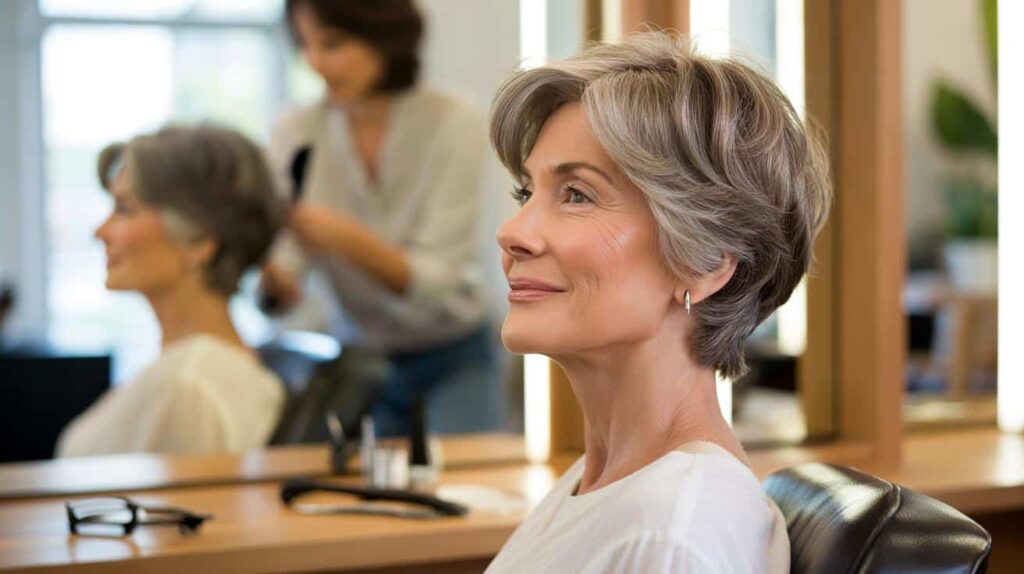
When women over 50 come in with fine or thinning hair, I often suggest a similar transformation: a soft pixie-bob with subtle layers, shaped close at the nape while adding gentle lift through the crown. Imagine the balance between a pixie and a classic bob — shorter and tidy at the back, slightly longer toward the front, and designed with airy layers that encourage movement rather than frizz.
It may sound simple on paper, but on real hair it can completely transform how it behaves. The goal is not to make the face look younger — it’s to make the hair look alive again.

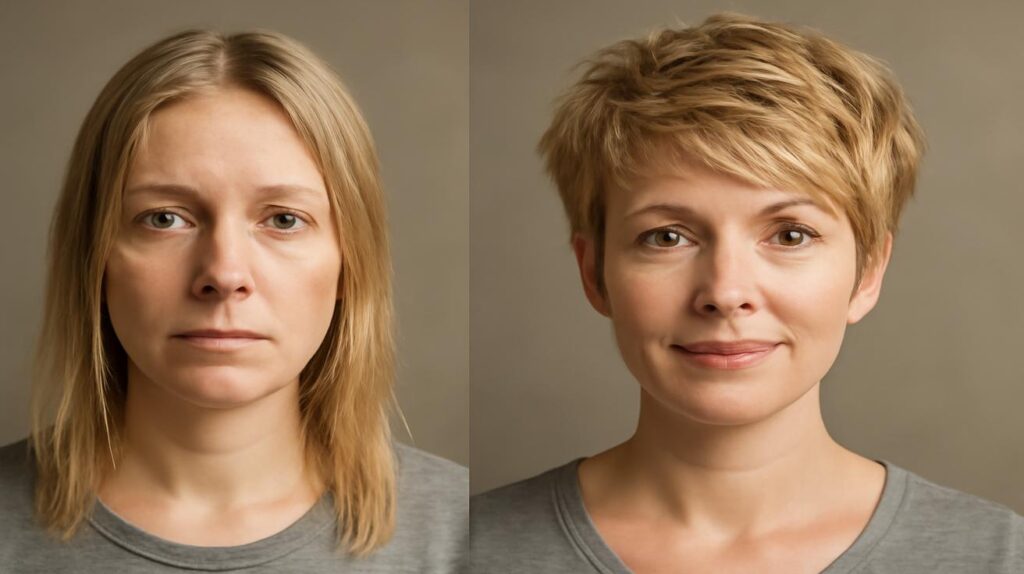
I remember a client named Claire, 57, who arrived with shoulder-length hair she had kept almost unchanged for decades. It technically had length, but the strands clung flat to her scalp and the ends appeared thin and tired. She kept repeating the same thing: “I don’t want it short. I just want it to have some volume again.”

So we talked first. Instead of focusing on length, I asked what bothered her the most when she looked at herself. Her answer wasn’t about losing hair length — it was about the lack of lift at the crown and the overall tired look of the style.
That’s when I recommended the pixie-bob: a neat exposed nape, soft edges around the ears, a gentle side-swept fringe, and subtle layers placed strategically at the crown. Less than an hour later, she looked at her reflection and smiled, saying simply, “My hair finally feels like mine again.”
Fine hair often changes after 50 because hormonal shifts alter the thickness of each strand. Even if the total number of hairs stays similar, they become finer and lie flatter. Long styles add weight that pulls hair downward, revealing more scalp and removing natural bounce.
A pixie-bob works differently. By removing weight from the back and exposing the neck, the hair can naturally lift upward. The gentle internal layers at the crown act like a hidden support system, helping the hair stand up softly without obvious choppy sections.
How To Ask For The Right Pixie-Bob For Fine Hair
Whenever someone asks for this haircut, I never rush straight to the scissors. I begin by observing small details: the curve of the neckline, whether the client regularly wears glasses, and where the jawline naturally falls. These factors help determine how tight the nape should be and how softly the hair should frame the face.
For fine hair, the ideal structure is usually shorter at the back than most people expect and slightly longer at the crown than they imagine. That extra length at the top gives the hair space to move and create volume naturally.
Instead of heavy layering, I rely on point-cutting and subtle texturizing at the ends. This allows the hair to stack softly while keeping the overall shape full. A side-swept fringe often works better than a straight blunt fringe, because it avoids highlighting a thinning hairline.
One of the most common mistakes is holding onto the last few inches of length for comfort. The front stays too long, the sides cover the jawline, and the nape remains undefined. From the front it feels safe, but from the back it drags the entire style down.
Another frequent request is “lots of layers for volume.” Unfortunately, too many layers can make fine hair appear even thinner. Soft internal layers — almost invisible — provide lift while preserving density.
And realistically, most people do not have time for a complicated styling routine every morning. The right haircut should still look good with a quick blow-dry and minimal effort.
The Simple Routine That Keeps This Cut Looking Good
A well-designed pixie-bob works best when supported by a simple routine. I usually guide clients through three essential habits that help maintain the shape and volume of the cut.
- The cut structure – A softly stacked nape with gentle crown lift and slightly longer front sections keeps the face open and balanced.
- The styling approach – Apply a light volumizing mousse only at the roots, blow-dry with the head tilted forward, and finish with fingers rather than a comb to maintain natural lift.
- The maintenance schedule – A quick trim every six to eight weeks keeps the neckline tidy and refreshes the crown layers.
With the right shape and a simple routine, fine hair can suddenly look purposeful rather than difficult.
Why This Short Style Often Feels Like A New Beginning
One of the most interesting things I notice after this haircut is the shift in body language. Clients relax. Their shoulders drop, and they stop touching the ends of their hair nervously. Often their posture changes — the head lifts slightly, as if lighter hair has quietly encouraged them to stand taller.
Cutting hair shorter after years of longer styles can feel intimidating at first. Yet many women quickly realize it offers more freedom: less time styling, less frustration with flat roots, and more opportunity to experiment with glasses, earrings, and makeup.
Instead of hiding behind tired lengths, the hair becomes a frame that highlights the face again. And sometimes that small change carries into other parts of life — how someone dresses, how confidently they enter a room, and how they feel when they catch their reflection unexpectedly.

Quick Overview Of The Pixie-Bob For Fine Hair
| Key Point | Description | Benefit For Readers |
|---|---|---|
| Ideal haircut: soft pixie-bob | Short stacked nape with gentle crown lift and slightly longer front | Creates natural-looking volume while respecting fine hair texture |
| Subtle internal layers | Soft layering inside the cut rather than heavy choppy layers | Makes hair appear fuller and healthier |
| Simple daily styling | Light root product, quick upside-down blow-dry, finish with fingers | Maintains lift and shape with minimal effort |