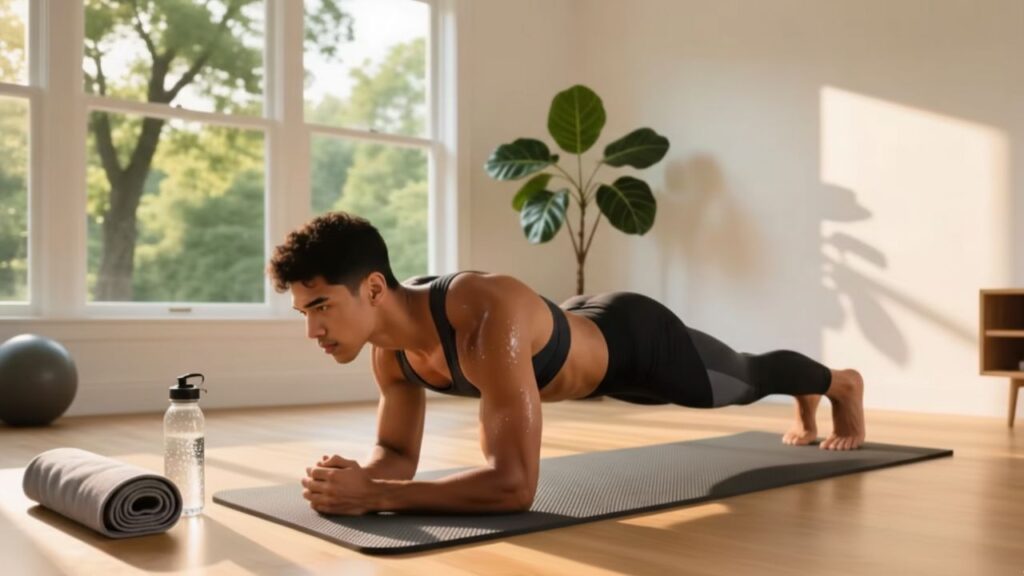
Minimalist fitness routines have become more popular over the past year, and the 1-minute daily plank has become a quick and easy way to build core strength. This exercise is great for most people and doesn’t require too much thought. Doing a plank for one minute every day can help you strengthen your deep abdominal muscles, improve your posture, ease strain on your lower back, and make you more stable overall. Even though it won’t give you a six-pack, it’s a habit that has a big impact on your long-term health.
When Should You Care About the 1-Minute Plank?
The 1-minute plank can help if you sit for long periods of time or get tired during the day. If you want to lose fat quickly or build muscle quickly, though, the plank alone won’t be enough because it’s not mainly about burning fat or building muscle.
Head-to-Heels Alignment: The Right Way
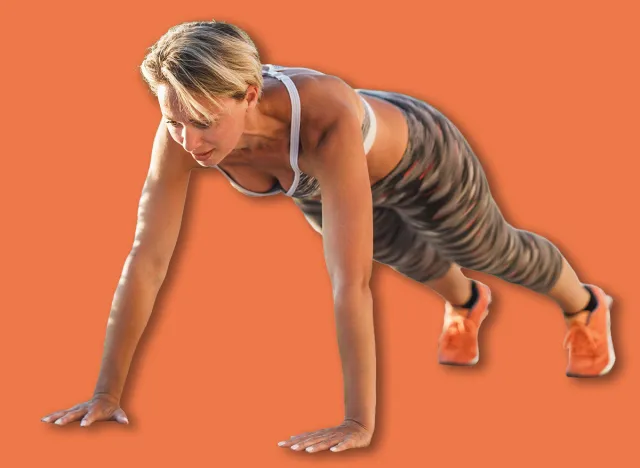
Keep your body in a straight line from head to heels to do the plank right. This form is very important for getting the most out of the exercise without hurting yourself.

The 1-Minute Daily Plank
Holding a forearm plank position for 60 seconds every day is the only thing you need to do for the 1-minute daily plank. The plank is an isometric exercise, which means it requires your muscles to stay engaged without moving. This is different from dynamic exercises like crunches. This works the transversus abdominis, which is the deepest layer of the core and helps keep the spine stable.

Desk workers, people who are just starting to get fit, and people who are moving from a sedentary lifestyle are all common users. The exercise doesn’t need any equipment, is easy to fit into busy schedules, and is a challenge for both your body and mind. You could think of it as “core hygiene,” like brushing your teeth to keep your structure healthy.
The 1-Minute Plank Is Getting More Popular
Micro-workouts, which are small, sustainable exercises that can fit into a busy schedule, have become more popular in recent years. The plank is a way to deal with the pain that comes from sitting for a long time. It puts more emphasis on stability than size, which is a popular trend in functional fitness right now. It has also gotten more attention because of social media challenges like “plank every day for 30 days.” But the plank is based on biomechanics, which makes it a useful and easy-to-do exercise for many people.
Muscles Used During the Plank
The plank works out more than just your abs. It works the shoulders, glutes, and legs, which makes the whole body tense and stronger and more stable.

Different Types of Planks and What They Do
| Type of Plank | Best for | Possible Problems |
|---|---|---|
| Plank for the Forearm | Beginners, core endurance, and joint safety | Wrist pain if form breaks down |
| Plank on hands | Shoulder strength and the switch to push-ups | More weight on the wrist; harder to keep it in line |
| Side Plank | Development of the oblique, stability on the side | Hip sagging is a risk, and it’s not as easy for beginners to understand. |
| Plank with Leg Lift | This works your glutes and tests your balance. | May throw off the alignment of the spine if rushed |
Important Things to Keep Track of When You Do Planks
To make sure your plank routine works, pay attention to these measurable things:
- Form Quality: Keep your body straight from head to heels. Look in a mirror or record yourself.
- Duration Progression: Start with 20 to 30 seconds, then work your way up to 60 seconds before slowly increasing the time.
- Muscle Engagement: Use your abs, quads, and glutes, but not your wrists or lower back.
- Breathing Control: To keep your neuromuscular system working well, make sure your breathing is steady.
- Consistency: It’s better to do it every day for one minute than once a week for five minutes.
The Good and Bad Things About the 1-Minute Daily Plank
Good things
- Deep Core Strength works on stabilising muscles that are often missed in regular workouts.
- Better posture: Helps with shoulder retraction and pelvic alignment.
- Less strain on the back: A stronger core means less strain on the back and more support for the spine.
- Holding the plank makes you more mentally strong by improving your focus and discipline.
- Efficient: It only takes a minute a day, so it’s easy to fit into any schedule.
Disadvantages
- Not Enough Calorie Burn: The plank won’t help you lose fat like cardio does.
- Risk of Plateau: Progress may slow down after a few weeks unless you make the workout harder or longer.
- Joint Pain: Bad form can put stress on your wrists or shoulders.
- Not a Weight-Loss Tool: To see your abs, you need to lose body fat, which you can do by eating right and working out your whole body.
How to Make a Plank Routine That Lasts
To make a habit of doing a 1-minute plank every day, do these things:
- Start by getting set up right: put your elbows under your shoulders, your feet hip-width apart, and your body straight.
- Get the Important Muscles to Work: Tighten your glutes, brace your abs, and push your forearms down.
- Keep the beat: Breathe in through your nose and out slowly.
- Gradually Increase the Time: Start with 20–30 seconds and add 5–10 seconds each week.
- Add Variations After 4 Weeks: To keep things interesting, add side planks or leg lifts.
Things You Shouldn’t Do
- If your hips are sagging or rising, keep a straight line from your head to your heels.
- Don’t hold your breath while doing the plank.
- Overextending Neck: Keep your gaze on the floor to prevent neck strain.
- Pushing Through Pain: Discomfort is normal, but stop immediately if you experience sharp pain.
Cost Analysis
The 1-minute plank is completely free. Unlike gym memberships or equipment, it requires no financial investment but provides significant returns in functional strength. With only 7 minutes per week of commitment, it’s a low-cost, high-reward habit.
Better Alternatives and Competitor Analysis
| Solution | Advantages | Limitations |
|---|---|---|
| 1-Minute Daily Plank | No cost, easy to start, builds endurance | Plateaus quickly; limited strength gain |
| Progressive Plank Program (2–5 min/day) | Better strength gains, scalable | Requires more time and consistency |
| Full Core Circuit (planks + dead bugs + bird-dogs) | Comprehensive development, prevents imbalances | Takes 10–15 mins; steeper learning curve |
| Resistance Training (squats, deadlifts) | Functional strength, hormonal benefits | Needs equipment and instruction |
Customer Feedback
Feedback from users has been mostly positive, with many praising the benefits of a stronger back, improved posture, and increased body awareness. However, complaints often center around wrist discomfort and boredom after a few weeks. The most significant drop-off happens between weeks 3 and 6 when results start to plateau.
 Goodbye Hair Dye for Grey Hair: What to Add to Your Conditioner for Natural Colour Revival
How to Do a 1-Minute Plank Every Day Guide
- Warm up lightly before planking with arm circles or cat-cow stretches.
- If you’re on a hard floor, use a mat or towel under your elbows.
- If wrist pain occurs, switch to knee planks.
- Stop if you feel sharp pain.
Conclusion
If you’re looking for a simple, science-backed way to enhance core stability, improve posture, and build resilience, the 1-minute plank is an excellent choice. It won’t replace full-body training but offers substantial benefits with minimal time commitment. Focus on proper form, maintain consistency, and add variety when you’re ready to progress.