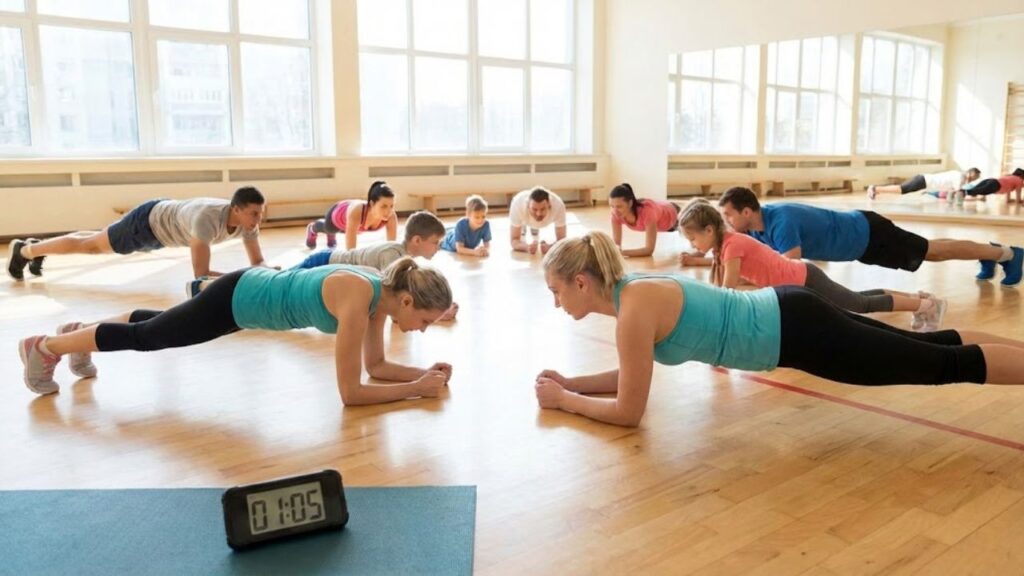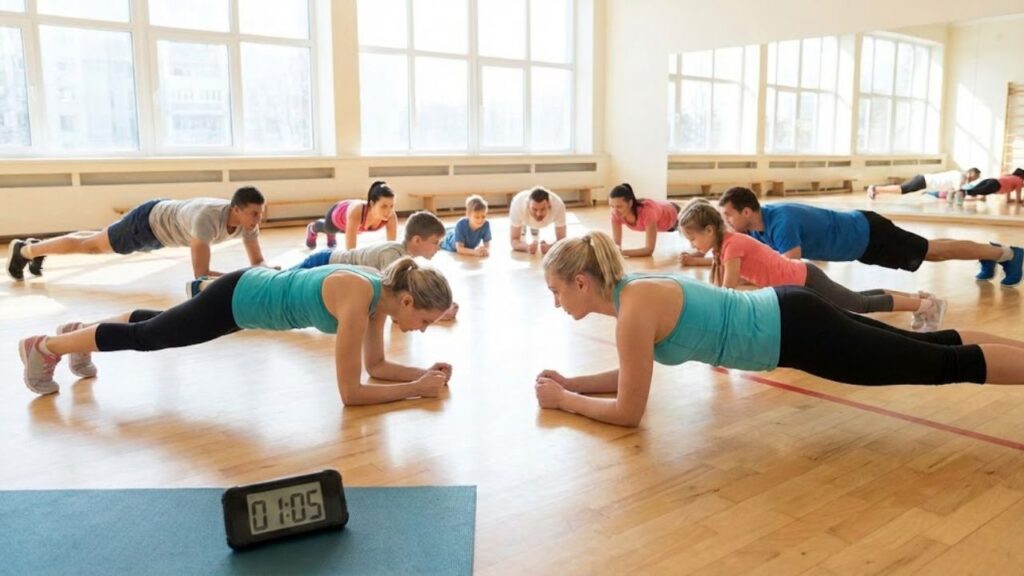
The floor feels cool beneath your forearms. Your toes press into the mat and your legs engage. Breathing finds a steady rhythm. Between the tension in your core and the focus in your mind, a question arises: “How long should I hold this plank?” Ten seconds? Thirty seconds? Or two minutes that stretch endlessly? Many treat planks as a basic exercise that works the same for everyone, but they are truly an interaction between your body and gravity, evolving throughout your life. What feels easy and strong at 18 may feel different at 48 or demand more care at 68. At any age, your core is your foundation, supporting your spine, protecting your back, and allowing fluid movement. So how long should you hold a plank to maximize results without strain, pain, or ego? The answer depends on understanding your body as it is right now.
The Quiet Storm in Your Core
Unlike noisy workouts, planks arrive quietly. You align your body: shoulders over elbows or wrists, heels back, head floating naturally. From the outside, it seems effortless.
Inside, a quiet storm awakens. The transverse abdominis cinches your midsection like a belt, multifidus stabilizes the spine, the diaphragm links breath to effort, and the pelvic floor supports from below. These muscles thrive on calm, precise effort repeated consistently.

Quality outweighs duration. A tense one-minute plank does less than a clean twenty-second hold with proper form. Time still matters, but it should stop as soon as form begins to fade.

The Myth of the 2-Minute Plank
Fitness culture often glorifies extremes: two-minute planks, five-minute challenges, viral clips of shaking bodies holding on. Longer does not always mean better.
Extending a plank beyond a certain point increases tolerance for discomfort more than strength. Research shows short, high-quality holds, performed multiple times, deliver greater core and spinal benefits than occasional marathon attempts.
Long planks aren’t harmful per se, but the return on investment drops while fatigue-related misalignment rises. Over time, the question shifts from “How long can I survive?” to “How well can I support my body?”
Age, Gravity, and the Plank Equation
As we age, recovery slows, tissues stiffen, and balance demands more focus. Planks feel more intentional—not weaker, just reflecting biology.
Flexible ranges are better than rigid rules. Match hold time to the moment your form begins to falter. Suggested guidelines for healthy adults:

| Age Range | Suggested Hold Time (per set) | Sets | Weekly Frequency |
|---|---|---|---|
| Teens (13–19) | 20–40 seconds | 2–4 | 2–4 days/week |
| 20s–30s | 30–60 seconds | 2–4 | 3–5 days/week |
| 40s | 20–45 seconds | 2–4 | 3–4 days/week |
| 50s | 15–40 seconds | 2–3 | 2–4 days/week |
| 60s–70s+ | 10–30 seconds | 2–3 | 2–4 days/week |
Your 20s and 30s: Capability Without Restraint
In your 20s and 30s, strength comes easily, recovery is quick, and tissues are resilient. Thirty to sixty seconds is an excellent range.
Subtle breakdowns—hips dipping, shoulders creeping, lower back signals—can be overlooked. Split effort into multiple short holds for better results than one long attempt.
Your 40s: Strength With Awareness
By your 40s, stiffness and old injuries become noticeable. Strength persists but demands respect. Twenty to forty-five seconds per set, repeated a few times, is effective. Some days you may last longer; other days stopping early is wiser. Focus on sustainability—supporting spine, posture, and movement.
Your 50s, 60s, and Beyond: Resilient, Not Reckless
Later decades redefine strength. Muscle mass declines slowly, balance shifts, recovery takes longer. Planks remain valuable even with modified forms like knee or incline planks. Short, precise holds (10–30 seconds) preserve posture, stability, and movement confidence.
Knowing When to Stop
Signs to end a plank: sagging lower back, shoulders tightening, breath holding, facial tension. Stopping early is skillful, not quitting. Over time, it trains efficiency.
Turning Planks Into a Practice
Integrate planks into daily life: before coffee, after work, before bed. Small, consistent efforts build meaningful strength. The goal isn’t personal records—it’s moving with ease, standing taller, and supporting your body. Hold as long as form remains honest. Rest. Repeat. That’s lasting core strength.