Grey hair appears when pigment cells in hair follicles slow down & eventually stop producing melanin. Age contributes, but stress, genetics, smoking, nutrition gaps, and some medical conditions also play a role. The result is familiar: a few silver strands emerge and gradually spread across the scalp. Many initially try permanent or semi-permanent color. It works fast but has downsides: harsh chemicals, long processing, and irritation risks for aging hair or sensitive scalps.
How to Blend Cocoa Powder Into Your Conditioner the Right Way
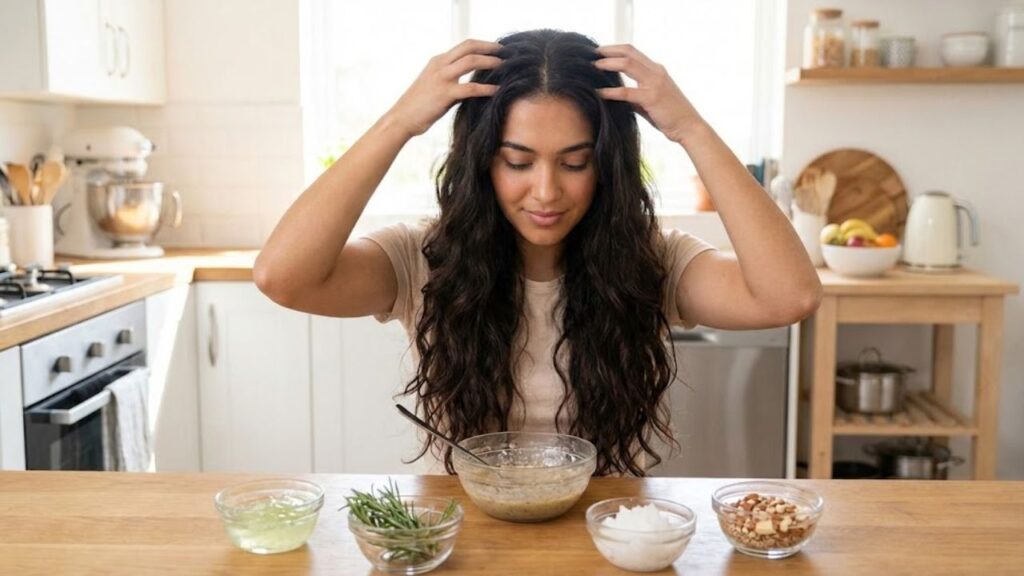
Step-by-step method on freshly washed, towel-dried hair, once or twice weekly:
- Place your usual conditioner in a clean bowl (silicone-light or silicone-free recommended for pigment adherence).
- Add 2–4 tablespoons of unsweetened cocoa powder based on hair length/thickness. Stir until smooth, chocolate-brown, no lumps.
- Section hair with clips and apply mixture to grey areas around temples, parting, and crown.
- Comb with a wide-tooth comb from roots to ends.
- Leave 20 minutes (up to 30 for resistant white hair). Rinse thoroughly with lukewarm water and massage scalp.
Results: soft shift from bright white to cooler smoky brown. Subtle darkening builds over multiple uses, blurring contrast between roots and dyed lengths.

Who Should Try This Grey Hair Method — and Who Should Avoid It
- Best for scattered grey hairs, blondes, or light brunettes.
- Gentler option for sensitive scalps reacting to chemical dyes.
- Gradual change rather than dramatic transformation preferred.
- Very dark hair: cocoa conditioner won’t fully hide greys but softens transition between growth and prior color.
Hair Type vs Likely Result After Cocoa Use
| Hair Type | Likely Result After Cocoa Use |
|---|---|
| Mostly white or grey, fine strands | Gentle beige-brown tone, glossier and smoother hair |
| Salt-and-pepper brown hair | Grey strands blend, overall shade softer and even |
| Dark brown or black with limited greys | Subtle warm undertone shift |
How Cocoa Interacts With the Hair Shaft and Pigment Loss
Grey hair feels rough because its protective layer lifts more easily. Conditioner smooths this layer, helping strands glide past each other. Cocoa particles settle on the hair surface, developing gradual color that washes out slowly. Acts as a protective tinted layer, providing color and mild protection without altering internal hair structure. Ideal for aging, dry hair, improving texture and movement.

Cocoa vs Other Grey Hair Solutions: Oils, Dyes, and Treatments Compared
- Herbal rinses (black tea, coffee) lightly stain but may dry hair with frequent use.
- Tinted conditioners or professional salon treatments require more effort and cost.
- Cocoa is easy, affordable, and conditions hair while fitting seamlessly into routine. Shade variability is the main downside.
Beyond Colour: Daily Care Tips to Keep Greying Hair Healthy and Strong
- Lifestyle impacts silver hair speed: stress, smoking, sun exposure, low-antioxidant diets.
- Cocoa users often adopt gentler habits: UV sprays, reduced heat styling, spaced washes, protein/lipid-rich masks.
- Some colorists recommend homemade masks post-salon to refresh tone without harsh chemicals.
- Supports a gradual transition to natural grey with minimal harsh grow-out lines.
“I’m exhausted from chasing my roots,” she admits
Eyes fix on thin silver lines. Dye bowls sit nearby — chestnut, espresso, iced mocha brown — none appealing. She wants subtle, natural results without screaming “hair dye.”
Goodbye Hair Dye
The stylist chooses sheer tones, soft glosses, and face-framing highlights instead of permanent color. Minimal transformation, softens contrast, refreshes the face quietly.
From Heavy Coverage to Smart Camouflage
Modern salons hear the same request: “I don’t want it to look dyed.”
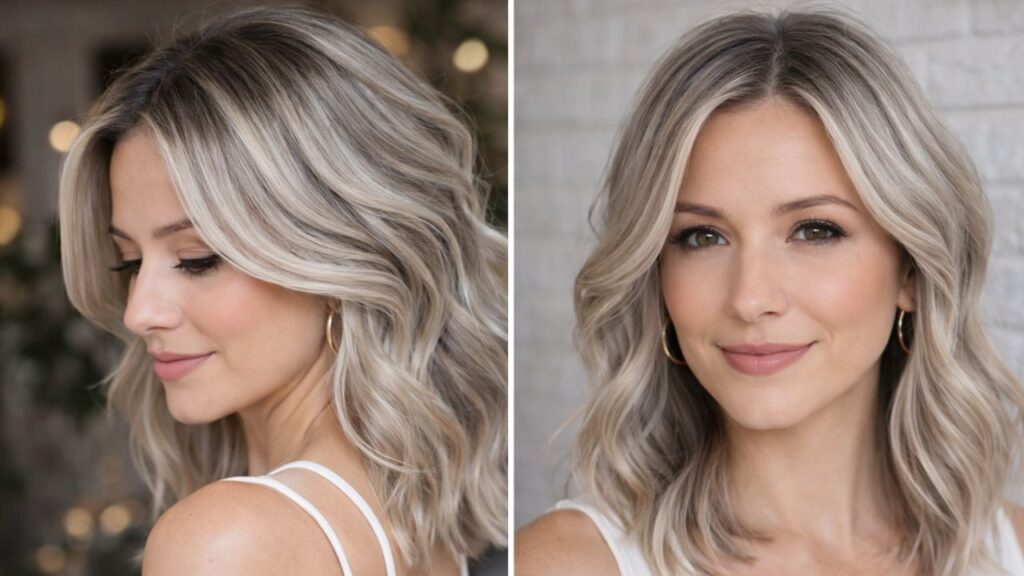
Gray blending uses transparent tints, root shadows, light-catching glosses, scattered highlights. Semi-permanent veils replace harsh dyes, reducing regrowth lines, time in chair, and artificial look.
Case Study: Karen, 52, London
Soft mushroom-brown glaze, ultra-fine face-framing highlights, no solid root coverage. Two hours later: harsh regrowth gone, silver strands intentional. Eight weeks on, minimal grow-out. “I feel younger,” she says, embracing gray rather than fighting it. Mental relief drives this trend beyond social media.
Why Blending Gray Changes the Face
High contrast dye can age the face; bright white roots spotlight scalp. Blending softens contrast, adds light near face, improves perceived features. Stylists use hair contouring techniques — integrating grey rather than erasing it.
The Modern Playbook for Youthful Gray
Gray blending: translucent demi-permanent color softens silver, lowlights add depth, ultra-fine highlights around face maintain airy look.

- Appointments stretch 8–12 weeks.
- Small tone/light variations create polished, lived-in finish.
Simple Care That Keeps Gray Looking Intentional
- Weekly gentle purple/blue shampoo to prevent yellowing.
- Lightweight shine serum or oil smooths gray strands.
- Tinted root sprays or powders soften contrast instantly.
- Switch to milder shampoos, use heat protection, trim brittle ends for healthy appearance.
The Emotional Shift Behind the Trend
Focus moves from erasing white strands to shine, movement, texture. Mindset shift: “Does my hair look alive?” rather than “Does it look young?”
Expert Insight
Paris-based colorist Lila Moreau: clients no longer cover gray; they seek rested, bright look. Gray blending and face-framing highlights stop roots from dominating the visual story.
Common Mistakes That Undermine the Look
Too dark shades for coverage, aging the face
Frequent permanent box dyes, heavy matte finish
Ignoring cut/shape, making color look tired
Overusing purple shampoo, dulling hair
Expecting single session to reverse years of coloring
A New Perspective on Age and Confidence
Soft bangs, shorter cuts, lighter face tones echo natural silver. Observers notice “rested” or “different, in a good way.”
This trend isn’t abandoning color — it’s about gentler touch-ups, embracing glossed natural gray, and achieving quiet confidence while keeping years lived intact.