Grey hair appears when pigment cells in hair follicles slow down and eventually stop producing melanin. While age is a key factor, stress, genetics, smoking, nutritional deficiencies, and certain medical conditions also play a role. The result is familiar: a few silver strands appear and gradually spread across the scalp. Most individuals opt for permanent or semi-permanent color initially. It provides quick results, but every coloring session comes with downsides: stronger chemical formulas, longer processing times, and a combination of ingredients that can irritate aging hair or sensitive scalps.
Hair Damage from Regular Dyeing
Hair lacking pigment is typically drier, more fragile, and less flexible. Regular dyes can make hair rougher and more prone to breakage. Frequent coloring strips moisture, damages the cuticle, and makes white hair appear flat rather than shiny. Even products marked as ammonia-free or gentle use oxidative reactions that alter hair structure. This may suit thick, oily hair at 25, but thinner, delicate strands at 50 feel very different. Plant-based alternatives like henna and indigo appeal to those seeking gentler options but come with challenges. Results vary by person, colors can turn too warm or dull, and correcting them at the salon is difficult.
The Cocoa Conditioner Hack
Unsweetened cocoa powder—the kind used in baking, not sugary instant mixes—is emerging as a gentle grey hair solution. It contains natural pigments and plant compounds that lightly stain hair without harming its protective layer. Cocoa doesn’t act like permanent dye but functions as a gentle filter, providing a brownish tint while nourishing hair. Flavonoids and tannin-like molecules in cocoa attach to the hair’s surface, subtly darkening grey strands with repeated use.

Benefits of Cocoa on Hair
On darker hair, cocoa adds depth and warmth rather than dramatically changing color. Cocoa also offers antioxidant properties to protect against environmental damage, softening agents for easier styling, and mild astringent effects to balance scalp oil. Combined with your regular conditioner, it creates a treatment that colors and conditions simultaneously.

How to Blend Cocoa Powder Into Conditioner
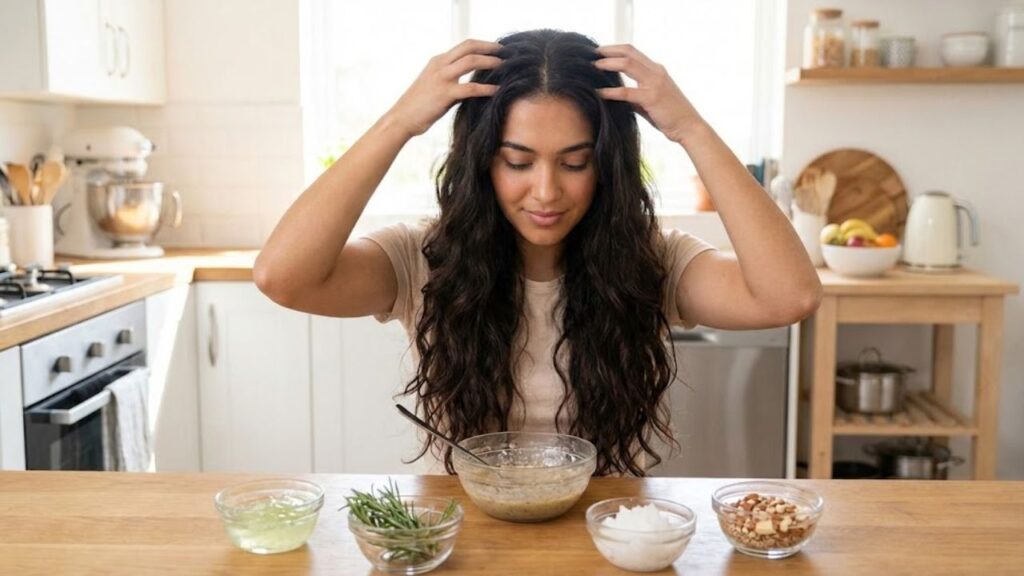
Use this on freshly washed, towel-dried hair, starting once or twice a week:
Place a generous amount of conditioner in a clean bowl (silicone-light or free for better pigment adherence).
Add 2–4 tablespoons of unsweetened cocoa powder depending on hair length and thickness.
Stir into a smooth, lump-free paste.
Section hair and apply to visible grey areas (temples, parting, crown).
Comb with a wide-tooth comb from roots to ends.

Leave 20 minutes (up to 30 minutes for resistant white hair).
Rinse with lukewarm water, massaging the scalp to remove residue.
Results are subtle at first—a softer beige or smoky brown appears and deepens over time, gently blurring contrast.
Who Should Try Cocoa Conditioner
Cocoa conditioner works best for those with scattered greys, blondes, or light brunettes whose grey hairs stand out. It’s gentler for sensitive scalps and suits those preferring gradual change. For very dark hair, it won’t fully cover grey roots but softens transitions.
Hair Type and Likely Results
| Hair Type | Likely Result After Cocoa Use |
|---|---|
| Mostly white or grey, fine strands | Beige-brown tone, glossier, smoother |
| Salt-and-pepper brown hair | Grey strands blend better, softer, even shade |
| Dark brown or black with limited greys | Subtle color shift, warm undertone |
How Cocoa Interacts With Hair
Grey hair lifts easily, making it prone to frizz and tangling. Conditioner smooths this layer, allowing strands to glide past each other. Cocoa particles settle on the hair surface, creating a gradual color effect that washes out slowly. This tinted layer protects hair without altering internal structure, improving texture and manageability, especially for dry, aging hair.
Cocoa vs Other Grey Hair Methods
Herbal rinses like black tea or coffee can stain but may dry hair. Tinted conditioners or professional grey blending treatments are alternatives. Cocoa is easy, affordable, and integrates into routines without major changes. Results vary depending on shade and application—overuse can dull hair if not rinsed thoroughly.

Daily Grey Hair Care Tips
Lifestyle influences silver hair growth. Stress, smoking, sun exposure, and antioxidant-poor diets accelerate greying. Cocoa users often adopt gentler routines: UV protection, less heat styling, spaced washing, and nutrient-rich masks. These habits help strands retain strength and shine. Some colorists suggest homemade masks post-salon to refresh tone without added chemicals, easing transition to natural grey. Cocoa represents a soft, reversible intervention respecting hair biology while providing gradual color enhancement.