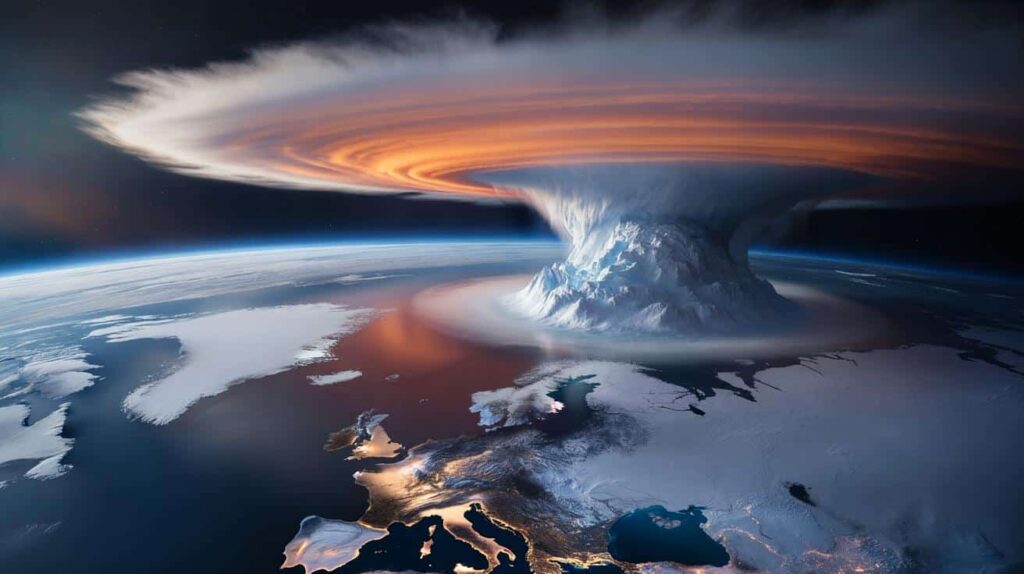
People in cities from Chicago to Berlin have been lulled into thinking that winter is fading because of the unusually mild weather. At the same time, atmospheric models are showing signs of a strong late-season shake-up in the polar vortex. What seems calm at street level is hiding a big plot twist 30 kilometres above the pole.
A spinning top is in trouble over the Arctic.
The polar vortex is a huge swirl of cold air that moves from west to east at speeds of more than 200 km/h around the Arctic. It works like a cold barrier in the winter, keeping the worst of the Arctic chill in place.
This February, that wall is about to fall down.

Satellite readings and advanced forecast models are showing that the stratosphere over the pole is warming quickly. In some places, temperatures are expected to rise by 40 to 50 °C in just a few days. Meteorologists call this a sudden stratospheric warming, or SSW. The event that is coming up looks like it will be very strong for this time of year.

Some experts say that the expected wind reversal is “borderline off the charts” because a polar vortex disruption of this strength is so rare and happens in February instead of mid-winter.
At major forecast centers, model runs keep showing the same disturbing picture: the vortex that was once strong either splits into two lobes or gets pushed off the pole altogether. Some situations send cold air to Siberia. Others pull a piece of the vortex down into Canada and the northern US, or they tilt it toward Europe.
What is really causing the polar vortex to break up?
High-pressure systems over the North Pacific and Eurasia and patches of ocean that are warmer than normal are pushing powerful wave patterns up from below the vortex. These waves push against the vortex like a hand on a top that is spinning.
First, they make the vortex move more slowly.
Then they push it to the side.
Finally, they can break it or move it.
When the vortex weakens or breaks apart, Arctic air is no longer neatly held in. It spills south in jagged blobs, with a jet stream that has been twisted into deeper loops. That’s when the calm, strangely mild February weather can turn into late-season blizzards, ice storms, or rain-on-snow events that cause problems.
History shows that when the stratospheric winds switch from strong westerlies to strong easterlies, major changes at the surface often happen 10 to 20 days later.
Why this disruption in February is so rare
Stratospheric warmings that happen suddenly are not new. They appear in the data record about every other winter. This time, the timing and the expected strength stand out.
Most of the biggest SSW events happen in January, which is the middle of the season. This disruption is getting worse in February, when the sun is already coming back and the ground in many places has started to thaw. That fight between the cold air up high and the landscape getting ready for spring can make temperature differences more pronounced and cause strong storms.
Reanalyses going back several decades show that only a few winters have had a wind reversal in the stratosphere in February on this scale. That rarity sets off alarms for forecasters who are used to looking at long-term data.
“Warpy” winters and climate change
The climate is getting warmer, which is happening at the same time as this event. Climate change isn’t directly causing the disruption, but it is changing how people feel about it.
Average temperatures that are higher mean that snow cover is less reliable, air can hold more moisture, and the changes between mild spells and short, fierce cold snaps are more noticeable. So when a polar vortex disruption sends cold south, it might come in a messier, less stable way instead of as a long, steady freeze.
Climate change hasn’t gotten rid of winter; instead, it has made it more moody, with bigger changes and more sudden shifts.
 A state pension cut is now approved with a monthly reduction of 140 pounds starting in March
What this could mean for your street and your heating bill
A polar vortex disruption doesn’t give each postcode a specific weather script. It changes the odds. Think of it as giving the dice a better chance of rolling in colder, more changeable areas.
Meteorologists think that based on past strong SSW events,
- There is a better chance that it will be colder than usual in most of Europe, the US, and Canada 10 to 20 days later.
- Higher chance of snow, especially in places that already get a lot of winter storms.
- Temperature swings got sharper, with quick drops after warm days.
- Southern Europe and the southern US will have less dramatic effects, but temperatures will go up and down more often.
That change is important for energy grids and infrastructure pressure. People are more likely to turn down the heat and do less maintenance when the weather is mild. If a sudden cold snap hits on top of that complacency, demand can rise quickly, putting pressure on old infrastructure. The Texas freeze of 2021, which followed a distorted vortex pattern, showed how weak some systems can be.
What we learned from “the Beast from the East” and Texas 2021
In February 2018, the UK went from early daffodils to gridlock as a strong SSW pushed air from Siberia west. People quickly called the episode the “Beast from the East.” Trains stopped, roads froze, and supermarket shelves emptied as snow piled up against doors that had been wide open a week before.
In 2021, Texas had a different but just as shocking outcome. A stretched polar vortex pushed the cold Arctic air very far south. Power plants and pipes that weren’t built to handle that much cold failed one after the other, leaving millions without electricity or running water.
There is no guarantee that either of these things will happen again this February. But the weather pattern that came before them looks too much like what forecasters are seeing this year.
How to read the next few weeks without getting scared
Most people don’t have the time to look at stratospheric wind charts. But there are a few easy signs that can help you use this information wisely.
- Keep an eye on the 10–20 day window. That’s when the most likely surface effects of the disruption will happen.
- Look for phrases like “pattern change” or “Arctic outbreak” in the forecasts. These are often when the SSW starts to change the weather in everyday life.
- Check local warnings: National weather services usually warn people about higher chances of snow, ice or storms a few days in advance.
- Be flexible with your travel plans. If you can, buy tickets that are easy to change in late February and early March.
- Go over the basics of getting ready for winter again: insulation, draught stoppers, and pipe protection are all cheaper than fixing things that break in an emergency.
Think of the next few weeks as a “second chance winter”. Even if you’ve already moved on to spring in your mind, there could be another round of real cold.
Steps you can take every day that really help
A polar vortex headline can be made easier to handle for families by doing a few small things:
- Instead of putting away your heavy coat, hat, and gloves, keep them close by.
- Put an ice scraper in the car and a bag of salt or grit near the steps or driveways.
- Ask older neighbours or family members about their heating and supplies.
- If your area is prone to power outages, look into backup options like battery packs or safe ways to heat your home.
It matters to change your expectations on the mental side. People often think winter is over when the first warm spell of February comes along. When the temperature drops again, it feels like the sky is personally insulting you instead of a known danger during a polar vortex disruption.
Important words that forecasts will use
Over the next two weeks, weather reports are likely to use some technical terms more than once. If you understand them, you won’t just feel overwhelmed by jargon; you’ll also be able to make sense of what’s coming in the forecasts.
| Term | What it means and why it matters now |
|---|---|
| The polar vortex | A lot of cold air moves around the Arctic in the stratosphere.When it weakens or splits, it lets Arctic air move south. |
| Sudden warming of the stratosphere (SSW) | The vortex is disturbed by rapid warming high above the pole.It is what started the event that is happening right now. |
| Jet stream | A fast-moving river of air in the upper atmosphere.Guides the paths of storms; deep loops can move cold or warm air to new areas. |
| Blocking high | A persistent high-pressure zone that stops weather patterns.Can keep cold air in place once it gets there. |
What scientists want to find out from this disruption
This event is a big test for meteorologists and climate researchers, even after the short-term forecasts. They will be keeping an eye on how the unusual wind reversal in February affects today’s warmer climate and how well models can predict how changes in the stratosphere will affect conditions on the ground.

That analysis goes straight into seasonal forecasts for the coming years. If models handle this disruption well, people will have more faith in long-term advice about risks in late winter. If they have trouble, scientists will change how they show how stratospheric processes work and how they affect the jet stream.
 9 phrases self-centered people commonly use in everyday conversations, according to psychology