The hairdresser lifts a piece of hair, lets it fall back on your cheek and sighs. She says in a careful voice that professionals use right before they suggest something big, “Your hair is very fine”. You look at yourself in the mirror under the salon lights. The front of your bob looks fine. You can see it from the side: that flat line that looks a little sad stuck to your head. You spent 20 minutes this morning blow-drying your hair for this.
We’ve all had that moment when we realised that our hair was following the rules of gravity and not our Pinterest board.
You scroll through pictures on your phone. There are short cuts, bouncy layers, necks that seem to get longer, and faces that seem to get sharper. The women look sure of themselves and a little lighter, as if cutting off five centimetres also cut off some of their self-doubt.

You can feel a little itch in your fingers.
Short hair might be the only way to make your fine hair look good.
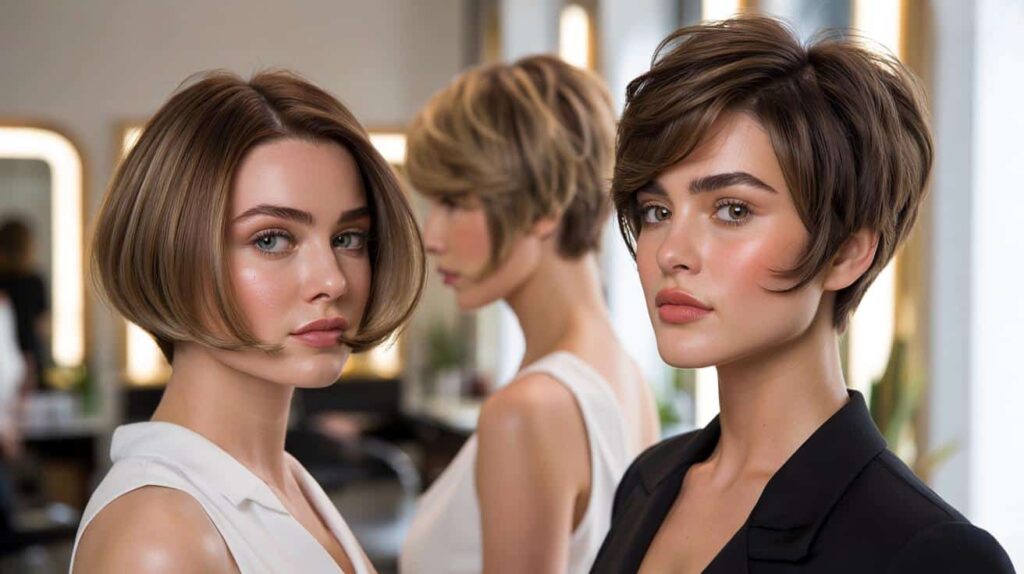
The layered French bob is the first short haircut that adds volume.
The French bob is the girl at the party who doesn’t yell, but everyone sees her anyway. When cut well, it works like magic on fine hair. It has a “oh, this old thing?” look to it, but it’s actually working very hard. The ends are blunt and the inside is full of invisible layers that build structure.
The structure is the key. A classic bob can fall apart on fine hair, like a curtain that doesn’t have enough fabric. The French version has small layers inside and a soft undercut at the back of the head that makes the hair stand up. The end result is light and round, and all of a sudden your neck looks like it belongs in a perfume ad.
Camille, who is 32, had been hiding behind a long, thin ponytail for years. After a summer of heat waves that made her hair stick to her face, she cut it into a French bob “just to try.” Two months later, she sent her hairdresser a picture of herself from a wedding. She had bare shoulders, red lipstick, and a short bob that brushed her cheeks. “These pictures make my hair look thicker than it ever has before.” People think I’ve added extensions.
The cut ends right at the strategic point where the neck and jawline meet, so the eye sees density even if the hair hasn’t magically grown. You’d think she had twice as much hair on Instagram.
This illusion makes sense in a simple way. Fine hair doesn’t have a lot of thickness; it just has a lot of hair. Long, it stretches out and clumps together under its own weight. It separates, lifts, and reflects light from different angles because it is short and layered in the right places. The French bob makes the hair around the cheekbones and above the nape look fuller by making the brain think it is.
That’s why a good French bob for fine hair is never just “cut straight at the bottom.” It’s a puzzle of tiny changes to your face shape, cowlicks, and natural parting. The more tailored it is, the fuller your hair will look, even on days when you don’t do much.
The pixie with a long top and bold volume booster is the second short haircut.
The pixie with extra length on top is the best way to stop fighting your fine hair and start using it. Short sides, a clean nape, and a crown that is a little longer and feathered make you look taller right away. Instead of a “boyish crop,” think of soft, feminine shapes.
On fine hair, the sides stay close to the scalp, which makes the top section look more dramatic. A little dry texture spray and a quick finger-tousle can give you that “I woke up like this but better” lift that seems impossible with long, flat ends. It’s not about getting the style just right. It’s all about the shape.
Hairdressers love to tell this story about a client. Ana, a new mom, came into the salon with hair that was shoulder-length and always in a messy bun. Her hair was fine, greasy at the roots by the second day, and limp when it was down. On a rainy Thursday, tired and late to pick up her kids from creche, she said, “Cut it.” Short. “I need hair that I don’t have to deal with.”
They gave her a pixie cut with a long, light top that fell to the side. The next week, she came back to tell me that her mornings had changed. “Two minutes with my hands and a pea of paste. That’s all. People want to know if I do my hair every day. Let’s be honest: no one really does this every day. But she didn’t have to with that cut.
It works so well on fine hair because of how physics works. Your hair won’t be pulled down anymore because most of the length and weight around the edges have been cut off. The longer top is the star of the show. It can stand up, wave or fall into a soft fringe. Short sides and a longer top make the crown look taller and fuller right away.
Your stylist will leave more length across the front if your face is round. If your features are strong, they might soften the edges, avoid harsh lines, and add soft layers around your ears. You should never copy and paste a good pixie from a picture. It’s a talk between your scalp, your way of life, and how much styling you can handle.
The graduated bob is the third short haircut.
It gives a subtle lift to people who don’t want a lot of volume. Not everyone is ready to get a full-on crop. The graduated bob, which is a little shorter in the back and longer in the front, is a gentle way to cheat thicker hair if you still want some length to play with. The stacked layers at the nape make a small shelf of volume that pushes the rest of the hair out instead of down.

That curve is everything when you look at it from the side. It changes the profile from “flat page” to “soft S-shape” on fine hair. You can still move your collarbone or jaw, but your hair finally gets that rounded back-of-the-head look you’ve been screenshotting with envy.
Lisa, 45, walked into a salon and said, “I want something modern, but I still need to tie it up for work.” Her hair was long, thin, and broken from years of wearing tight elastics. Her stylist suggested a bob that got longer as it went down her shoulders. Shorter in the back, with layers, and a soft angle to frame her face.
Lisa admitted the next month that she hardly ever tied it up anymore. “My hair suddenly does this thing” at the back, like I’ve blow-dried it even though I haven’t. The graduation at the back of her head gave her hair that natural curve that made it look fuller in every meeting-room mirror.
The graduated bob is great for fine hair because it adds layers where you need them most: at the base. Each layer doesn’t fall like a flat curtain; instead, it rests on top of the one below it, which gives it a natural lift and a rounded shape. The eye sees shape before it sees individual strands, and shape is what makes things look thick.
This cut feels safe for people who are afraid of getting too short. You can still tuck your hair behind your ears, play with the texture, and curl the front for the evening. But every time you move your head, that little “bump” at the back reminds you that fine hair doesn’t have to mean dead hair.
The shaggy crop, which has a messy texture that makes it thicker.
The shaggy crop is the rebel of short cuts. It’s not too neat, it’s purposely uneven, and it has a lot of light layers that catch the air. That is what makes fine hair look fuller. It is in between a short bob and a long pixie, with soft, choppy ends and a curtain fringe most of the time.
You don’t get a smooth helmet; instead, you get little flicks and wisps that move around your face. Every little movement makes shadows and depth. Your hair looks “lived in” from the front, not flat and over-brushed. From the back, it has that perfectly imperfect edge that looks better the less you try.
If you’ve ever left a salon with a razor-sharp cut that looked great on the first day but dead on the third, this shaggy crop is the answer. It will forgive you. It grows out well. It looks better when it’s a little messy than when it’s too neat.
The biggest mistake is to make the layers too thin. If you have fine hair, you could really over-thin it. You don’t want to be able to see through it; you want it to be light. A good stylist will cut the ends of your hair to make it softer while keeping enough weight on the lengths so that your hair doesn’t break into sad little strings. The goal is not “my scissors slipped,” but “controlled chaos.”
Marie, a hairstylist in Paris who mostly cuts short hair, says, “Fine hair doesn’t need more product; it needs more architecture.” “I make tiny steps inside the cut with a good shaggy crop so that the hair lifts itself.” All you have to do at home is wake it up.
- Before your hair settles, dry it upside down to give the roots a boost.
- Never use heavy creams that weigh down fine hair; instead, use a light mousse or spray.
- Instead of brushing the lengths flat, scrunch them up gently.
- Don’t ask your stylist for aggressive thinning; instead, ask for soft, choppy layers.
- To keep the shape, trim every 6 to 8 weeks, especially around the neck and fringe.
More than just a cut: how to live with short hair when your hair is fine
When you cut your fine hair short, your relationship with your mirror changes a little. Instead of strands, you start to see shapes, and instead of length, you see silhouettes. With the right cut, it looks like you suddenly “have hair” again—hair that is real, takes up space, moves with the wind, and shows up in pictures.
On good days, it will dry in five minutes and you’ll wonder why you waited so long to cut it. On days when you’re in a hurry, you can spray some texture spray on with your eyes half closed and still look like you tried. Being short doesn’t mean you’ll never have a flat moment. It means that your base cut does half the work for you without making a sound.
There is also that change in confidence that is hard to notice. Your face is more visible, your neck is less hidden, and your gestures are sharper when your hair is short. You might want to switch out your earrings. You might find lipstick again. Or maybe you just like not having to push hair out of your eyes all the time.
The scissors aren’t the only thing that has changed for fine hair. It’s knowing that you can make volume instead of begging for it with ten products and a round brush at 7 a.m. The best short cut is the one that fits how you really live, not how you think you “should” live. It should also fit how much styling you can handle and how much you like change.
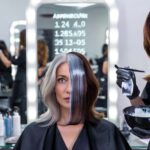
The real question might not be “Do I dare cut it short?” But “What would my mornings be like if my hair finally did what I wanted it to do?”

Main pointDetail: What the reader gets out of it
| Point | Detail | Benefit |
|---|---|---|
| Pick short cuts that are structured | A French bob, a pixie with a long top, a graduated bob, or a shaggy crop | Finds certain styles that make fine hair look thicker. |
| Put internal architecture first. | Unseen layers, stacked nape, and longer top sections | Knows how to make volume without using a lot of styling products |
| Cut to fit your lifestyle | How much effort you put into styling, how often you can trim, and the shape of your face | Helps you choose a haircut that looks good and is easy to maintain. |