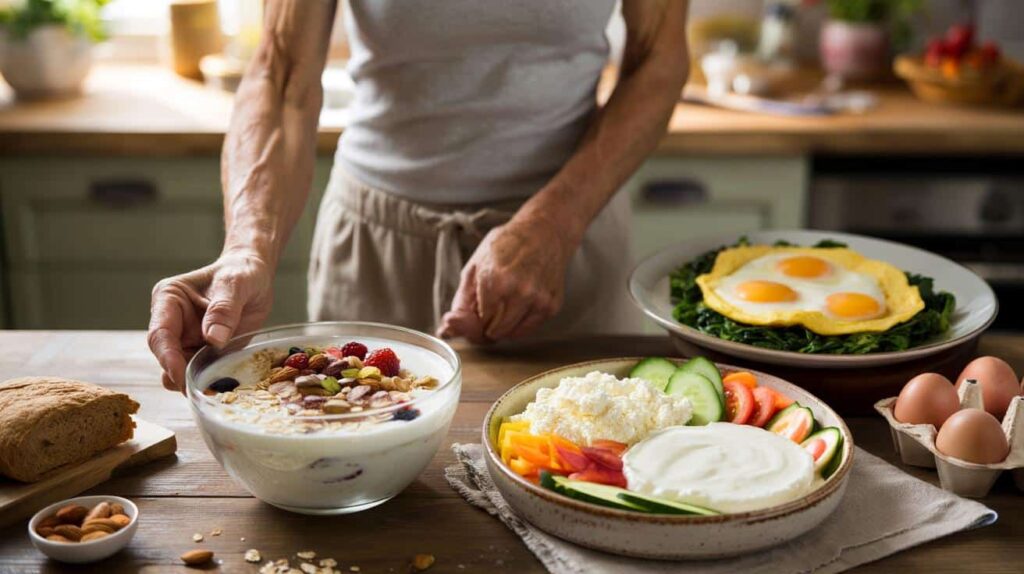
Muscle doesn’t just disappear overnight; it slowly fades away when you don’t get enough protein and don’t move around as much. At this age, a lot of people cut back on red meat and cured meats for health reasons, which can lead to an unintentional protein gap. The good news is that you can fill that gap with a few simple, familiar foods without having to change your life or your grocery list.
Why protein is more important after age 50
Around the middle of life, the body starts to lose muscle faster. This process, called sarcopenia, can speed up if your diet and way of life don’t keep up with your age.
Experts often suggest that people over 50 eat 20 to 30 grams of protein with each main meal to help keep their muscles strong.

Protein does more than just build muscles. It helps you stay balanced, keeps you from falling, boosts your metabolism, and makes everyday tasks like carrying groceries and climbing stairs much easier.

A lot of older people cut back on meat for heart, cholesterol, or digestive health reasons. That can be good, but only if other proteins take their place. If you can handle them, dairy and eggs are a simple and cheap way to keep your muscles well-fed without having to eat steak or salami.
Three easy protein friends (no meat or cured meats)
1. Yoghurt: a protein that can be eaten for breakfast or as a late-night snack
Plain yoghurt, especially Greek-style or strained kinds, is a great way to get a lot of protein without much trouble. A normal 170 g (6 oz) pot of plain Greek yoghurt can have 15 to 18 g of protein, and sometimes even more, depending on the brand.
Plain or Greek yoghurt is a good source of protein and calcium, which helps bones and muscles stay strong.
The best thing about yoghurt is how easy it is to fit into your daily life:
- Breakfast: a quick, healthy meal with oats, nuts, and some berries
- Snack: by itself or with a spoonful of nut butter for more protein and healthy fats
- After a meal, as a lighter dessert option, especially if you use fruit instead of sugar to sweeten it.
Choosing plain versions keeps you from getting extra sugars that you don’t need. People who are watching their saturated fat can choose low-fat kinds, but not “diet” pots that are very sweet and trade fat for sugar. Flavoured yoghurts can still be helpful, especially if they help someone get enough protein. However, it’s important to read the label.
2. Cottage cheese and ricotta are easy to add to lunch and dinner.
Cottage cheese and ricotta are both high in protein and very versatile, especially when it comes to main meals.
Cottage cheese and low-fat ricotta can be added to savoury dishes to make light meals into filling, muscle-friendly plates.
There is usually about 11–13 g of protein in every 100 g of cottage cheese. Ricotta is usually a little lower, but it’s still a good source. People who need to watch their saturated fats or overall calories should use lean or part-skim ricotta.
These cheeses are great for more than just breakfast:
- Lunch: mixed greens, tomatoes, olive oil, and whole grain bread were added to a salad.
- Dinner: added to vegetable soups, stuffed into roasted peppers, or put on top of baked potatoes
- A quick plate is a scoop of cottage cheese with sliced cucumbers, carrots, and a drizzle of olive oil.
They also help people who have trouble with tough cuts of meat or heavy meals. Soft textures make it easier to chew and digest, which is especially helpful for people with dental problems or a low appetite.
3. Whole eggs: cheap and full of nutrients
Eggs are still one of the best ways to get protein that is easy for the body to use. A big egg has about 6 to 7 grams of protein, as well as important vitamins and minerals.
The yolk has most of the vitamins in an egg, such as vitamin D, B12, and choline, as well as some of the protein.
For a long time, people were told not to eat egg yolks because they are high in cholesterol. Current rules in some countries are less strict: for most healthy people, eating eggs regularly as part of a balanced diet is fine. People with diabetes or heart disease should still follow the medical advice that is right for them.
Eggs are strong because they are useful:

- Quick cooking: scrambled, boiled, or poached in a few minutes
- You can eat it for breakfast, a light dinner, or as part of a salad.
- Cheap: usually less expensive per gram of protein than most meats or speciality foods
You can get a lot of protein in one pan with an omelette with vegetables and a sprinkle of grated cheese. Plus, you don’t have to wash up much.
How much protein do you really need after age 50?
Needs change depending on your weight, how active you are, and how healthy you are. Many experts now say that adults over 50 may need to eat more protein than younger adults, especially if they want to keep or build muscle.
| Body weight | Approx. daily protein target* |
|---|---|
| 60 kg (132 lb) | 72–90 g per day |
| 70 kg (154 lb) | 84–105 g per day |
| 80 kg (176 lb) | 96–120 g per day |
*These ranges show 1.2–1.5 g of protein per kg of body weight, which is a level that is often suggested for older adults who are active or want to keep their muscles, unless they have kidney or other medical problems that limit them.
Eating this amount of food throughout the day is better for your muscles than eating a lot of it all at once at dinner. Yoghurt, soft cheeses, and eggs are great because they can be eaten at different meals without getting old.
Making real meals with these three foods
A one-day menu for someone over 50
For a 70 kg person who wants to get about 90 g of protein in a day, these foods might look like this:
- Breakfast: Greek yoghurt (170 g) with oats and a handful of almonds, which has about 20–22 g of protein.
- Lunch: A salad with 120 g of cottage cheese, whole grain bread, and olive oil has about 20–25 g of protein.
- Snack: A small cup of plain yoghurt or a hard-boiled egg has 6 to 10 grams of protein.
- Dinner: An omelette with two eggs and spinach, with a spoonful of ricotta on the side. This has about 18–20 grams of protein.
Fruits, vegetables, pulses, and whole grains add fibre, antioxidants, and slowly releasing carbohydrates to the mix.
Putting protein with movement
Regular movement, especially resistance exercise, works best with protein intake. Simple exercises with resistance bands, light weights, or even just your own body weight tell your muscles to stay active and respond to protein.
Eating enough protein without doing any strength-based activity is like putting bricks on a building site where no one is working.
If you don’t exercise regularly, short sessions of 10 to 15 minutes a few times a week can already make a difference over the course of a few months.
Important words and things to think about after 50
Sarcopenia is the slow loss of muscle mass and strength that comes with age. Eating more protein and doing resistance training can slow down this process and even help you get back some of what you lost in the beginning.
Proteins with a high biological value have all the essential amino acids in the right amounts. This group includes eggs, dairy, fish, and meat. You can also get a full amino acid profile by mixing plant proteins like beans and grains.
People who have kidney disease, advanced liver disease, or certain metabolic conditions should talk to their doctor or dietitian before eating more protein. Too much protein can put extra stress on organs that are already having trouble in some cases.
Smart combinations of risks and benefits
For most healthy adults over 50, moving some of their daily protein to yoghurt, cottage cheese, ricotta, and eggs has a number of benefits: it’s easier to chew, it’s faster to make, they eat less processed meats in general, and they have better control over saturated fats when they choose lean options.
There are still a few things to keep an eye on. Some people can’t digest lactose, which can cause bloating or pain. Eating lactose-free yoghurts and cheeses or smaller portions more often can help with these problems. If you have high cholesterol or heart disease, you should ask your doctor how many egg yolks are right for you.

Adding plant proteins like beans, lentils, tofu, and quinoa to these three foods makes them even more nutritious. This blend helps keep your gut healthy, keeps your appetite in check, and gives you a wider range of vitamins and minerals that work together to protect your bones and muscles over time.