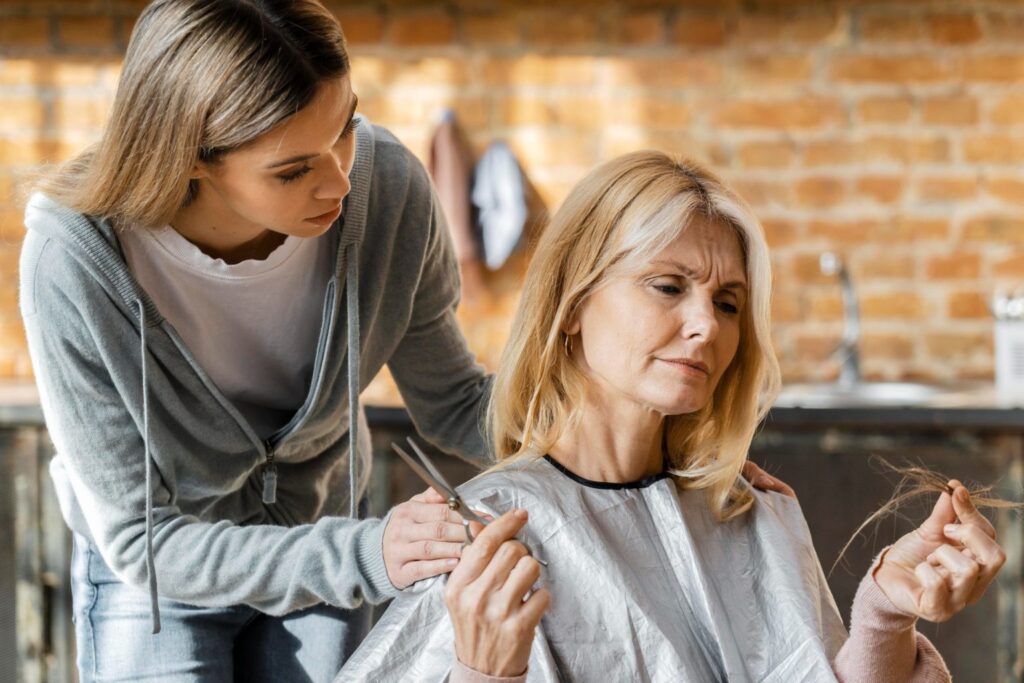
People want their greys softened, not smothered, and their scalp treated with the same care as their skin. This is happening in salons, on social media, and in bathroom sinks.
The end of the dye age?
For years, the only way to cover up grey hair was to make an appointment for color or buy a box of dye at the store. Roots were hidden on time, no matter what it did to the health of the hair.
That routine is starting to break down. People are starting to rethink permanent color because salon prices are going up, people are worried about harsh chemicals, and they are starting to appreciate “real” aging.

People want hair that looks healthy and real, not hair that is obviously three shades darker than their eyebrows.

At the same time, the rules about how to look good at work have gotten less strict. It’s not surprising anymore to see roots, silver streaks, or a salt-and-pepper fringe on a video call. That laid-back attitude is making it possible to deal with gray in gentler, more gradual ways.
What makes hair turn gray in the first place?
It’s not just birthdays that make your hair gray. Melanin, a pigment made by special cells in the hair follicle, gives each strand its color. Over time, those cells slow down and stop making pigment altogether.
When this happens, new hairs grow in a lighter color, then white. When this starts is mostly up to genetics. Some people see silver in their 20s, while others don’t see it until they’re in their 50s. Some medical conditions, smoking, severe stress, and not getting enough nutrients can all speed things up.
Once a follicle has “turned off” its pigment factory, it won’t go back to its original color on its own. That’s why people have always used regular dyes: they do what the follicle can’t do anymore.
There’s another twist: hair without color can feel different. Most of the time, grey strands
feel rougher or drier to the touch, and look thicker and more wiry
make frizz more noticeable by reflecting light differently; not work as well with the same products you used in your twenties;
As we get older, our scalps make less sebum, which makes this texture drier. Less natural oil means less lubrication for each strand, so greys need more moisture and care.
Why so many people are done with old-fashioned dyes
Permanent hair colors use chemicals that open the hair cuticle, take away the old color, and add new pigments. That process can make the hair shaft weaker, especially if you do it a lot or do it on top of other applications.
People also say that oxidative dyes make their scalp itch, burn, or turn red. People with sensitive or reactive skin may not be able to handle getting their hair colored often.
The new goal is not “no gray at any cost,” but “color that respects the scalp and still feels like my hair.”
In light of this, softer methods are becoming more popular, such as semi-permanent tints, plant-based rinses, glosses, and more recently, edible pantry items that also boost color.
Cocoa: the unlikely hero in your kitchen
Using cocoa powder to gently darken gray or faded hair is one of the more interesting trends. It sounds like a trick from TikTok, but the reasoning is pretty clear.
Cocoa has a lot of colored compounds and antioxidants in it. When you put the pigments on your hair as a paste and let them sit, they stick to the surface of the strand and shade it slightly without going as deep as a chemical dye.
A cocoa treatment is more like a tinted conditioner than a full-blown dye. It softens silver tones and adds shine and warmth.
Cocoa doesn’t change your natural color because it doesn’t oxidize. This makes it especially appealing to people with light brown or medium brunette hair who want their gray hair to blend in instead of completely disappear.
What cocoa can really do
Expect small but noticeable changes, not a complete change:
make the difference between grey strands and natural hair less noticeable. Give mid-brown shades a warm, chocolatey shine.
Repeated use will make very light greys a little darker. The conditioning ingredients in the mix will make the hair shinier and softer.
If your hair is very dark, the color change won’t be as dramatic because the base tone is already deep. If you have very light blonde hair, you might notice that the color becomes more beige or mushroom-toned than brown.
How to make a grey cover treatment with cocoa
At its most basic, the method only needs two things: pure cocoa powder and a light conditioner. It matters which versions you choose.
What to choose for an ingredient
Cocoa powderNo added sugar, milk, or flavorings; 100% cocoa; no sweeteners
ConditionerLight, with no heavy oils that weigh hair down and no silicone if possible
Guide to applying step by step
Once you know those two things, the rest is easy.
Gently wash your hair with shampoo and then towel-dry it until it is damp.
Mix one tablespoon of pure cocoa powder with enough conditioner in a bowl to make a smooth, creamy paste.
Divide your hair into sections and put a lot of the mix on the parts that are most gray.
Use a wide-toothed comb to spread the color out evenly.
For a softer result, leave on for 15 to 20 minutes. For a deeper tone, leave on for a little longer.
Rinse well with warm water until the water is mostly clear.
The effect is soft and gets stronger over time. Using the mixture once a week can slowly make your greys darker and keep the color looking more even overall.
There is no clear “root line” because the cocoa is mostly on the surface. The color just fades softly between washes.
What cocoa does for aging hair besides changing its color
The cuticle on gray hair is rougher and less shiny, which makes it look dull. A cocoa conditioning mask can help smooth that surface for a short time, which makes light bounce off more evenly and makes hair look fuller and healthier.
People are also interested in cocoa’s antioxidant properties. You shouldn’t expect miracles, but masks with a lot of antioxidants may help protect your skin from the daily oxidative stress caused by UV rays, pollution, and heat styling.
If you’re scared of putting strong chemicals near your scalp, a kitchen cupboard item feels less scary and easier to control. You can just stop using it and let it wash out if you don’t like the result.
Who this trend is really good for
Not everyone will like this new, low-tech way of dealing with greys. People who like big changes in color or bold fashion colors will still need salon-quality products. Cocoa treatments are best for people who:
have light to medium brown hair with a few gray hairs here and there and want to look fresher without making a big change; have scalps that are sensitive or easily irritated; are trying to make their hair last longer between salon visits; are switching from permanent dye to a softer color during the awkward grow-out stage;
There is also a mental side to it. For people who feel pressure to always look “polished” at work, accepting that some gray will show can be freeing. A subtle tint is a good way to get a middle ground between full coverage and going completely natural.
Realistic expectations, risks, and useful notes
Just because something is “natural” doesn’t mean it’s safe for everyone. Cocoa comes from a food that can make some people allergic. It’s a good idea to patch-test a small amount of the mixture on the inside of your arm or behind your ear for 24 hours.
Commercial hair dyes are more strictly controlled than kitchen ingredients. Results will vary from person to person and even from batch to batch. The pigments stick better or worse depending on the water hardness, the shampoo you use, and any color treatments you’ve had before.
The most important change in thinking is from “one-step permanent fix” to “ongoing, low-risk maintenance ritual.”
If you’re interested in trying it, here’s what a realistic scenario looks like: you make the cocoa mask once a week, put it on while you check your email or scroll through your phone, rinse it out in the shower, and watch your greys slowly fade over the next few weeks. There is no big change from before to after; just a slow push toward a more flattering color.
This kind of routine goes well with other helpful habits, like using a spray that protects against UV rays when the sun is strong, styling your hair less often with heat, and making sure your diet has enough protein, iron, and B vitamins to help your hair grow from the inside.

For a lot of people, that mix of a little color, extra care, and less exposure to chemicals is more appealing than spending another afternoon under the salon foils. This is how the quiet goodbye to classic hair dye is gaining speed.