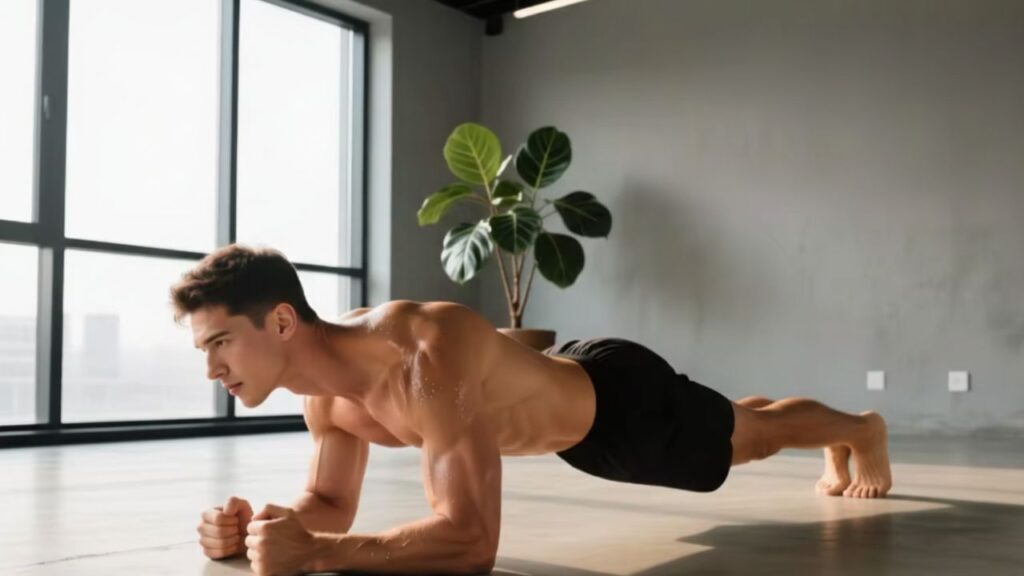
Incorporating a daily 1-minute plank into your routine offers significant benefits such as enhanced core strength, improved posture, and increased full-body stability. This isometric exercise targets multiple muscle groups, including the abs, glutes, back, and shoulders, providing a comprehensive workout for your body. However, success in this exercise requires maintaining proper form—hips aligned, core engaged, and spine neutral—to avoid injury. For beginners, starting with knee planks can help build endurance safely.
About the 1-Minute Daily Plank
The 1-minute hand plank (also known as the high plank) involves holding a push-up position, focusing on core engagement and total body stabilization. Unlike dynamic exercises like crunches, planks require static muscle contractions, helping to build endurance and functional strength. This exercise is typically performed using the hands (instead of the forearms), which shifts the emphasis to the shoulders, triceps, and chest. It is popular in home workouts, HIIT routines, and yoga flows due to its minimal equipment requirements and time efficiency. Completing this exercise for just one minute daily makes it accessible even for those with busy schedules.
Why the 1-Minute Daily Plank Is Becoming Popular
The 1-minute plank challenge has grown in popularity across social media platforms, fitness blogs, and wellness communities. Its simplicity is one reason for its widespread adoption—requiring only 60 seconds and no special equipment. The measurable goal of holding a plank for a full minute motivates people to stick to the challenge. Furthermore, strong core muscles offer more than just aesthetic benefits. They enhance movement efficiency, reduce discomfort from prolonged sitting, and improve balance, especially as remote work increases sedentary behavior. Social media influencers have also helped popularize this habit by sharing transformation stories and progress updates, often showcasing improvements in posture and confidence.

Plank Variations
There are several plank variations to accommodate different fitness levels and goals:

- High Plank (on Hands): Engages the upper body more, but may strain wrists and shoulders for beginners.
- Forearm Plank: Easier on the wrists but focuses more on the core. Less upper-body engagement than the hand version.
- Modified Knee Plank: Suitable for beginners, reduces back strain but offers less overall engagement.
- Side Plank: Targets obliques and lateral stability. Requires better balance and shoulder strength.
- Dynamic Planks (e.g., shoulder taps, plank-to-push-up): Increases calorie burn and coordination, but higher risk of improper form and injury.
Choose a plank variation based on your current strength level, joint comfort, and fitness objectives. Most beginners should start with modified knee planks and progress to a full hand plank.
Plank Features and Measurable Indicators
To assess the effectiveness of your plank routine, focus on these indicators:
- Form Quality: Ensure your body is in a straight line, with no sagging or raised hips.
- Duration Progression: Start with 30 seconds and gradually increase your hold time to 45–60 seconds.
- Muscle Engagement: Feel activation in your core, glutes, and shoulders, not just fatigue.
- Posture Awareness: Stand taller with less slouching throughout the day.
- Mental Focus: Maintain concentration during the hold to build discipline and focus.
Pros and Cons of the 1-Minute Plank
| Pros | Cons |
|---|---|
| Core Strength: Builds deep abdominal and spinal support. | Improper Form Risk: Poor alignment can lead to strain on the back or shoulders. |
| Posture Improvement: Encourages better alignment and reduces forward hunching. | Wrist Discomfort: Hand positioning may cause strain; forearm plank is a good alternative. |
| Time Efficiency: Takes only 1 minute, making it easy to fit into a busy schedule. | Limited Cardiovascular Benefit: Does not elevate heart rate or burn a significant number of calories. |
| Mental Resilience: Builds focus, discipline, and self-efficacy. | Overuse Potential: Repeating it daily without rest could lead to muscle soreness. |
| Full-Body Activation: Engages arms, legs, core, and back muscles simultaneously. | Not a Standalone Solution: Should be part of a broader exercise routine for balanced fitness. |
How to Choose the Right Plank Approach
Follow these steps to determine the best plank for your fitness level and goals:

- Evaluate Your Starting Point: Begin with a modified knee plank if you struggle to hold a 20-second plank.
- Select the Support Surface: Use a yoga mat or carpet to reduce discomfort during the exercise.
- Choose the Right Variation: If wrist sensitivity is an issue, opt for forearm planks. For more upper-body engagement, go for the hand plank.
- Set Realistic Goals: Gradually increase your hold time by 10–15 seconds each week until you can hold a full 60-second plank.
- Consistency Is Key: Incorporate planking into a daily habit, like after brushing your teeth or before your morning coffee.
Common Mistakes to Avoid
- Letting your hips drop or rise too high during the plank.
- Holding your breath instead of breathing steadily.
- Pushing through pain instead of adjusting your form.
- Skipping a warm-up before starting the exercise.
Cost Analysis and Insights
The financial cost of adding a 1-minute plank to your daily routine is virtually zero. While no special equipment is required, a basic yoga mat ($15–$30) can enhance comfort and grip. Compared to other core-strengthening tools, such as ab rollers ($20–$50) or resistance bands ($10–$25), planking offers better value as it doesn’t rely on any external devices and requires minimal time investment. Just 7 minutes of planking each week can produce measurable gains in core stability and endurance.
Competitor Analysis and Better Alternatives
Planking is effective for building core endurance, but combining it with other exercises can lead to better overall results. Below is a comparison of common core-strengthening methods:
| Solution | Best For | Potential Drawbacks |
|---|---|---|
| Plank (1-Minute Daily) | Building endurance, improving posture, mental focus | Limited muscle hypertrophy; static nature |
| Cable Woodchops | Rotational strength and power | Requires gym access |
| Crunches/Sit-Ups | Core engagement | Can strain neck and lower back |
| Dead Bugs / Bird-Dogs | Beginner-friendly core activation | Slower progression, lower intensity |
Customer Feedback Synthesis
Users appreciate the simplicity and accessibility of the daily plank challenge, but some face challenges such as wrist discomfort or lack of progress. Here’s a summary of customer feedback:

- Frequent Praise: “I noticed a straighter posture in just two weeks,” and “It’s easy to remember and do every day.”
- Common Complaints: “My wrists hurt after a few days,” and “It became boring without variation.”
Maintenance, Safety, and Legal Considerations
To ensure safety and long-term effectiveness:

- Warm Up: Perform light stretching or marching in place before starting your plank.
- Focus on Alignment: Keep your head, spine, and pelvis in a neutral position. Engage your core gently but fully.
- Modify When Needed: Switch to knee or forearm planks if discomfort arises.
- Listen to Your Body: Stop if sharp pain occurs. Mild fatigue is normal, but persistent pain is not.
- Allow Recovery: Take rest days to prevent overuse injuries.