Being patient and breathing slowly will make you more flexible, not always forcing your body into deep stretches. Always remember that muscles should be able to stretch out on their own over time. Slow yoga is one of the safest and best ways to become more flexible, especially for people who feel stiff, sit for long periods of time, or are just starting to get back into shape after a break. The five slow yoga poses below use controlled movement, mindful breathing, and gentle stretching to help the body open up without putting too much stress on it.
How slow yoga can help you get more flexible
When you do slow yoga a lot, your muscles can really relax. If you move too quickly through poses, your body may tense up as it tries to protect itself. When you slowly and purposefully get into and hold postures, your nervous system calms down, which helps your muscles relax more naturally. This method lowers the chance of injury and helps you become more flexible for a long time.
Slow yoga offers more than just flexibility benefits. It supports joint health and improves blood circulation while helping you become more aware of your body. Regular practice makes a real difference even when you only spend a few minutes each day on it. You will likely notice that daily movements become easier & your body feels better as you continue with this practice.

Side Stretch While Sitting to Move Your Spine and Waist
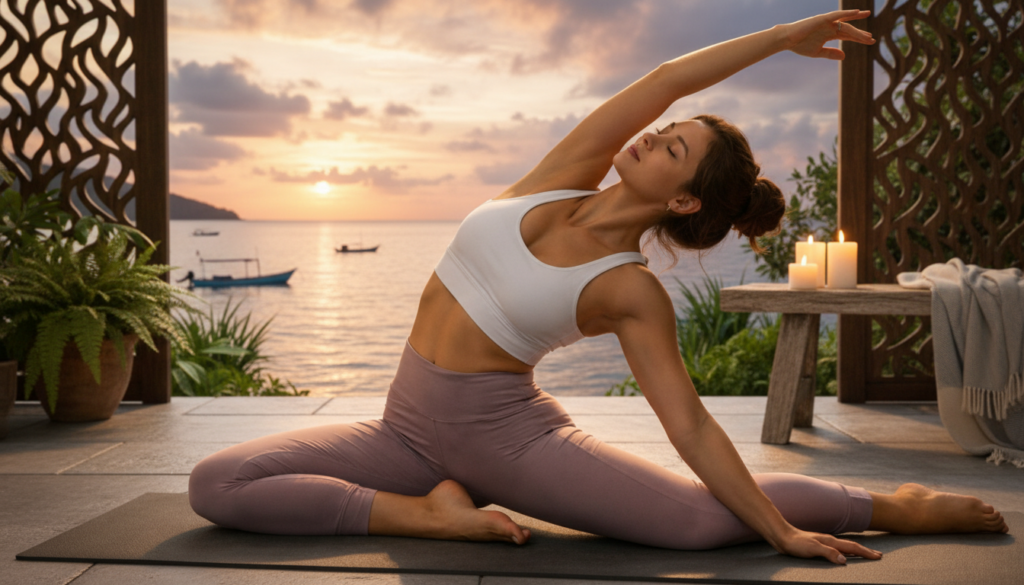
The seated side stretch gently loosens your spine & the muscles around your ribs and waist. It helps you breathe deeply & makes your upper body more flexible. Sit comfortably on the floor with your legs crossed or stretched out in front of you. Place your right hand on the floor beside you. Breathe in and lift your left arm over your head. As you breathe out slowly lean to the right while keeping both hips on the ground.

Feel the stretch on the left side of your body as you take six to ten slow breaths in this position. Switch sides and do it again. This pose helps your spine move more easily and eases stiffness from sitting for a long time.
Butterfly Pose to Relax Your Hips and Inner Thighs
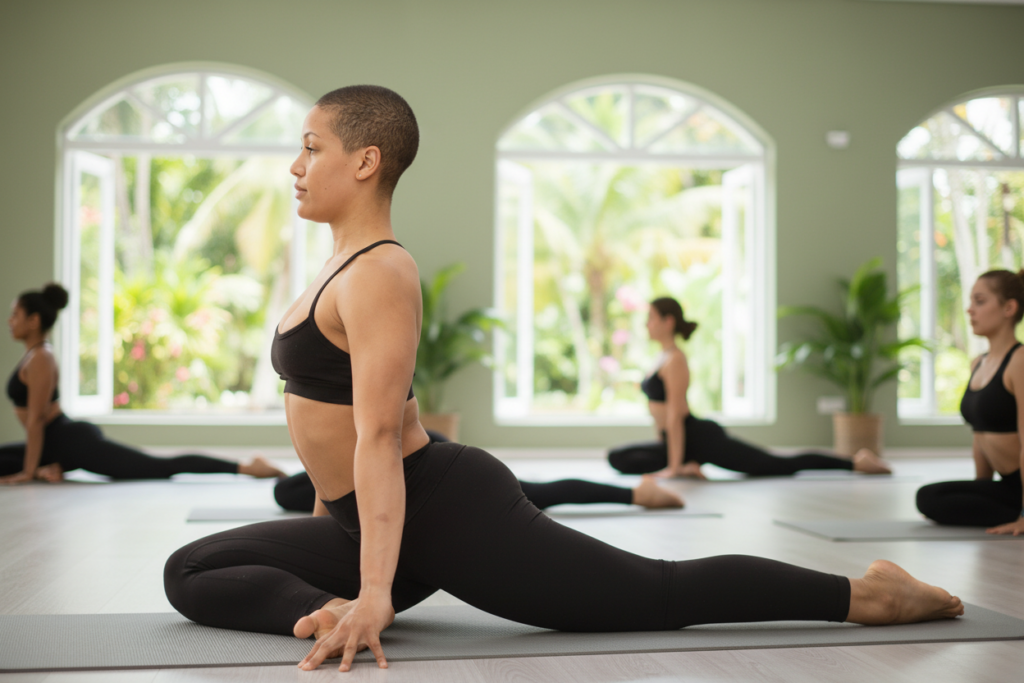
Butterfly Pose works well for people who spend most of their day sitting down. This position helps relax tight hips and inner thigh muscles. Start by sitting on the floor and bringing the soles of your feet together so they touch. Your knees will naturally drop toward the sides. Grab your feet or ankles with both hands and maintain an upright back as you take slow breaths. This stretch targets areas that become stiff from prolonged sitting. The gentle opening motion allows your hip joints to release tension gradually. Focus on keeping your spine extended rather than rounding your shoulders forward. Take several deep breaths while holding this position to maximize the benefits.
You should bend forward from your hips if you are able to do so. Keep your back in a straight position during this movement. Do not apply pressure to your knees while bending. Stay in this position for a duration of one to three minutes. When you practice this exercise on a regular basis it will increase the flexibility of your hips. It will also improve your posture and help you maintain better alignment when standing.
Low lunge to stretch the lower body and hip flexors
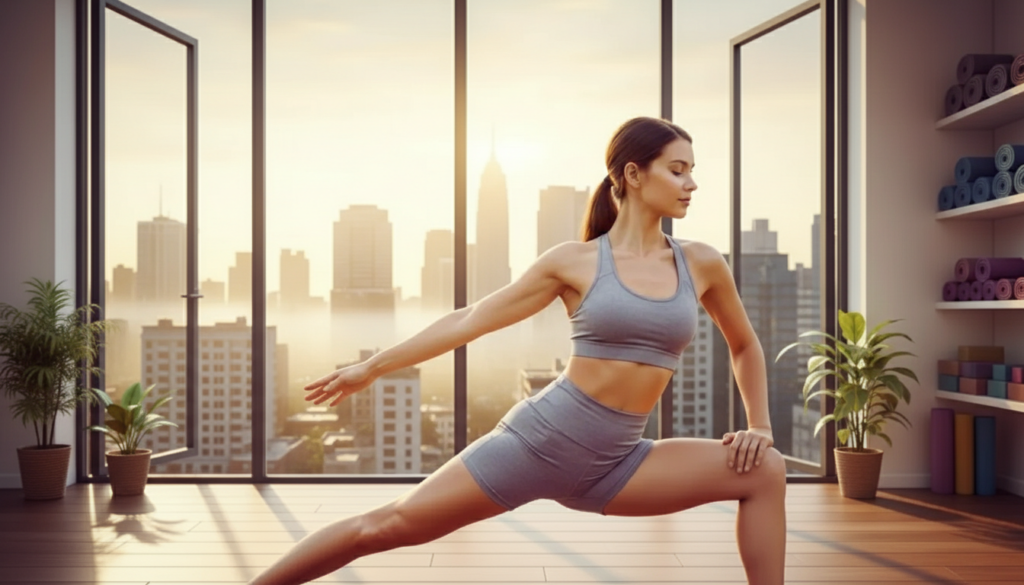
Your hip flexors can get tight if you sit for a long time. A steady, controlled stretch like the low lunge is a safe way to open these muscles. Step forward with one foot and lower your back knee to the floor. Place your front knee directly above your ankle.

Move your hips forward slowly while keeping your torso straight. Place your hands on your hips or thighs. Breathe in and out for eight to twelve breaths on one side, then switch sides. This pose helps the hips, thighs, and lower back become more flexible.
The Reclined Hamstring Stretch is a safe way to make your muscles longer
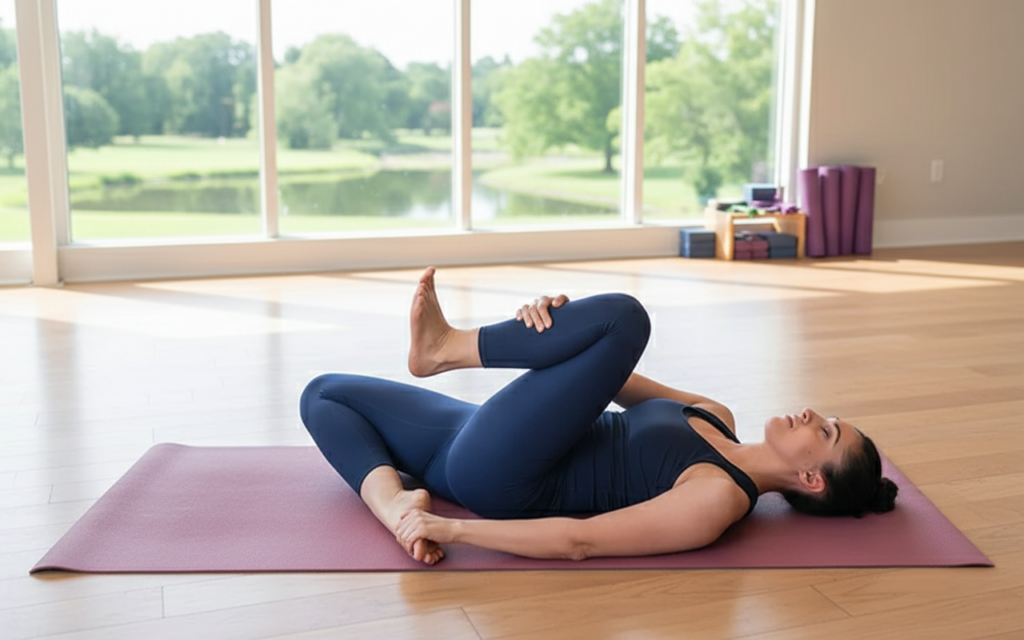
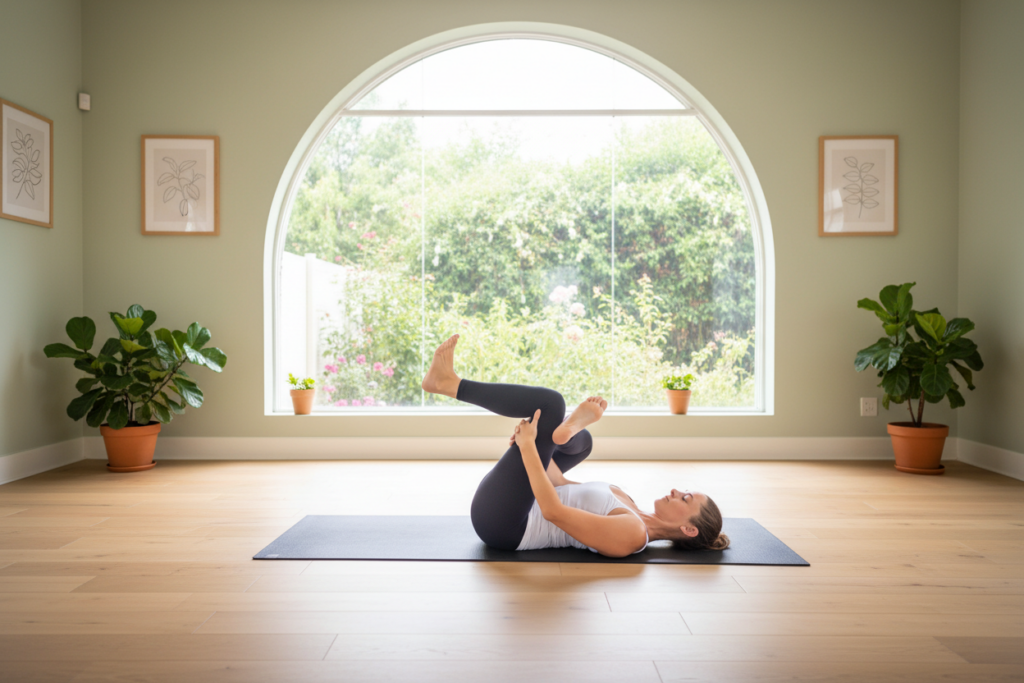
This back stretch targets your hamstrings while keeping your lower back safe. Start by lying flat on your back with one leg extended on the floor. Bend your other knee & grip it behind your thigh or calf. Gently straighten the bent leg upward toward the ceiling until you notice a comfortable stretch.
Take a deep breath and let your shoulders relax. You only need to hold for one to two minutes before switching legs. This stretch helps make the hamstrings more flexible and relaxes tight muscles in the lower body.
- Child’s Pose to Calm Your Body Down
- How to Do These Yoga Poses Safely
- How often you should practise to get results
- Who Can Benefit from Slow Yoga
Making a calm place for yoga

- Pick a quiet spot with enough space to move around.
- Wear clothes that are loose and comfortable, and use a mat that supports you to make practice easier.
Ending Your Yoga Class
When you’re done with the poses, take a minute to sit or lie down quietly. Listen to your body and how you breathe. This break gives your practice time to get used to it. Slow yoga is a safe and gradual way to get more flexible. It also helps you feel less stiff, which makes it easier and more comfortable to move around every day.