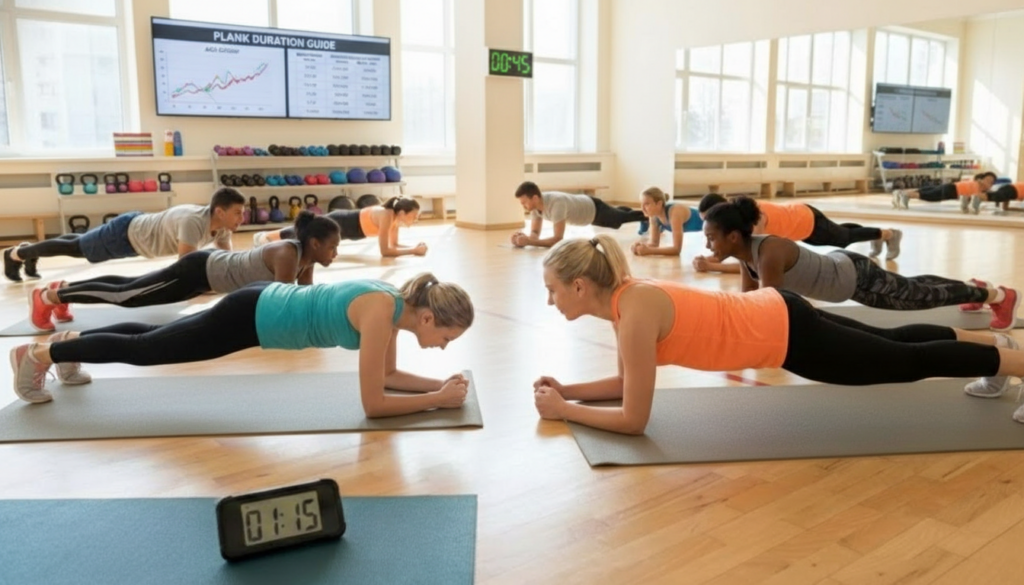
The floor feels cool on your forearms. Your toes grip the mat, your legs are working, and your breathing slows down. You might be wondering, “How long should I hold this plank?” because your core is tight and your mind is clear. Ten seconds? Thirty? Two minutes that feel like forever? Planks come in different sizes. They change as you get older and are always changing because of gravity and your body. You might feel strong at 18, but it might be hard at 48, and it might need more care at 68. No matter how old you are, your core is the most important part of your body. It protects your back, supports your spine, and lets you move around. You need to know how your body is right now to figure out how long the perfect plank should last.
How to Time a Plank Hold
Planks don’t make noise like workouts with heavy weights or feet that crash into each other. Your body makes a long line, with your head floating naturally and your shoulders stacked on top of your elbows or wrists. Your heels reach back. From the outside, it looks easy. But a quiet storm begins inside. The transverse abdominis tightens like a belt to support the body, the multifidus protects the spine, the diaphragm connects breathing to effort, and the pelvic floor gives steady support from below. These muscles work best when they are worked on in a calm, steady way over and over.
Things You Should Know About Long Planks
Fitness culture often praises extremes, like two-minute holds, five-minute challenges, and viral videos of people shaking their bodies and holding on with willpower. In reality, it’s quieter. After a while, holding a plank for longer makes you more tolerant of pain than it makes you stronger. Experts and research agree that doing short, precise holds often is better for your core strength and spinal health than doing long, hard workouts every now and then. Long planks aren’t bad for you, but they don’t help you as much and they make it more likely that you’ll get out of alignment when you’re tired. The question changes from “How long can I last?” to “How well can I help my body now?”
 The hack of using a magnetic strip inside a bathroom cabinet door to store bobby pins and tweezers
The Plank Equation, Age, and the Pull of Gravity
As we age, the body’s response changes. It takes longer for tissues to heal, they get stiffer, and it takes more work to keep your balance. It used to be easy to do a plank, but now it might take some work. That’s biology, not weakness. It’s better to follow flexible ranges that take into account your shape and ability than to stick to one rule.
Age-appropriate plank hold times:
| Age Group | Plank Time | Frequency |
|---|---|---|
| Teens (13–19) | 20–40 seconds | 2–4 sets, 2–4 days/week |
| 20s–30s | 30–60 seconds | 2–4 sets, 3–5 days/week |
| 40s | 20–45 seconds | 2–4 sets, 3–4 days/week |
| 50s | 15–40 seconds | 2–3 times/week |
| 60s–70s | 10–30 seconds | 2–4 times/week |
Knowing when to quit
If your lower back sags, your shoulders tense, or your face strains, your body is telling you that a plank is too dangerous. If you stop at the first sign of form loss, you’re not quitting; you’re training smart. This method helps your nervous system work better and stops it from breaking down over time.
 Goodbye Hair Dyes: The Grey Hair Trend Going Viral for Natural Coverage That Looks Youthful
Planks every day
Planks don’t have to be too much. You can do them at different times of the day, such as before coffee, after work, and before bed. Over time, these small, regular efforts add up to make a big difference. You don’t want to break a record; you want to stand taller, move with confidence, and take care of your body every day. Hold it for as long as you want. Have a break. Do it once more. That’s where the real strength is.