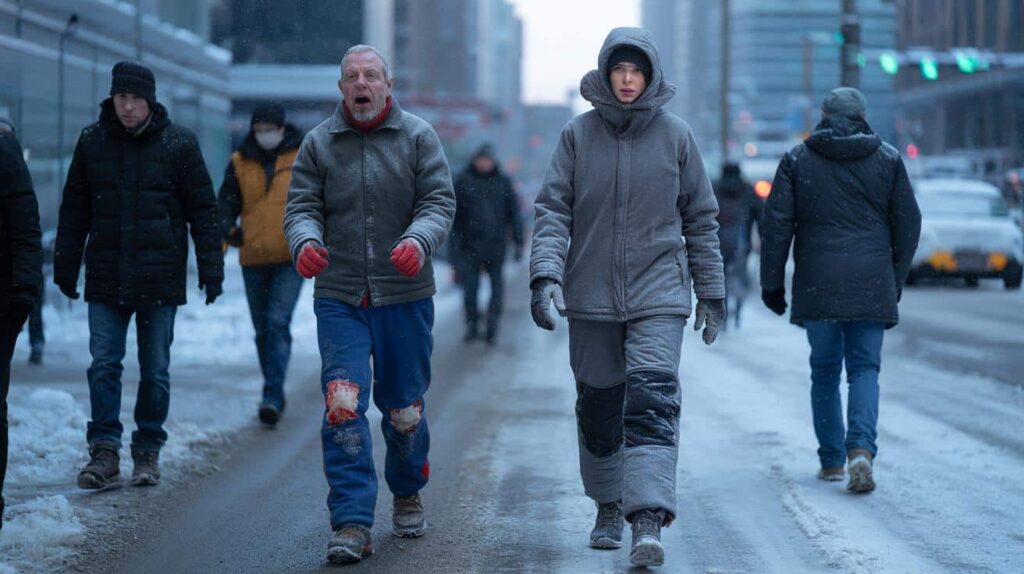
The bus doors open, and a cold gust cuts through the crowd. Everyone instinctively reacts—collars rise, shoulders hunch. You step off in your favorite jeans, the ones that survive everything from office hours to late-night drinks. But after just fifteen seconds, the chill has worked its way through the denim, settling on your thighs like an icy sheet. You walk faster, but it does little to help. The wind cuts through, your legs burn, then go numb. That’s when it hits you—your trusty, reliable jeans are silently betraying you. The cars pass, your breath turns white, and one thought keeps repeating in your mind:
Why Do Jeans Feel Colder Than the Air?
On a typical autumn day, jeans seem like a good choice. They’re thick, durable, and stylish. They look warm and practical. But when a true winter chill sets in—minus ten degrees, strong winds, damp air—the cotton suddenly feels like sandpaper soaked in cold. Your thighs sting, your knees lose feeling, and the fabric clings to you as though it’s trying to freeze you from the outside in. It’s not just discomfort; your body shifts its priorities to protect your vital organs, sacrificing your legs in the process.
The Dangers of Wet Denim in the Cold
Think back to the last time you crossed a frozen parking lot in jeans after a freezing rain. At first, the denim felt stiff but manageable. But then, you brushed against a snowbank or caught a splash of slush from a passing car. Within minutes, the cold wetness spread, darkening the fabric and turning a mild discomfort into pure torture. That damp patch clung to your skin, and no amount of movement could warm it up. Once inside, your legs were red and almost burning as the blood rushed back in. You probably promised yourself you’d dress better next time but never did.

Why Cotton Jeans Don’t Work in Winter
Jeans are typically made from heavy cotton denim, which has one major flaw: it traps moisture. Once cotton gets even slightly damp—from sweat, snow, or drizzle—it loses its insulating power. The fabric presses the cold moisture against your skin like a cold compress, and dense denim conducts heat away from your body faster than materials that trap air. Without air pockets to act as insulation, wind turns denim into a chilled shell, allowing heat to escape from your legs. Meanwhile, your body prioritizes keeping your core warm, and your legs are the first to suffer.

What to Wear Instead of Jeans in Real Cold
The simplest winter upgrade isn’t glamorous, but it works: layers. Start with a thin, snug base layer made of merino wool or synthetic fibers like polyester or polypropylene. This first layer keeps sweat away from your skin while trapping a thin layer of warm air. Over it, choose insulated pants—softshell ski pants, lined hiking trousers, or even fleece-lined leggings under looser pants. If you’re attached to your jeans, wear them as an outer shell, not the first layer of defense. Once your skin never touches the denim, the cold’s impact is drastically reduced.
Why Mixing Winter Gear with Jeans is a Mistake
A common winter look: a big, cozy coat, scarf, beanie, thick gloves—but raw, blue jeans below. The top half looks ready for a ski trip, but the bottom half? It’s early October at best. People think, “My legs don’t get cold, I’m fine.” Then, after 20 minutes outside, they wonder why they feel exhausted or can’t shake the deep chill. The mismatch creates an imbalance—while your upper body stays warm, your underprotected lower half leaks heat. Let’s be honest: no one checks the thermal rating of their pants before heading out, even on a long commute.

Winter Gear Advice from a Mountain Guide
We spoke to a mountain guide who spends over 150 days a year in freezing conditions. He shared, “The number one mistake I see in cities is people treating jeans as winter gear. They’re not. They’re a fashion choice. When it’s cold, legs need the same attention as your torso. When your thighs freeze, your whole body pays for it.”
The Essential Winter Wardrobe for Your Legs
Imagine a small winter wardrobe box with just a few clear options:

- Base Layer: Merino wool or synthetic long johns to wick away sweat and trap warmth.
- Insulating Mid-Layer: Fleece-lined leggings or lightly padded pants.
- Outer Shell: Windproof, water-resistant pants for days with snow, wind, or slush.
- Emergency Layer: Thin, packable overtrousers that slip on over city pants when a cold snap hits.
- Home Comfort: Warm joggers or wool-blend lounge pants to let your legs thaw indoors.
The Quiet Power of Dressing Your Legs Right
Once you experience a real winter day with proper legwear, jeans alone will feel like forgetting your gloves. You’ll walk slower but without the tension in your shoulders. Your thighs stay warm, your knees bend easily, and the wind becomes background noise instead of an attack. You’ll feel less drained when you get home or to work. There’s a subtle peace that comes from not shivering inside your own clothes. The truth is, pants can be just as technical and protective as a good jacket—without all the hype.

Key Takeaways for Dressing Right in the Cold
| Key Point | Details | Value for the Reader |
|---|---|---|
| Avoid jeans as primary winter pants | Cotton denim traps moisture, conducts cold, and provides little insulation when wet or windy | Fewer painful, numb legs and reduced risk of deep chills outdoors |
| Prioritize layered leg systems | Base layer + insulating layer + windproof shell depending on weather and activity | Stable warmth and better comfort on commutes, walks, and outdoor work |
| Choose technical or wool-based fabrics | Merino, synthetics, softshell, and fleece-lined options trap heat and wick sweat | More energy, less fatigue, and clothing that works with your body |