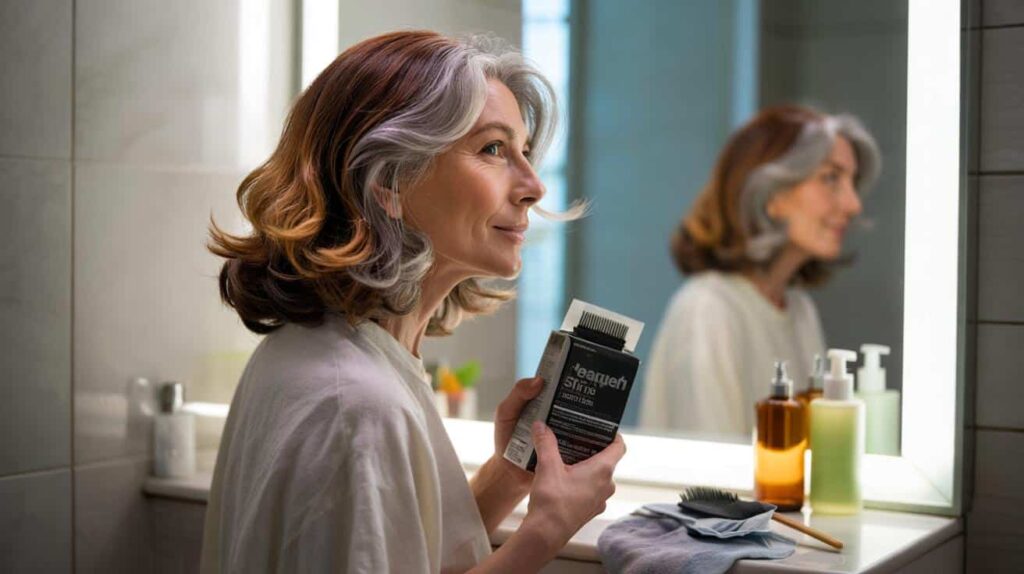
The woman in front of the mirror pauses, holding a box of dye. Her fingers are stained from years of “just touching up the roots.” The bathroom smells like ammonia, the towel around her shoulders is already ruined, and a timer is going off in the background. She sighs, looks at the small print on the package, and for the first time thinks, “Why am I still doing this to myself?”
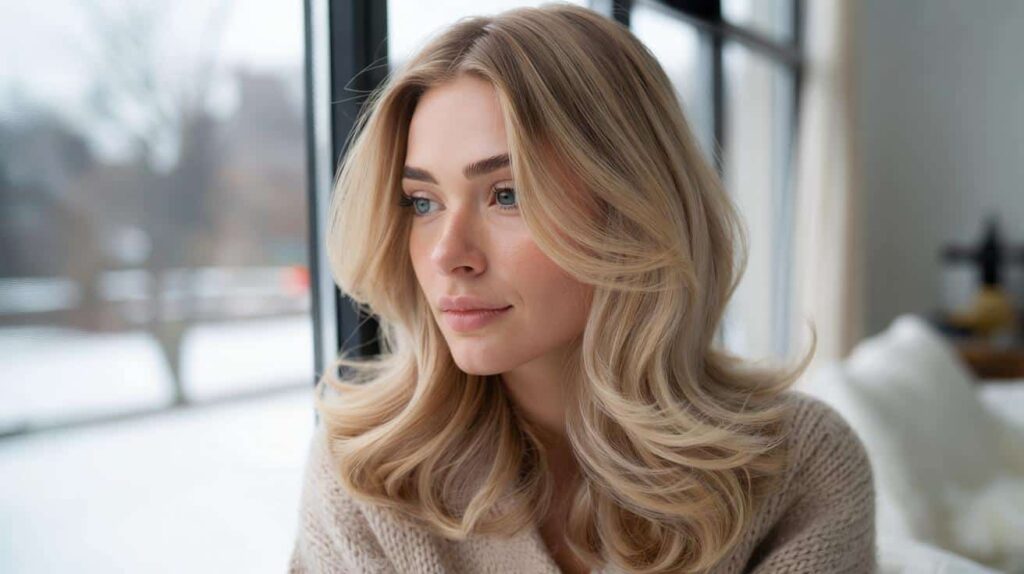
Her friends are posting selfies on social media with soft, blended hair that makes grey strands look less like a problem and more like a planned highlight. Her teenage daughter jokingly says that this new “salted caramel” look makes her look younger than her flat, over-dyed brown hair.
Something is changing, but not loudly.

The turning point for grey hair: from harsh cover-up to soft camouflage
You can see it on any street in a big city: the grey is still there, but it’s different. Less “I’ve given up” and more “I made this choice.” Strands of silver blend into warm chestnut, soft blond, or deep espresso, as if a filter had been put on reality instead of a thick coat of paint.
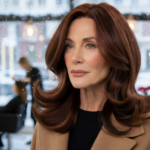
All the time, hairdressers talk about it. People are sick of the never-ending battle against regrowth, but not everyone is ready to go completely silver. The new goal is more subtle: use grey to your advantage instead of getting rid of it, and somehow look fresher, lighter, and younger in the process.
For example, Elena, who is 47, used to dye her hair every three weeks without fail. Her white roots yelled at her in the lift mirror the day she forgot an appointment. She remembers saying, “I felt old.” Then her stylist suggested a “grey blending” method, which involved adding soft highlights, a base colour that was a little lighter, and focusing on the areas where the silver was strongest.
Four hours later, she walked out with hair that looked like it had been lived in. Her greys were still there, but they blended in with the sandy, glowing mix. People at work kept asking, “Did you cut your hair?” You look like you’ve had some sleep. No one thought she would just stop fighting with her roots.
This new trend is based on a simple fact: hard, uniform colour makes the face look older. Black, dark brown, or even solid red that is flat draws attention to lines and shadows. When you add natural grey to a palette with more than one colour, light reflects differently. The whole face looks softer, and the cheekbones catch more light.
There is also a mental relief. People don’t rush to get their hair coloured on day 15 after dyeing it. Instead, they wait longer between appointments, try out plant-based pigments, or use toning shampoos. The feeling goes from “I have to hide this” to “I’m handling this change on my own terms.” That alone can make someone look a few years younger.
The new way to “dye” is with soft blends, plant pigments, and smart tricks.
The first step in this new way of doing things is easy: stop fighting your natural base and start working with it. A lot of colourists now want their clients to come in with grey roots showing so they can see the real pattern. Then they make a blend, not a mask.
For some, that means adding very fine highlights around the face that are one or two shades lighter than their natural brown to match the silver strands. For some, lowlights are the key. These are slightly darker streaks that add depth and make the grey look like it was meant to be there. When used with gentle toners, the overall look is softer, more glowing, and surprisingly young.
The toolbox at home is also changing. People are moving away from strong permanent dyes every month and toward semi-permanent colours that don’t contain ammonia or plant-based mixes with henna, indigo, cassia, and herbal infusions. These don’t cover like paint; they tint and veil. The grey doesn’t go away; it changes into warm gold, cool ash, or soft beige reflections.

We’ve all been there, crouching over the bathtub with gloves on and thinking, “There has to be a better way to deal with my hair than this.” This “easier way” isn’t one magical product; it’s a different rhythm: longer gaps between colours, less harsh formulas, and quick fixes like coloured masks to refresh the lengths without hurting the scalp.
Léa, a colourist in Paris who specialises in grey transitions, says, “People don’t ask me to ‘hide’ their grey anymore.” “They want me to make them look brighter, less tired, and more like themselves.” Grey is now a part of the conversation, not the enemy.
She tells clients all the time that looking younger doesn’t mean getting rid of every white strand. It’s about how the face looks in terms of texture, shine, and contrast. That’s where small, clear changes come in:
- To make the grey blend in better, lighten the colour one or two shades near the temples.
- Every few months, use a clear or gloss glaze to make the shine better without changing the colour too much.
- Once a week, use a purple or blue shampoo to get rid of yellow tones and keep grey areas looking stylish instead of dull.
- To keep your hair from looking older, switch between protein treatments and moisturising masks.
- To avoid a heavy, opaque look, only colour the roots and leave the lengths for toning masks.
Grey as a friend: what this change means for age, beauty, and power
There is more to this trend than just a better selfie. Allowing some grey to show is a way of saying, “I don’t owe anyone the illusion of eternal youth.” But I still care about how I look, and I have the right to play. Blending and softening those greys is a way to say this.
That small change makes a big difference. There is finally a middle path opening up between the pressure to stay young forever and the order to “embrace your natural self or else.” *You can still change, colour, and shape your silver threads to fit your story right now.
For some people, adding plant pigments to their silver is a good choice for the environment and a way to avoid strong smells and itchy scalps. For some, it’s a matter of time and money: they go to the salon less often and can take care of their hair more easily. And for a lot of people, it’s just a relief not to freak out when that white stripe shows up after two weeks.
Let’s be honest: no one really does this every day. The perfect hair routine, the religious use of hair masks, and the monthly professional gloss all get in the way of life. That’s also why this softer, more forgiving way of doing things is so appealing. Grey gets darker, colour fades, and instead of a “disaster,” you get a soft change that still looks like it was planned.
When you talk about grey in this new way, it often leads to bigger conversations. For example, about mothers who never showed a white hair, coworkers who were judged for “letting themselves go,” and partners who suddenly find silver “sexy” when a trend makes it visible. People share recipes for herbal rinses, compare transition photos, and give each other advice on how to talk to a hairdresser who still wants to put on a full-coverage dye.

Some will choose bright white streaks, others will go almost completely natural, and some will stick with gentle disguises for years. It’s not so much about the destination as it is about the freedom to explore. This soft, blended, glowing grey might be one of the most subtle but powerful beauty revolutions of the decade: no big slogans, just millions of small, stubborn choices made in front of a mirror.
 Day turns to night as the longest total solar eclipse of the century sweeps across multiple regions