The girl sitting in the salon chair ahead of me stared at a screenshot on her phone. She looked at it repeatedly. The color she wanted was not platinum blonde. It was not bronde either. She wanted something softer & creamier. She wanted hair that looked like beige cashmere. The colorist mixed the dye in a bowl. The girl whispered to herself. She said she just wanted to look less tired.
Her skin looked like she had just returned from a long walk in the cold sun after getting eight hours of sleep. The shadows under her eyes were gone and the color did not look like she had just dyed her hair. It seemed like she had always looked that way.
That’s the soft magic of suede blonde.

What is “suede blonde,” and why does everyone want it?
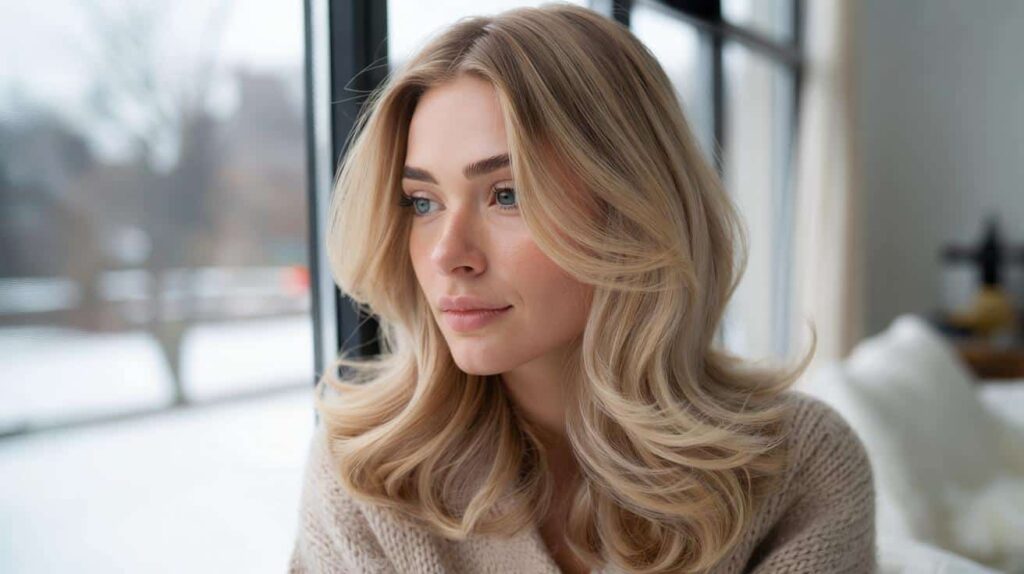
If you ask three colorists to define suede blonde you will probably get three slightly different answers. However they will all describe the same basic concept. Picture a blonde shade that is neither icy nor golden but instead has a soft muted finish. It looks like sunlight filtering through a frosted window.

It’s not Barbie, not a surfer, and not a classic Hollywood movie. Think of winter cashmere, oatmeal knitwear, and milky coffee. Suede blonde is right in the middle of warm and cool, with a neutral, creamy tone that looks good on a lot of different skin tones.
That gentle quality means a lot on a dull January morning. It does not resist the light but works together with it.
Why suede blonde is everywhere now
A hair colorist in Paris mentioned that some weeks nearly half of her clients show up with identical inspiration photos. They bring screenshots saved from Pinterest and images grabbed from TikTok. They also present grainy red carpet photographs with captions like subtle blonde or expensive neutral blonde written across them. The colorist explained that this pattern happens regularly throughout the year. Clients arrive at the salon believing they have discovered a unique hair color idea. However they are actually requesting the same shade that multiple other people have already asked for that same week. The repetition occurs because social media algorithms push similar content to many users simultaneously. These clients typically want a blonde tone that appears natural & understated. They use words like expensive to describe the quality they hope to achieve. The photographs they bring rarely show the hair color clearly due to poor image quality or dramatic lighting from professional photography. Despite these limitations the colorist must interpret what the client envisions & explain what is realistically achievable with their current hair condition. This phenomenon reflects how beauty trends spread rapidly through digital platforms. A celebrity appears at an event with a particular hair color and within days that look becomes widely requested at salons. The colorist noted that clients often do not realize how many other people are seeking the same transformation. They each believe their inspiration is somewhat original when in fact it has become the dominant request of the moment.
One woman walked in wearing her hair pulled back loosely with pronounced dark circles beneath her eyes that clearly marked her as someone working in finance. She laughed while explaining that she didn’t want compliments about her hair color. Instead she hoped people would simply notice that she looked well rested. After spending two hours getting a suede-blonde treatment her cheekbones appeared more defined and the dull winter pallor affecting her complexion had noticeably diminished.
She walked out with a color that makes you lean in and wonder if it’s real.
How to ask for suede blonde so you don’t end up with orange or gray hair
You should never walk into a salon & simply ask to be blonde. That approach will give you the same generic color that everyone else gets on any regular weekday afternoon. The problem with this vague request is that it tells your stylist almost nothing useful. Blonde is not just one shade. It includes dozens of different tones ranging from pale platinum to warm honey to cool ash. Without specific direction your colorist will likely default to whatever blonde they do most often or what they think might work for your skin tone based on a quick glance. A better approach involves bringing reference photos that show exactly what you want. Find images of blonde shades that appeal to you and save at least three or four examples. This gives your stylist a clear visual guide to work from. Make sure the photos show hair in natural lighting rather than heavily filtered social media posts that distort the true color. You should also consider your natural hair color and condition before committing to blonde. Going from dark brown to platinum blonde requires multiple sessions & significant chemical processing. Your hair might not be healthy enough to handle that transformation all at once. A good stylist will be honest about what your hair can realistically achieve. Think about the maintenance requirements too. Blonde hair needs regular toning appointments to prevent brassiness. The roots will show growth faster than with darker colors. You will need to invest in purple shampoo and quality conditioning treatments. The upkeep costs add up quickly over time. Your skin tone matters when choosing a blonde shade. Cool undertones typically look better with ashy or platinum blondes while warm undertones suit golden or honey tones. Your stylist should evaluate your complexion & suggest options that will complement your natural coloring rather than clash with it. The consultation before coloring is crucial. This is when you discuss your lifestyle & how much time you can dedicate to maintenance. Be honest about your budget for both the initial service and ongoing appointments. A skilled colorist will design a blonde that fits your practical needs and not just create something that looks good for one day.
Tell your colorist you want a gentle blonde look without any strong contrast. Use words like buttery beige or soft oat when describing what you want. Say you prefer muted tones and creamy shades instead of yellow ones. Bring three to five photos of people who have similar skin tones and hair colors to yours and already have that suede blonde style you like.
Say this sentence out loud: I want light around my face but I still want to look like me. That simple statement captures what most people really want from good lighting. They do not want dramatic shadows or harsh brightness. They want to look natural and recognizable while still being well lit. The problem is that many people struggle to achieve this balance. They either end up with flat boring light that washes out their features or they create such strong contrast that they look completely different from their normal appearance. Good lighting should enhance your natural features without transforming them. It should make your skin look healthy and your eyes look bright without making you unrecognizable to people who know you. The key is understanding that light has direction & quality. Soft light from the right angle will wrap around your face gently. It fills in some shadows while still maintaining enough dimension to show your bone structure and facial features. When you place a light source too close or too far away you change how it interacts with your face. When you use a hard light source instead of a soft one you create entirely different shadows. These technical choices determine whether you look like yourself or like a stranger. Most people instinctively know when lighting works for them. They can see it in photos and videos. They recognize when they look like the person they see in the mirror versus when they look oddly different. The goal is not perfection. The goal is authenticity with enhancement. You want to be the best version of yourself rather than a completely altered version. This means keeping your natural features visible while using light to minimize distractions and draw attention to your eyes & expression.

How suede blonde changes your whole winter look without you even knowing it
After spending a week with suede blonde hair you start to notice that the real change is not just about your new color. Everything around you seems different now. The concealer you always use appears lighter than before. Your favorite lipstick has a cooler tone to it. Even that thick knit sweater you never liked suddenly looks stylish on you.
# Understanding Neutral Colors and Skin Tone
Neutral colors work differently on your skin compared to bright or bold shades. When you wear neutral tones the light bounces off your skin in a gentler way. This happens because neutral colors sit in a middle zone on the color spectrum. The effect creates softer shadows across your face. These shadows don’t appear as harsh or defined as they would with other colors. The overall result is a more flattering appearance. Neutral tones also help reduce the appearance of redness in your complexion. This means your skin looks calmer and less flushed. People often appear more approachable when their skin tone seems even and settled. Your facial features become more defined when you wear these colors. The balance between light and shadow improves. This makes your natural features stand out in a positive way without looking overdone. Photography benefits greatly from neutral color choices. The camera captures your face with better clarity when you wear these shades. This advantage becomes even more noticeable during winter months when natural light is limited & often comes through clouds. The diffused winter light combined with neutral clothing creates the most balanced photographs.
Some people say it feels like they are lit from inside even when they are only drinking coffee and using dry shampoo. The sensation comes from small changes that add up over time. When someone sticks to basic habits they often notice a shift in how they feel throughout the day. Coffee provides a reliable energy boost that helps them stay alert during morning tasks. Dry shampoo saves time in the morning routine while keeping hair looking fresh between washes. These simple choices create a foundation for feeling more put together. The glow people describe is not about dramatic transformations or expensive products. It comes from consistency with the basics. When you maintain small routines that work for your lifestyle you tend to feel more capable & ready to handle whatever comes your way. The inside feeling reflects confidence that builds when you take care of yourself in practical ways. It shows that wellness does not require complicated steps or perfect execution. Sometimes the most effective approach involves working with what you already have & making it part of your regular day.
FAQ
Does suede blonde work on darker natural hair?
Yes but this process requires additional time & multiple appointments. Your colorist will need to lighten your hair slowly while keeping it healthy. They might suggest starting with a darker shade like suede caramel before moving toward light blonde tones.
Is suede blonde easy to care for?
You will need to maintain this color more often than your natural hair but less often than platinum blonde. Plan to touch up your roots every eight to twelve weeks & add a gloss treatment between those appointments. The positive aspect is that the subtle root growth and neutral tones blend in better as they grow out.
Will suede blonde make me look pale if I’m very pale?
Most of the time it does not cause problems. The neutral foundation works well for fair skin and looks especially good during winter months. Your colorist might add some warmth around your face to prevent you from appearing washed out under cold lighting conditions.
Can I use a box dye to get suede blonde at home?
You can attempt to dye your hair suede blonde at home but achieving the right result depends on precise placement and subtle application. Box dye typically produces a single flat color without any dimension. Getting a professional to do it is worthwhile if you want that soft & expensive appearance that comes from proper technique.
If my hair is already very light blonde, what should I ask for?
You can transform your blonde hair into a softer suede shade by requesting lowlights along with a beige or neutral gloss treatment. The goal is not to make your hair brighter but to add more depth & create a creamier appearance.