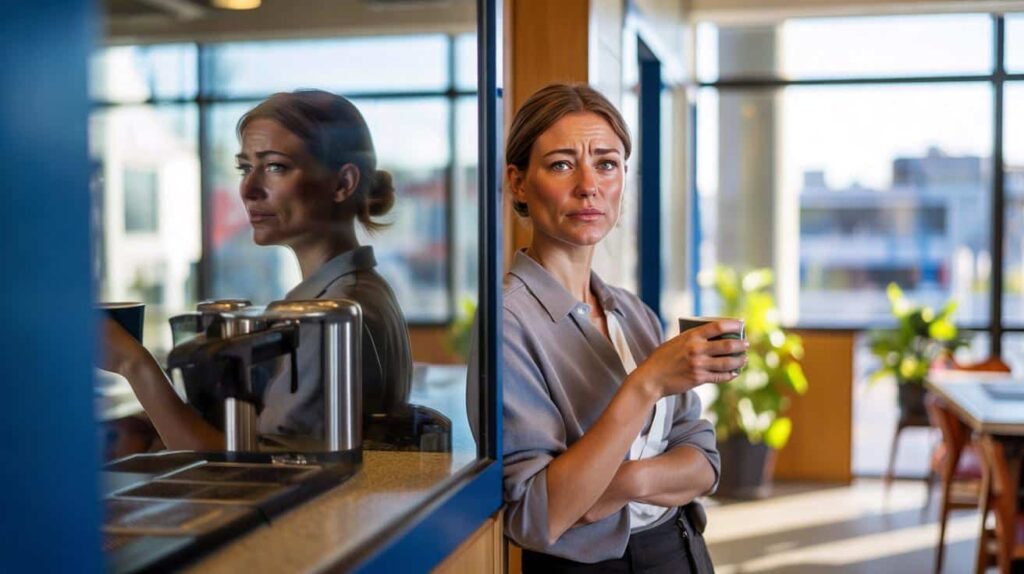
A woman in her forties stands frozen in front of her bathroom mirror, dye brush suspended mid-air. The grey roots are back again. The towel slips off her shoulder, the phone rings, and the room smells like ammonia. She sighs. She knows this ritual all too well—the constant battle against grey hair that makes its way into her life every few weeks.
But then, on her feed, a new trend catches her eye: women embracing their grey hair, blending it so naturally that it shimmers with soft highlights, giving the appearance of youth rather than aging. Their hair looks luminous, fresh, and far younger than her dyed bob. She wonders—could not dyeing her hair be the secret to looking younger?
The Trend of Grey Blending
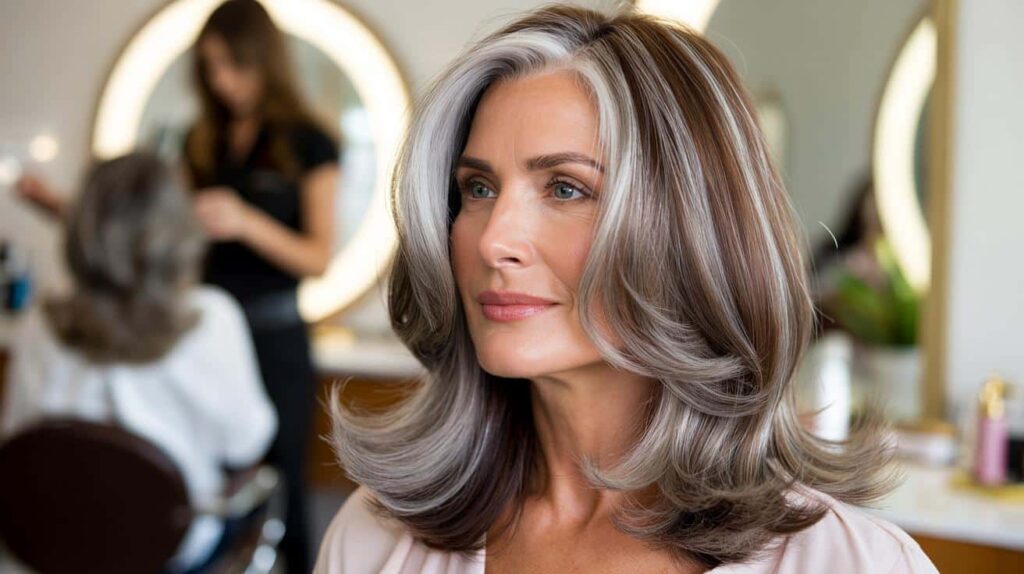
Instead of hiding grey hair, the new approach is about making it blend seamlessly with the rest of your natural color. This method, known as “grey blending,” involves a subtle interplay of natural color, light strands, and grey, creating a soft, glowing effect that is not harsh or blocky. The aim is to let the grey look like it was always meant to be there, offering a soft, youthful shine without the sharp contrast of dyed hair.

It’s not just about hiding grey hair—it’s about making it look luxurious and easy. The trend has caught fire across the globe, from London to New York to Seoul, with many women in their late 30s and early 50s embracing this new way of thinking about grey hair. A French colorist explains, “My clients no longer want to lie about their age; they just want to look good for their age.”

The Psychological Shift: From Hiding to Enhancing
What’s changed in hair trends? The obsession has shifted from “I must hide every grey” to “I want my hair to look expensive and effortless.” Solid, dark colors often make features appear harsher and older, especially as the skin and face naturally soften over time. Blended grey, on the other hand, works like natural contouring, drawing attention to the eyes and softening the shadows around the face. It’s a smart optical trick rather than a moral stance.
The Process of Grey Blending
The grey blending method doesn’t cover every strand with dye. Colorists focus on small sections, adding thin highlights and lowlights around the areas most prone to grey—such as the temples, parting, and face contour. The base color is often lightened slightly, and cool shades like ash, caramel, or mushroom tones are added to create a natural, seamless look.
One of the key advantages of grey blending is that the growth line is almost invisible, unlike traditional dyeing, which often results in a stark contrast as your roots grow out. Grey blending allows for longer intervals between salon visits, often stretching to eight or even twelve weeks, without noticeable regrowth lines.

Adapting to the Transition: How to Start
Transitioning to grey blending isn’t an overnight fix. It’s a gradual process that starts with lightening your base color over two or three sessions. The goal is to soften the root line and spread the grey across different sections. The first session is all about breaking the harsh contrast of your roots, and the real benefit comes from giving your hair time to adjust and grow naturally.
During this transition, you might experience some “in-between” phases where your hair isn’t as shiny or smooth as it was with the full coverage dye. But that’s okay—it’s a part of the process. As your natural hair texture starts to emerge, the look will eventually feel more authentic and less polished.
Maintaining Your Grey Blended Hair
To keep your grey hair looking fresh, follow these simple maintenance habits:
- Use sulfate-free shampoo safe for colored hair.
- If your grey hair turns yellow or brass, use a purple or blue shampoo once a week.
- Trim dry ends that have been over-processed to allow your natural texture to return.
- Wear softer partings and add more volume at the roots to soften the grey.
- Instead of full root coverage, schedule a gloss or toner treatment every few months.
When Grey Becomes Your Ally
The moment will come when you no longer view your reflection and zoom in on your roots. Instead, you’ll see your face, your eyes, your jawline—features that shine through more naturally. As friends start to notice the change, you’ll hear compliments like, “You look fresher, what did you do?”—without them knowing it’s the grey that’s doing all the work. With less time spent on salon appointments, you’ll start to feel more at ease with the process. Your hair will no longer be the source of panic but a testament to your natural beauty.

Table: Key Aspects of Grey Blending vs. Full Coverage Dyeing
| Aspect | Grey Blending | Full Coverage Dyeing |
|---|---|---|
| Color Effect | Soft, glowing, natural texture | Flat, uniform, harsh contrast |
| Maintenance | Longer gaps between appointments | Frequent touch-ups to cover roots |
| Visual Impact | Natural contours, brighter face | Stronger contrasts, harder features |
| Emotional Shift | Grey as an ally, embracing natural beauty | Grey as a flaw, needing to be hidden |
Conclusion: The New Freedom with Grey
The trend of embracing grey hair is not about fighting age—it’s about embracing a more natural, youthful, and relaxed version of yourself. Grey is no longer a symbol of aging, but a texture that adds sophistication and depth to your look. This trend is about making peace with your hair, giving it freedom to grow naturally, and enjoying the grace of aging without the pressure to stay young forever.
 Longest Solar Eclipse Of The Century Will Turn Day Into Night Across Several Parts Of Earth