If you’re returning to exercise after a long break or recovering from an injury, jumping straight into advanced core workouts can feel overwhelming. Many commonly suggested core movements demand strength and stability that beginners may not yet have.
When you work with a professional trainer, they usually offer modified versions of exercises that match your current ability level. These adjustments still challenge your muscles while helping you safely rebuild strength. However, if you’re exercising alone, you might push through movements that are too difficult, which often leads to poor form and reduced muscle engagement.
When exercises are too challenging, larger and stronger muscles tend to take over the movement. As a result, smaller stabilizing muscles—especially those deep within the core—don’t activate properly. Over time, this can slow down progress and limit true core development.
 5 daily exercises trainers say rebuild muscle strength faster than gym routines after age 55
By simplifying exercises and focusing on beginner-friendly movements, you allow those smaller stabilizing muscles to become stronger. These muscles act as the body’s support system and are essential for maintaining balance, posture, and spinal protection.

Starting with basic movements also helps build a stronger mind-muscle connection. This awareness allows you to feel your core muscles working and understand how to engage them properly during exercise.
During my own recovery from a lower back disc injury, rebuilding core strength became a major priority. I had to scale back to extremely simple movements that targeted the deep core muscles supporting the spine. Although they looked easy at first, these exercises were incredibly effective.
This experience reinforced one key lesson: progression matters. Starting small and gradually increasing difficulty creates long-term strength without risking further injury.
Below is a beginner-friendly core routine built around simple movements that focus on developing foundational strength—particularly in the lower and deeper core muscles.
1. Dead Bug Floor Tap
Lie on your back with your legs lifted so that your hips and knees form a 90-degree angle. Your shins should be parallel to the floor.
Keep your arms resting beside your body with your palms facing down. As you become stronger, you can progress by raising your arms overhead.
Slowly lower one foot toward the floor while maintaining the bend in your knee. Lightly tap the floor and return to the starting position.
Repeat the same movement with the opposite leg, alternating sides for each repetition.
Tip: Focus on initiating the movement from your lower core rather than your hips.
Progression: When you feel stronger, straighten the lowering leg before tapping the floor—but only if you can keep your lower back pressed down without arching.
2. Bridge March
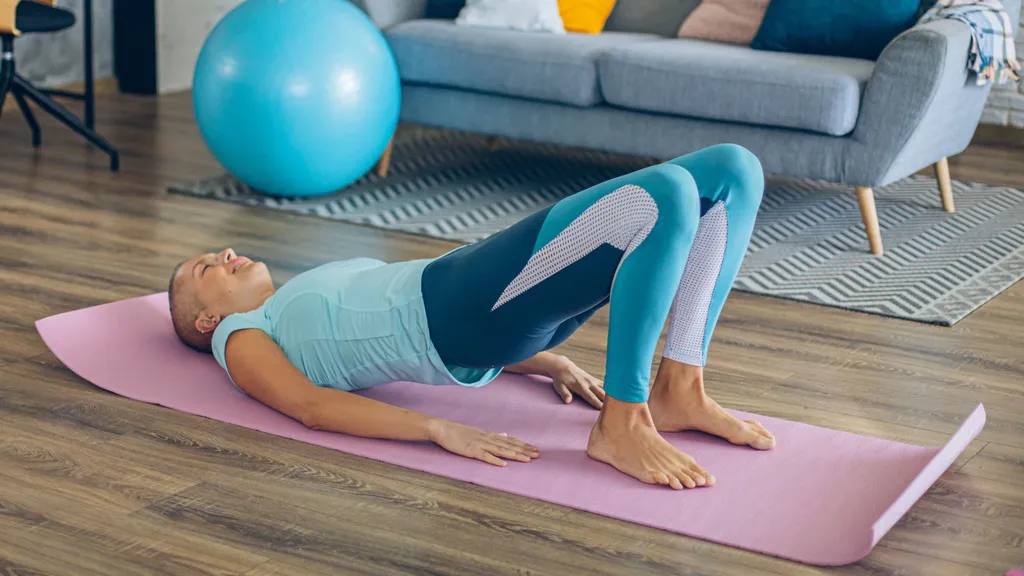
Begin by lying on your back with your knees bent and feet flat on the floor, positioned about hip-width apart.
Place your arms beside your body with palms facing down for stability.
Press through your feet and lift your hips off the floor until your body forms a straight line from your shoulders to your knees.
From this raised position, slowly lift one knee toward your chest while keeping your hips steady and level.
Lower the foot back to the floor and repeat the movement with the opposite leg.
Tip: Keep your core engaged and squeeze your glutes throughout the movement to prevent your hips from rocking side to side.
Modification: If maintaining stability is difficult, perform regular glute bridges without marching until your strength improves.
3. Single-Leg Knee Tuck
Sit on the floor with both legs extended straight in front of you.

Place your hands slightly behind your body for support, about shoulder-width apart.
Slowly bend one knee and pull it toward your chest while keeping your torso steady.
Return the leg to the starting position and repeat with the opposite knee.
Continue alternating sides while focusing on activating your lower abdominal muscles.
Modification: If balancing upright feels difficult, lean back onto your elbows for additional support.
Progression: Once single-leg tucks feel comfortable, progress to lifting both knees together toward your chest.
4. Bent Knee Raise
Lie flat on your back with your knees bent and feet resting on the floor. Keep your knees and feet together.
Place your arms beside your body with palms pressing gently into the floor.
Activate your core by lightly pressing your lower back into the floor.
Slowly lift both knees toward your chest while keeping your legs together.
Lower your feet back down with control until they gently tap the floor, then immediately begin the next repetition.
5. Seated Side Tap
Sit on the floor with your knees bent and feet planted firmly on the ground.
Lean your torso slightly backward while keeping your back straight and your core engaged.
Rotate your upper body to one side and tap your hands on the floor beside your hips.
Rotate to the opposite side and repeat the tapping motion.
Continue alternating sides in a controlled rhythm.
Tip: Maintain an upright chest and a long spine throughout the movement.
Progression: If you have no spinal discomfort, you can increase the challenge by lifting your feet off the floor and balancing on your sitting bones while performing the side taps.
Final Thoughts
Building core strength doesn’t require complicated movements or intense workouts. Starting with simple, controlled exercises allows beginners to strengthen the deep stabilizing muscles that support the spine and improve posture.
These beginner-friendly exercises focus on stability, control, and proper muscle engagement. Practicing them consistently can help you rebuild strength safely and create a solid foundation for more advanced training in the future.