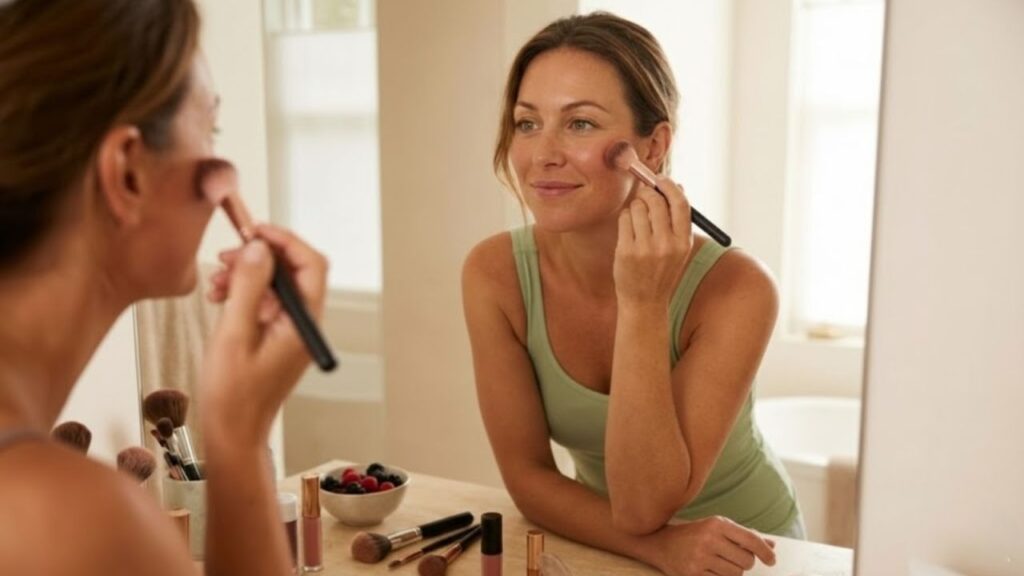
The woman examining her reflection appears nearly but not quite the same as she did when she was twenty-five. Her cheeks are now now slightly lower. Her jaw gently absorbs the soft fullness that used to lift when she smiled. She grabs her well-known blush brush and does what she has been doing for years: she smiles and applies colour to the apples of her cheeks. She then stops.
Method of Blush Placement
Her face appears heavier rather than lighter due to the blush. The center of her face appears slightly puffed and the shadows beneath her eyes appear deeper. She removes the colour and tries again, positioning it slightly higher this time. Her cheekbones become more defined right away. Her eyes are brighter and her face appears lifted. The same person, the same blush. Where it was used was what changed, not the product itself.
Why After 30, Blush Placement Begins to Feel Off
There comes a subtle point in life when your makeup regimen no longer produces the same effects. It takes time for it to happen. You just realise one day that methods you’ve been using for years don’t seem quite right. Blush is frequently the initial problem.

By mid-afternoon, blush applied low and rounded can make a 32-year-old appear exhausted. The colour that used to add freshness is now more in line with the delicate lines surrounding the mouth and nose. It highlights the center of the face rather than shaping it. Placement is now more important than product selection.

According to a London makeup artist, she can frequently determine someone’s age by observing how they apply blush. Colour applied directly to the center of the cheeks is a natural fit for younger faces. Even though their facial structure gradually changes, many people over 30 continue to use the same technique.
She remembered working with two sisters who were 38 and 28 years old. They used the same products and had comparable skin tones. The younger sister’s entire face was enhanced by the blush on the apples of her cheeks. The same placement highlighted small hollows under the eyes of the elder sister. The older sister appeared rested, as if she had had a good night’s sleep, when the artist moved the blush closer to the temples. Instead of focusing on the center of her face, the colour highlighted her eyes and cheekbones.
The explanation is straightforward after 30. After 30, the fat beneath the skin gradually moves downward, but the bone structure stays the same. The brush is still guided by muscle memory to the previous fullness. Applying blush there draws attention to that movement. The face appears elevated when the colour shifts slightly upward and outward. You’re just changing where the eye lands first; you’re not changing your features.
The Contemporary Blush Map That Produces a Natural Lift
The method that is currently being used everywhere is surprisingly straightforward. When applying blush, look straight ahead and maintain a relaxed expression rather than grinning. From the top of your ear to the side of your nostril, visualise a diagonal line. Blush should be applied along the upper portion of that line, nearer the ear than the nose.
The form should sweep toward the outer corner of the eye in a gentle, angled curve. Instead of pushing colour toward the middle of the face, blend upward into the temples. As with watercolour spreading on paper, allow the pigment to gradually fade into the hairline. This instantly reveals cheekbones that many people over 30 had forgotten they had.
A tiny change has a significant impact. Make sure there is a clear gap between the area beneath your eyes and the start of the blush. A finger’s width of exposed skin helps keep colour from highlighting dark circles or settling into fine lines.
A small amount of colour applied to the bridge of the nose can help achieve a fresh flush however, the primary application should be high and directed toward the outside of the face. This method produces glow without appearing bulky.
 This 7,000-year-old stone wall found off the coast of France may be the work of hunter-gatherers
The desire to look healthy without looking overdone is a common concern. That reluctance makes sense. An unflattering flushed face can result from a single, heavy swipe applied too low. For this reason, placement is more important than quantity.
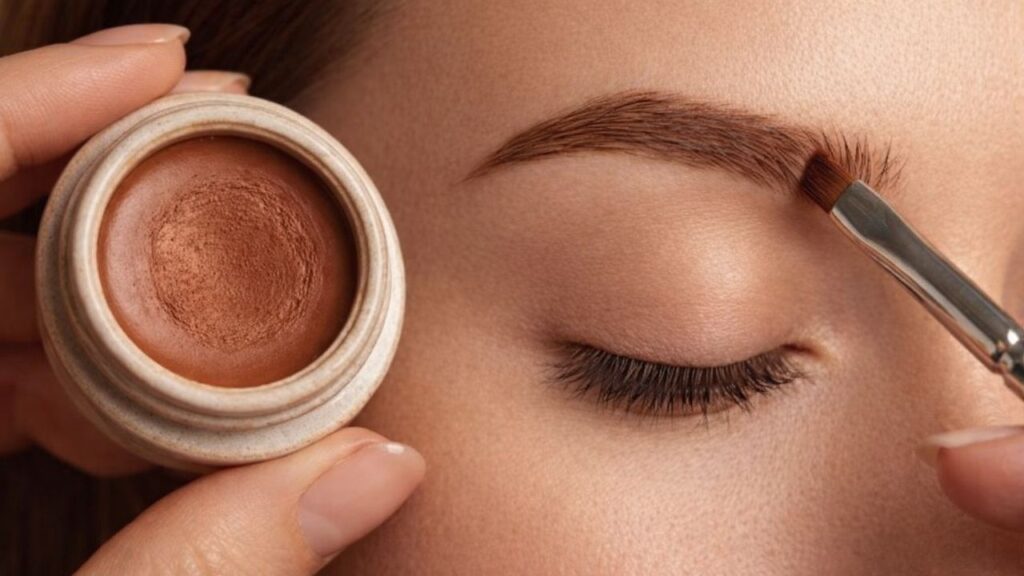
Use less product at first than you believe you’ll need. Rather than sweeping, tap it on. Gradually add colour in light layers. Because cream formulas blend into the complexion rather than sit on top, they frequently work better on mature skin.
Makeup tutorials don’t apply to real life. On some mornings, you check your phone and apply blush. Thus, keep in mind this simple rule higher and farther back. That small change can make your entire face appear more awake on days when you’re exhausted—like the version of yourself you still recognise.
Important Things to Remember
- When applying blush, use a diagonal approach rather than a circular one.
- The strongest colour should not be near the mouth or nose.
- To produce a lifting effect blend upward into the temples.
- If powder highlights texture go for cream or liquid formulas.
- Every few years, as your face changes, review where you should apply blush.
How Blush Eventually Turns Into a Quiet Confidence Reset
Changing the way you use a product that you have been using for more than ten years has a subtle but powerful effect. It’s a choice to accept the fact that your face has changed. Over time, a single angled stroke turns into a minor negotiation.
Friends frequently complain about appearing worn out or unlike themselves. The way light and shadow now move across their features is often the most noticeable change. You can change the light by changing the colour. The story your face conveys before you speak is subtly shaped by the placement you choose.
Everybody has unintentionally noticed their reflection and wondered who they were. Blush placement adjustments soften that moment, but they don’t erase it. It draws attention to the expression and structure you’ve earned without making everything seem negative.
It’s also easy to share this small adjustment. It’s difficult to hide the difference once you’ve noticed it—doing one cheek the old way and one the new. Often, the contrast speaks louder than any instruction.
Blush becomes more about knowing your own facial architecture than it is about following trends. Where does colour make you appear more alert right away? Although there isn’t a single diagram that works for everyone, the general idea is that colour that moves upward indicates energy. Fatigue is frequently indicated by a colour that settles in the center. This could be the reason this method keeps coming up again. You just need to raise what you already own a few millimetres; no new products are needed.

Dennis Wolf Talks About Longevity and PED Balance in Professional Bodybuilding
 11 Winter Nail Polish Shades Trending Everywhere This Season for a Fresh Polished Modern Look
A Useful Placement Guide
- Lift the application zone: For a natural lifting effect, apply blush toward the temples and above the ear-to-nose axis.
- Maintain space beneath the eyes: To lessen the visibility of fine lines and dark circles, leave about one finger of skin exposed.
- Prefer angled lines: For a more sophisticated appearance, blush diagonally as opposed to circularly.